The new commercial structure applied to Turkish horseracing has come under scrutiny, as concerns are raised on a squeeze of commission fees, and conflicts of interest on ownership.
This year will see a strategic shift for Turkish racing, as the sport looks to revitalise its commercial structure, with ownership of the pari-mutuel wagering system transferred to United Racing Şans Oyunları.
United Racing had secured a 10-year contract granted by the Türkiye Wealth Fund (TVF) to manage a new pari-mutuel wagering system for the races/fixtures of Türkiye Jokey Kulübü (TJK).
The Türkiye Wealth Fund serves as the principal economic project of President Recep Tayyip Erdoğan and the AKP government. Established in 2016, TVF controls a portfolio of strategic investments authorised by AKP including Turkish Airlines, Türk Telekom, Turkcell, Ziraat Bank, Halkbank, BOTAŞ Gas and TPAO infrastructure.
In 2019, TVF took majority ownership rights of Jokey Kulübü, on the mandate to overhaul and improve the economic performance and structure of the operating company of Turkish racing since 1950.
The arrangement has not seen Turkey privatize horseracing itself. The statutory rights remain under state control through TVF, while United Racing has been entrusted with operating the betting system and expanding its commercial reach.
Seven months into the new regime, however, the transition is attracting scrutiny over whether its economics can deliver the growth promised for Turkish racing.
Agent revolts
A week of investigations by newspaper Cumhuriyet has highlighted the anger of betting agents under the concessions banner Sanal Bayiler feeling a big squeeze of United Racing.
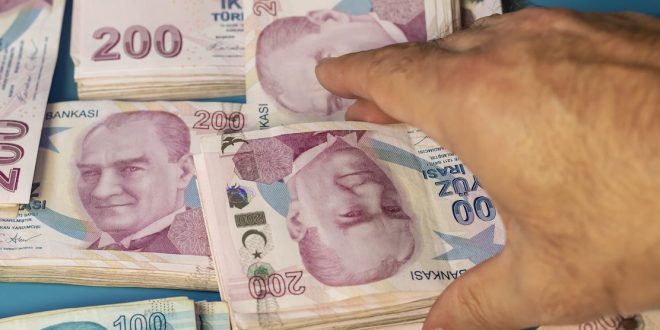
Cumhuriyet, has reported that commissions paid to Turkish racing betting agents (online and retail) have been reduced from 4.5% to 2.5% without warning. Furthermore, retail venues selling TJK coupons have commissions cut by 6% to 5%.
Agents have complained as to why United Racing was allowed to change terms without negotiations, with many questioning why racing coupons should be promoted at half-the-value to their businesses.
Concerns raised by agents reflect a longstanding challenge for Turkish racing: growing the overall betting market rather than simply redistributing existing customers between licensed agents.
United Racing operates a network of more than 2,000 physical agents. Its mandate is therefore not simply to administer an existing betting pool, but to increase the economic value of racing over the course of its 10-year agreement with TJK.
Demirören family strikes it rich… again
Commercial pressures have been accompanied by increased scrutiny of United Racing itself.
Media exposes have raised questions about the company’s ownership structure and reported corporate links involving Spine Şans Oyunları and Four Leaves Şans Oyunları, including interests associated with the Demirören family.
The development is likely to intensify concerns over the growing influence of the Demirören family via Turkish gambling, where its interests already extend to the Milli Piyango National Lottery and sports-betting operations through İddaa/Bahis, giving the group significant exposure to Turkey’s state-controlled gambling market.
In Ankarra, MP Selçuk Özdağ submitted parliamentary questions concerning the award, highlighting reports that United Racing had been incorporated on 20 November 2025 with TRY1m in capital, shortly before assuming responsibility for betting operations at the beginning of 2026.
Özdağ called for greater transparency regarding the selection process, competition considerations and the parties involved in the new structure.
Further questions have concerned businessman Ömer Onan and links to Platform Şans Oyunları, which has been involved in the commercial rights surrounding digital and mobile broadcasts of Turkish racing.
The overlapping interests have prompted questions over whether Turkey’s new model risks concentrating too much of racing’s commercial infrastructure among a limited number of parties.
TVF retains ultimate control
Despite the involvement of private businesses, Turkish horse racing remains under state control.
The statutory rights to organise racing, operate racecourses and conduct pari-mutuel betting were transferred to the Türkiye Wealth Fund for 49 years from January 2018.
TJK, an association recognised as operating in the public interest rather than a state-owned corporation, continues to administer the sporting infrastructure of Turkish racing.
The major change in 2026 was therefore the separation of betting operations from TJK.
United Racing assumed responsibility for pari-mutuel betting under its TVF contract, with associated betting operations, customer relationships and certain employees transferred into the new structure.
The reform is therefore better characterised as the outsourcing of Turkey’s state-controlled horse-racing betting monopoly rather than the privatisation of Turkish racing itself.
Growth is the acid test
Political and ownership questions will continue, but the longer-term verdict on the restructuring will ultimately depend on whether United Racing can grow the economic value of Turkish racing.
The operator has inherited a nationwide retail network, established digital agents and one of Turkey’s longest-running betting products. Its challenge is to make that proposition relevant to a new generation of customers.
That objective makes the dispute surrounding agent commissions particularly significant.
A reduction from 4.5% to 2.5% materially changes the economics for digital distributors expected to invest in technology, marketing, product development and customer acquisition.
Should agents respond by reducing investment, Turkey could find itself with a new operating structure competing over the same ageing pool of racing customers rather than expanding participation.
For United Racing and TVF, the first meaningful benchmark will therefore be betting turnover.
The industry will want to see whether 2026 wagering volumes, customer numbers and digital engagement demonstrate genuine expansion against TJK’s previous performance.
Until those figures become clear, questions will persist over whether Turkey’s racing overhaul has laid the foundations for a larger market – or simply redistributed control and revenue within the existing one.
The restructuring was intended to open a new commercial chapter for Turkish racing. Just seven months into the United Racing era, its mandate to deliver growth is already being tested by the economics, transparency and competitive structure of the market it inherited.