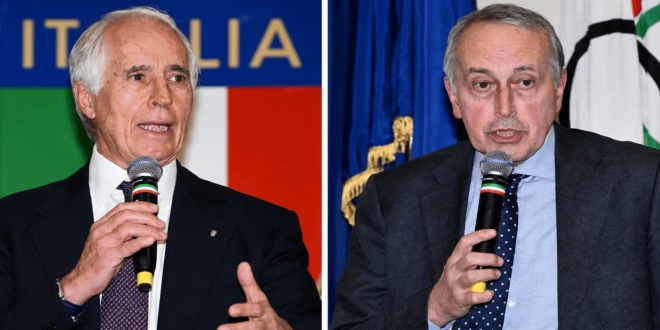
Giovanni Malagò and Giancarlo Abete, the two candidates seeking the presidency of Italian football, have outlined rival plans to modernise the governance and structure of the national game.
The duo are vying to win the election for the presidency of Italian Football Federation (FIGC) on 22 June, but both agree that football should receive a direct share of betting revenues through a dedicated ‘Right-to-Bet’ tax on licensed bookmakers.
Both proposals envisage a 2% allocation of “betting turnover or proceeds”, with the revenue earmarked to help rebuild Italian football at a time when the calcio faces mounting challenges around youth development, ageing stadiums and the competitiveness of its leagues.
FIGC’s election of a new President is viewed as critical in which path the Italian government will choose to repeal and replace the Dignity Decree of 2018 – the federal mandate of the former Lega 5-Star coalition that imposed a blanket ban on gambling advertising and sponsorships.
Malagò, widely regarded as the frontrunner and backed by the players’ union and coaches unions, views betting revenues as a strategic funding mechanism for youth development, grassroots football and infrastructure investment – under his ‘new Club Italia’ programme.
His visions would incentivise clubs to field more Italian U-23 players through financial and tax-relief measures, while funding a national stadium modernisation plan seen as critical to Italy’s hosting ambitions for UEFA Euro 2032.
Malagò also wants to overhaul Club Italia, bringing figures such as Paolo Maldini and Gianfranco Zola into the national team structure, while positioning the FIGC as a strategic guarantor of the wider football ecosystem.
Meanwhile, Abete, the former FIGC President backed by the Lega Nazionale Dilettanti (LND), has centred his campaign on strengthening the sustainability of the football pyramid.
His programme proposes reducing the number of professional clubs to improve financial stability and competitive standards, while providing greater support to clubs through new funding streams.
Abete also advocates a dedicated management structure for Club Italia and a stronger role for the federation in driving reforms across the game, with the primary objective to help clubs improve their commercial and investment capabilities.
New vision for betting advertising & sponsorships
The candidates also diverge on how betting should support football.
Malagò sees betting revenues primarily as a “federation-led funding mechanism”, with proceeds redistributed across youth development, grassroots participation, infrastructure projects and broader football programmes.
The former Olympic Commitee President, has positioned betting alongside media rights, anti-piracy measures and sports taxation reforms as part of a wider strategy to strengthen Italian football.
Abete’s approach is viewed as more commercially ambitious. Alongside a betting levy, he supports restoring sponsorship and advertising partnerships between football and betting operators, arguing that clubs should once again be able to secure direct commercial investment from regulated betting firms.
A media figurehead Abete envisages part of the revenues supporting integrity and responsible gambling initiatives.
In essence, Malagò’s vision centres on redistribution and long-term investment, while Abete advocates a combination of redistribution and commercial liberalisation of Italian football that has lagged from its European competitors.
Once elected, the new FIGC President will begin negotiations with Italy’s Olympic Committee (CONI) and Serie A over the future relationship between pro-sports and betting.
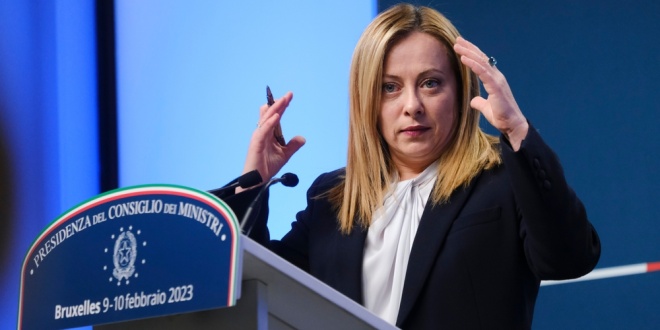
The talks will be overseen by Sports Minister Andrea Abodi and carry added urgency as Prime Minister Giorgia Meloni has instructed government departments to submit economic reform proposals by September for inclusion inItaly’s 2027 Budget.
Meloni seeks to consolidate sports and gambling reforms before the country enters the 2027 election cycle in which the modernisation of calcio will be on the campaign front.