Italy’s land-based gambling sector will continue in a state of limbo, as the government is unwilling to sign-off on the final terms of its long-awaited retail reorganisation.
A two-year negotiation between the Ministry of Economy and Finance (MEF) and the Conference of Regions and Autonomous Provinces has broken down on the final settlement of the Decreto di Riordino del Gioco Fisico.
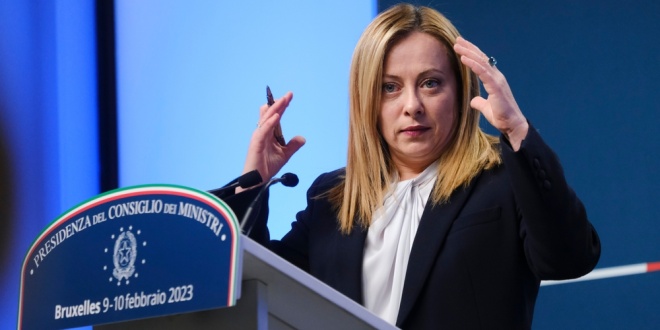
As last week concluded, reports in Rome spread that the final terms of the decree had been rejected by the office of Prime Minister Giorgia Meloni and were sent back to the MEF for further consideration.
Meloni’s Undersecretary to the Presidency of the Council, Alfredo Mantovano, confirmed to AgiProNews that any final decree would not change minimum distance protections in place by regional authorities.
The government is adamant that rules prohibiting gambling venues from being close to schools and other sensitive places must be kept in place.
The decision is a major blow for the Meloni administration’s gambling reform agenda.
After Italy’s online gambling framework was relaunched in November 2025, Meloni had been hoping to conclude the more politically sensitive restructuring of the land-based sector before the expiry of its fiscal delegation powers on 29 August.
Impasse Continues
But the negotiations are deadlocked over the future of Italy’s distanziometro rules. The MEF sought to bring together the patchwork of regional legislation and set some common requirements for minimum distances, opening hours, venue certification and concession requirements.
Yet regional governments have been resistant to a weakening of their powers as gambling is an important public health issue.
The impasse reflects a familiar feature of Italian policymaking, where national reforms frequently become entangled in constitutional disputes between Rome and the regions over who controls key areas of public policy.
The collapse of talks also raises fresh uncertainty about the new programme of retail gambling concessions, an issue that needs to be settled urgently. Prior to last week’s fallout, the settlement had focused on concluding the terms of compensation with the Conference, the body representing Italy’s 20 autonomous provinces and 110 municipalities –
If the regional distance restrictions continue, new tenders for betting shops, slot machines and bingo halls will be difficult to launch without them, and previous concession processes have been challenged under the current ones as operators were unable to identify compliant locations.
Economic blowback
For the Treasury, the delay is a big fiscal cost. New concession auctions were expected to generate between €1.8bn and €2bn in upfront licence revenue, and larger reforms were supposed to bring more legal certainty for operators and a uniform regulatory framework across the country.
The proposed reform package also included a national definition of sensitive locations, harmonised opening hours, mandatory certification of gaming venues, development of a national register of operators, new advertising provisions and technical standards for next-generation gaming machines.
With little time left before the fiscal delegation expires at the end of August, the likelihood of a legislative outcome is looking increasingly remote. Even if the decree were approved by the Council of Ministers, it would still need the State-Regions Conference and parliamentary committees to sign off on it.
In the meantime, the government will keep the market going by continuing retail gambling concessions until 31 December 2026.
Market analysts say further extension of the concession regime seems to be the most likely outcome now. Morgan Stanley has indicated that, without political negotiations, Italy might postpone the retail overhaul for another year or two, while lawmakers are still trying to find a more comprehensive agreement between the state and regional authorities.
AGIC, which counts Flutter Entertainment, Lottomatica, Entain, bet365 and Brightstar as members, had warned that successive concession extensions have left Italy’s regulated retail gambling market without long-term certainty for almost a decade, discouraging investment and delaying the modernisation of the sector.
Who blinks first
Whether Meloni intends to return to the negotiating table remains unclear.
With the PM expected to prioritise securing an uninterrupted passage of the 2027 Budget when Parliament reconvenes in September, there appears to be little appetite to reopen one of the coalition’s most contentious regulatory disputes ahead of an election year in 2027.
Yet leaving the retail reform unresolved will likely lead to a conflict with Italy’s judiciary.
Both federal and regional courts continue to grapple with a backlog of disputes stemming from successive extensions of retail gambling concessions and conflicts between state licensing objectives and municipal planning restrictions.
As stands it appears that PM Meloni and her cabinet are willing to play a game of “who blinks first” on the future of Italian gambling and its reorganisation.