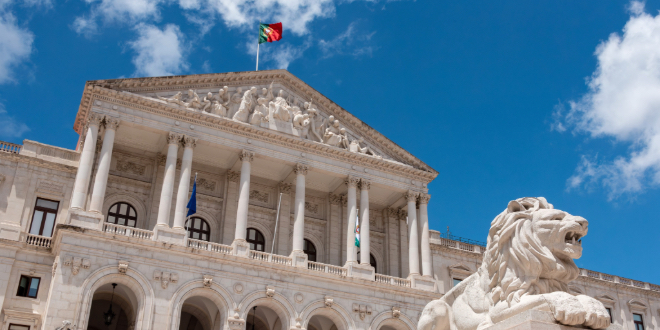
Developments in the Palácio de São Bento see a proposal to “impose income tax declarations on online gambling winnings” progress in Portugal’s political ranks.
The proposal that received its initial approval is endorsed by Partido Livre, who seeks to impose a “positive annual net balance from online games and betting to be considered as personal income due to be taxed under progressive IRS rates”.
Portugal Democrat’s Party (PSD) and the Socialist Party (PS) voted in favour of the amendment. Meanwhile Chega, the largest opposition party, abstained from a vote on the matter.
Under Livre’s proposal a player’s positive annual net balance from online gambling and betting would be declared as “Category G income and taxed with other income at Portugal’s progressive personal income tax rates”.
Livre’s proposal noted: “Those who earn a net gain through online games and betting should pay according to the same rules of tax fairness as those who get income from work, pension, savings or investment without losing sight of public responsibility to prevent and reduce harm linked to gambling.”
Livre cited Spain, where net betting gains are already included in personal income tax.
In Spain, the €1,000 annual threshold applies to certain income and gains in aggregate (betting gains where no tax was withheld) but not separately to gambling winnings.
The separate €22,000 threshold generally applies only to employment income from a single player, but players earning below €22,000 can still be required to file because of their winnings with local tax authorities.
The Spanish precedent poses a practical question for Portugal. How consistently do players declare small net winnings? How much tax is generated by that?
Operators want clarity on the agenda. Tiago Pereira, Head of Portugal for LeBull, said players and operators need to know how net winnings would be calculated across licensed platforms as well as what reporting and compliance duties operators would face.
Pereira also asked how the tax would affect player behaviour and competitiveness of the regulated market. For licensees, the worry is that a tax on winnings will make regulated sites less attractive to players who can access unlicensed alternatives.
In April, MPs debated Livre bills tightening gambling advertising rules; banning gambling sponsorship of events and competitions; and prohibiting promotions by public figures and influencers.
Advertising has been a major issue in the separate parliamentary debate on how Portugal regulates gambling licensees.
The bills were defeated as PSD and its governing partner CDS-PP voted against them, Chega and PS abstained.