

Search
Choose a style
Dark
Light
Features

BREAKING
Events
Time to read: min
SBC signs long-term agreement to remain in Lisbon until 2030
October 2, 2026

BREAKING
Events
Time to read: min
SBC Summit Day 3: Prediction markets praised as "extraordinary opportunity in innovation" but doubts remain
October 1, 2026

BREAKING
Features
Time to read: min
SBC Summit: Reflecting on the global expansion of the AFA brand
October 1, 2026

BREAKING
Events
Time to read: min
SBC Summit 2026: live from Lisbon Day 2
September 30, 2026
BREAKING
Oceania
Time to read: min
Oceania Overview: Labor gets support for ads reform while class action against major firm widens
August 19, 2026

BREAKING
Features
Time to read: min
World Cup Betting Tour: betr and Australia looking to build on Turkey win against USA tonight
June 19, 2026

BREAKING
Features
Time to read: min
Backlash for BetStop as gambling in Australia continues to cause controversy
September 22, 2026
BREAKING
Marketing
Time to read: min
Australia gets gambling reform bill over the line but leaves neither side fully satisfied
August 21, 2026
BREAKING
Oceania
Time to read: min
Oceania Overview: Australia gov’t stands by reforms while Sportsbet clear from AML probe
July 3, 2026
24:08
BREAKING
Featured News
Time to read: min
Labor takes soft path on Murphy’s goal to end “Australia’s gambling normalisation"
May 12, 2026
26:06
BREAKING
Marketing
Time to read: min
Australia MPs call for gambling ad loopholes to be closed
April 13, 2026

26:06
BREAKING
Marketing
Time to read: min
Australia advertising ban likely to have limited impact on gambling spend
April 8, 2026
Australian betting to see ‘much higher barrier of entry’ as Labor reforms press on
You’ve shared it!
The Australian betting industry has been thrust to the forefront of political debate as the governing Labor party hosts its annual conference and implement a package of reforms.
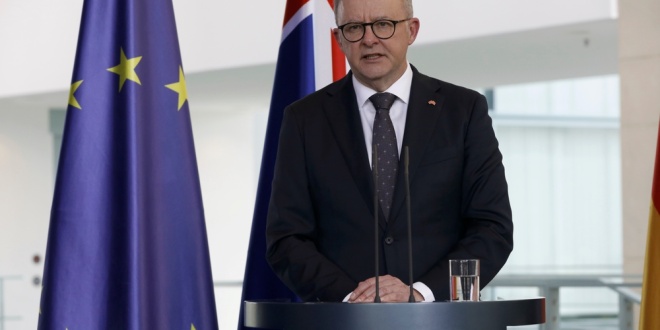
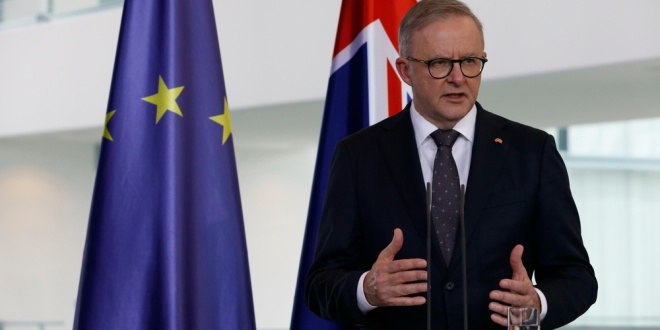
Prime Minister Anthony Albanese’s government introduced the Gambling Reform Bill earlier this month. The bill includes a raft of reforms to advertising, though falling short of an outright ban.
Reactions to the bill have been mixed. Advocates for gambling reform have been calling for changes for some time, and Albanese and party leadership will no doubt face questions from backbench MPs and other party members at the conference in Adelaide.
This is not to say that the bill will do nothing, however. Australian betting companies are now facing the biggest package of reforms they have seen in years, and while it may not go as far as many politicians and members of the public want, businesses have a lot to consider.
“It’s going to have very considerable ramifications in the way in which licensed operators in Australia currently do business,” said Jamie Nettleton, partner at Australian law firm Addisons Lawyers, speaking on SBC’s iGaming Daily podcast.
“The more you get into it the greater restrictions in place,” he continued.
“They range from very considerable restrictions on the manner in which betting operators can promote their services in Australia, and a lot of the expansion that occurs as a result of the opening up of a market – which we saw in Australia initially and now see in the US – is going to be closed considerably with very limited amounts of advertising.”
The Australian betting ads debate
Calls for gambling reform have reached fever pitch in Australia since the publication of the Murphy report, a parliamentary report with 31 recommendations for legislative and regulatory change penned by the late Labor MP Peta Murphy in 2023.
The report called for a total ban on gambling advertising, which Labor has ultimately not gone through with.
It also called for the creation of a dedicated national gambling regulator, with the role effectively carried out by the Australian Media and Communications Authority (ACMA) under the current system.
Labor’s bill focuses on four key areas:
For gambling reform proponents, the bill has fallen short on two key areas – the creation of a national gambling regulator, and the complete ban on gambling advertising.
For Australian betting operators, Albanese’s decision to hold back on completely banning gambling advertising will have led to a sigh of relief, though the extent of the restrictions may still have come as a bit of a shock.
This latter may be especially the case as it appeared for the past year or so that Albanese’s government was dragging its feet on gambling reform, at least in the mind of gambling reform advocates.
“At the end of the day, the real question will be ‘to what extent is there a benefit to having a licence in Australia that allows you to promote your services?’,” Nettleton told iGaming Daily.
“That is one of the benefits, that you can promote your services,but now can you promote your services effectively?
“I think the long term result of this, particularly because of the added level of compliance, is that there will be greater consolidation, there will be lesser and lesser operators and a much greater barrier to entry for others.”
War of words over Australian betting
As expected, the Australian betting reforms have been fiercely debated. As made clear above, advocates for gambling reform have been bitterly disappointed with Albanese’s reforms, seeing them as a heavily watered down version of the Murphy report.
Critics have come from the Labor backbenches, the Greens, independent MPs, and the Liberal National Coalition – the latter’s Victoria branch have also been very critical of a 40 year deal penned between the state’s Labor government and The Lottery Corporation in recent weeks.
David Pocock, an independent Senator, former Australia rugby union player and long-time critic of the gambling industry, has targeted the Labor government as “taking donations from gambling companies while not acting on inducements or fully banning gambling ads”.
Having taken place extensively in parliament, in the Australian media and on social media, debates will now be heard in the halls and stages of the Labor conference – taking place from 23 July-25 July.
Murray Watt MP, Albanese’s Minister for the Environment and Water, remarked that ”there’ll be people who’ll say a range of things around these issues, but the government has taken serious action already”.
“We’ve got our legislation before the parliament outlining where we want to take gambling reform … that’s the biggest focus and we think it will make a big difference.”