BetStop, Australia’s national self-exclusion register finds itself at the centre of a report discussing the controversies in the country’s gambling sector.
Uncertainty is a word that very much epitomises the state of Australia’s gambling industry right now.
Public sentiment is overwhelmingly hostile toward the sheer volume of gambling promotion, with polling showing around 76%-77% of Australians supporting a total ban on gambling advertising.
Health experts, gambling reform advocates and independent lawmakers have increasingly vocalised their views that gambling is a major public health issue. Calls for change are largely based on the 2023 Murphy report, a parliamentary report containing 31 recommendations for gambling reform.
On the back of this, the government under the leadership of Labor Prime Minister Anthony Albanese has resisted a blanket ban and opted for partial restrictions like the three-per-hour gambling ad cap instead.
This has frustrated many Down Under, including Adam Glezer, a Consumer Advocate who heads up Consumer Champion. His latest published report has made the Consumer Advocate the latest voice to raise grievances about Australia’s regulatory situation around gambling.
Is BetStop fit for purpose?
For Glezer, Australia’s national self-exclusion register, BetStop, is at the centre of uncertainty.
For a start, citizens are not particularly in the know – only 26.5% of Australian adults are aware that BetStop even exists, according to a major report by the Australian Institute of Family Studies (AIFS). Staggeringly, an Australian Gambling Research Centre (AGRC) report stated that just one in three actual punters are aware of the register’s existence.
The issue of BetStop’s efficiency does not stop there however. There is speculation about the financial future of the self-exclusion service’s operator, Dataworks.
On the face of it, Dataworks’ stock has been decimated since its 2017 IPO. When the company floated, shares were trading at around AU$6.43. They now sit at $0.12.
If you delve ever so slightly deeper, you’ll see that the company recorded a statutory loss after tax of $2.25m (£1.2m) in FY26, and while that is a major improvement on its FY25 loss of $10.03m, it’s still a company in the red.
It reported a cash balance of $651,308 as of 30 June, but recent updates show that the company has received firm commitments for a $3m placement, with a separate entitlement offer seeking to raise up to a further $1.24m.
This does somewhat signal the foundations of a turnaround, but it doesn’t deter the opinion of Glezer, either, who asserted that “its long term prospects don’t fill me with confidence”. It’s not where the uncertainty stops, either.
Ian Penrose sits on the Board at Dataworks as a Non Executive Director. He is also a Senior Independent Director of London-listed supplier Playtech. Glezer views this is a big problem, a view likely shared by Australia’s extensive gambling reform advocacy movement.
“Ian sits on the board of Dataworks, which runs BetStop, and the board of Playtech, a gambling technology giant,” Glezer explained to SBC News.
“Working in BetStop’s interest cuts against Playtech’s bottom line, and vice versa. There’s no way to spin that as anything but a conflict of interest.”
Needless to say, Dataworks has a different viewpoint. The company told SBC News that it does not consider Penrose’s role at Playtech to constitute a conflict of interest.
It also confirmed that he is stepping down from the Playtech Board. He has agreed to remain at Playtech until after publication of its FY26 results to ensure an orderly transition.
“Dataworks has appropriate governance processes for identifying and managing any actual or potential conflicts involving its directors,” a company spokesperson added.
“The company considers Ian’s extensive experience across regulated gaming, technology and corporate governance to be a benefit to Dataworks and to the development of effective player-protection technology. Dataworks does not operate wagering services.”
Are Australia’s gambling authorities up to the job?
Intertwined with BetStop is the regulator’s relationship with the register, as well as Australian operators. The Australian Communications and Media Authority (ACMA) is the de facto regulator of Australian gambling, along with other digital, media, and communications areas.
Below this, regulation is on the state-by-state basis. The country lacks a single gambling regulator, like Britain’s Gambling Commission or Germany’s GGL, and campaigners have been calling for the creation of one for some time, this also being a flagship measure of the 2023 Murphy report.
One issue that Glezer has is the settlements issued by the ACMA. Firstly, the three biggest settlements issued to gambling firms have all been non-gambling related.
Tabcorp was ordered to pay $4m for spam in June 2025, and then $2.7m for spam and do-not-call breaches in July 2026. Sportsbet, meanwhile, was issued a $2.5m settlement order for spam in February 2022.
However, at the time Glezer released his report, the ACMA had only issued two financial penalties to companies in breach of BetStop rules. This was despite, he said, “at least a dozen distinct wagering operators [being] found in breach since BetStop’s launch”.
Glezer also cited one example of Entain breaking BetStop rules 500 times, but the ACMA took so long to investigate it that it couldn’t levy a fine as the investigation exceeded the statutory 12-month time limit.
“Fifteen companies have been caught breaching self exclusion, one of them, Unibet, over 100,000 times on its own, and only three have ever been fined. That’s not deterrence. That’s a licence to keep doing it,” he said.
“It’s letting everyone know that a blind eye is turned to breaches in Australia, which only incentivises unscrupulous providers to keep doing it, as the risk is minimal.
“Entain had over five hundred breaches and paid no fine. Unibet’s failures cost it a million. It’s hard not to conclude that protecting the industry matters more to the government than protecting problem gamblers and children.
“Text a punter too often and you’ll pay. Take bets from someone who asked to be locked out and you might get a stern letter.”
The findings once again go to show that there is a clear rift between government, the public and gambling operators in Australia.
Albanese’ recent reform package has not been well received by advocates for gambling reform, nor was it received well by elements of the industry either. It looks like the cracks are definitely starting to show Down Under.
But an improved financial state for BetStop, alongside the fact that the ACMA has just this month issued its third settlement order to a company for BetStop breaches (a $1.1m penalty to Dabble) may give stakeholders on both sides that there could be chance for more cohesion as the debate around gambling in Australia rolls on.
On BetStop, Dataworks told SBC News: “Dataworks does not comment publicly on matters relating to the operation, promotion or policy settings of government programmes.”
Learn how to integrate responsible gaming into your marketing strategy with a masterclass led by Arjan Korstjens on Thursday 1 October. Get yourself a conference pass by visiting https://sbcevents.com/sbc-summit/masterclasses/








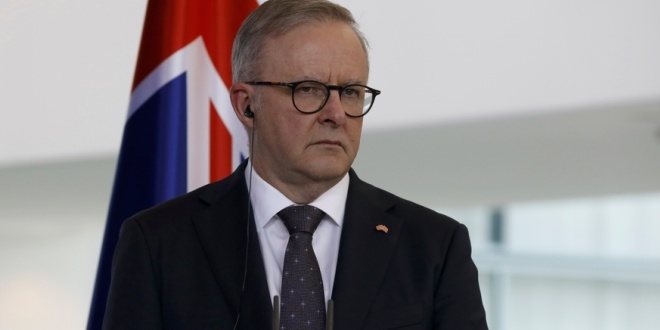




Backlash for BetStop as gambling in Australia continues to cause controversy
You’ve shared it!
BetStop, Australia’s national self-exclusion register finds itself at the centre of a report discussing the controversies in the country’s gambling sector.
Uncertainty is a word that very much epitomises the state of Australia’s gambling industry right now.
Public sentiment is overwhelmingly hostile toward the sheer volume of gambling promotion, with polling showing around 76%-77% of Australians supporting a total ban on gambling advertising.
Health experts, gambling reform advocates and independent lawmakers have increasingly vocalised their views that gambling is a major public health issue. Calls for change are largely based on the 2023 Murphy report, a parliamentary report containing 31 recommendations for gambling reform.
On the back of this, the government under the leadership of Labor Prime Minister Anthony Albanese has resisted a blanket ban and opted for partial restrictions like the three-per-hour gambling ad cap instead.
This has frustrated many Down Under, including Adam Glezer, a Consumer Advocate who heads up Consumer Champion. His latest published report has made the Consumer Advocate the latest voice to raise grievances about Australia’s regulatory situation around gambling.
Is BetStop fit for purpose?
For Glezer, Australia’s national self-exclusion register, BetStop, is at the centre of uncertainty.
For a start, citizens are not particularly in the know – only 26.5% of Australian adults are aware that BetStop even exists, according to a major report by the Australian Institute of Family Studies (AIFS). Staggeringly, an Australian Gambling Research Centre (AGRC) report stated that just one in three actual punters are aware of the register’s existence.
The issue of BetStop’s efficiency does not stop there however. There is speculation about the financial future of the self-exclusion service’s operator, Dataworks.
On the face of it, Dataworks’ stock has been decimated since its 2017 IPO. When the company floated, shares were trading at around AU$6.43. They now sit at $0.12.
If you delve ever so slightly deeper, you’ll see that the company recorded a statutory loss after tax of $2.25m (£1.2m) in FY26, and while that is a major improvement on its FY25 loss of $10.03m, it’s still a company in the red.
It reported a cash balance of $651,308 as of 30 June, but recent updates show that the company has received firm commitments for a $3m placement, with a separate entitlement offer seeking to raise up to a further $1.24m.
This does somewhat signal the foundations of a turnaround, but it doesn’t deter the opinion of Glezer, either, who asserted that “its long term prospects don’t fill me with confidence”. It’s not where the uncertainty stops, either.
Ian Penrose sits on the Board at Dataworks as a Non Executive Director. He is also a Senior Independent Director of London-listed supplier Playtech. Glezer views this is a big problem, a view likely shared by Australia’s extensive gambling reform advocacy movement.
“Ian sits on the board of Dataworks, which runs BetStop, and the board of Playtech, a gambling technology giant,” Glezer explained to SBC News.
“Working in BetStop’s interest cuts against Playtech’s bottom line, and vice versa. There’s no way to spin that as anything but a conflict of interest.”
Needless to say, Dataworks has a different viewpoint. The company told SBC News that it does not consider Penrose’s role at Playtech to constitute a conflict of interest.
It also confirmed that he is stepping down from the Playtech Board. He has agreed to remain at Playtech until after publication of its FY26 results to ensure an orderly transition.
“Dataworks has appropriate governance processes for identifying and managing any actual or potential conflicts involving its directors,” a company spokesperson added.
“The company considers Ian’s extensive experience across regulated gaming, technology and corporate governance to be a benefit to Dataworks and to the development of effective player-protection technology. Dataworks does not operate wagering services.”
Are Australia’s gambling authorities up to the job?
Intertwined with BetStop is the regulator’s relationship with the register, as well as Australian operators. The Australian Communications and Media Authority (ACMA) is the de facto regulator of Australian gambling, along with other digital, media, and communications areas.
Below this, regulation is on the state-by-state basis. The country lacks a single gambling regulator, like Britain’s Gambling Commission or Germany’s GGL, and campaigners have been calling for the creation of one for some time, this also being a flagship measure of the 2023 Murphy report.
One issue that Glezer has is the settlements issued by the ACMA. Firstly, the three biggest settlements issued to gambling firms have all been non-gambling related.
Tabcorp was ordered to pay $4m for spam in June 2025, and then $2.7m for spam and do-not-call breaches in July 2026. Sportsbet, meanwhile, was issued a $2.5m settlement order for spam in February 2022.
However, at the time Glezer released his report, the ACMA had only issued two financial penalties to companies in breach of BetStop rules. This was despite, he said, “at least a dozen distinct wagering operators [being] found in breach since BetStop’s launch”.
Glezer also cited one example of Entain breaking BetStop rules 500 times, but the ACMA took so long to investigate it that it couldn’t levy a fine as the investigation exceeded the statutory 12-month time limit.
“Fifteen companies have been caught breaching self exclusion, one of them, Unibet, over 100,000 times on its own, and only three have ever been fined. That’s not deterrence. That’s a licence to keep doing it,” he said.
“It’s letting everyone know that a blind eye is turned to breaches in Australia, which only incentivises unscrupulous providers to keep doing it, as the risk is minimal.
“Entain had over five hundred breaches and paid no fine. Unibet’s failures cost it a million. It’s hard not to conclude that protecting the industry matters more to the government than protecting problem gamblers and children.
“Text a punter too often and you’ll pay. Take bets from someone who asked to be locked out and you might get a stern letter.”
The findings once again go to show that there is a clear rift between government, the public and gambling operators in Australia.
Albanese’ recent reform package has not been well received by advocates for gambling reform, nor was it received well by elements of the industry either. It looks like the cracks are definitely starting to show Down Under.
But an improved financial state for BetStop, alongside the fact that the ACMA has just this month issued its third settlement order to a company for BetStop breaches (a $1.1m penalty to Dabble) may give stakeholders on both sides that there could be chance for more cohesion as the debate around gambling in Australia rolls on.
On BetStop, Dataworks told SBC News: “Dataworks does not comment publicly on matters relating to the operation, promotion or policy settings of government programmes.”
Learn how to integrate responsible gaming into your marketing strategy with a masterclass led by Arjan Korstjens on Thursday 1 October. Get yourself a conference pass by visiting https://sbcevents.com/sbc-summit/masterclasses/