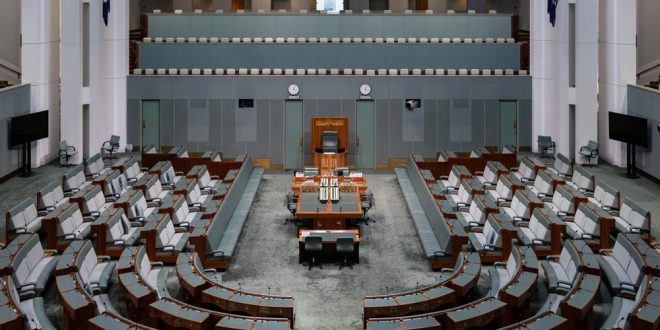
The future of Australia’s gambling sector remains firmly in the spotlight as the Labor government secures a deal with the opposition on the future of a long-awaited package of regulatory reforms to settle long-standing concerns on advertising rules.
Amidst the political back-and-forth in Canberra, Entain and its subsidiaries of Ladbrokes AUS and Neds are facing a legal challenge that calls on customers to participate in a class action against Entain in the state of Victoria.
Australia is a vast gambling market, with online revenue of around AU$2.8bn (£1.4bn) in 2025 alone according to some estimates. It is also a major market for international operators, having stood out in Entain’s latest financial reports while Flutter Entertainment and bet365 have also taken market share.
All in agreement on ads? Not quite
Last April, the Labor government presented its package of gambling reforms, authorised by Prime Minister Anthony Albanese, who had rejected the previous recommendations of the Murphy Report.
This served as the long-awaited government response, putting forward a package of 31 reforms to be applied to the Interactive Gambling Act 2001 – Labor stands that reforms were carried out considering the recommendations of Peta Murphy.
The flagship measure was a planned clampdown on gambling advertising, with the number of TV ads per hour between 6am-8:30pm capped at three per broadcaster, a full ban on ads during live sports broadcasts during these times, and a ban on radio ads during school commute times.
According to ABC, Labor wants to get the Interactive Gambling Amendment (Gambling Reform) Bill approved by the end of the week. Though Labor has a 94 seat majority in parliament and does not need the 41 opposition votes to get the bill through, it has secured a deal with the Liberal National Coalition, the main opposition.
The deal will see the creation of a service for Australians to opt out of online gambling advertising. This policy has been approved by the Labor caucus, and comes after the Coalition also pushed the government to include online streaming services in the above mentioned advertising restrictions.
Anika Wells, Australia’s Communications Minister, is quoted by ABC as saying that the opt-out register “will provide Australians with a one-stop shop to opt out of seeing wagering advertising on online platforms”.
So, have Labor and the Coalition achieved political unity on Australian gambling? No, is the simple answer, far from it. Party leadership and chief policymakers have secured some kind of agreement, but dissent on the backbenches remains rife.
There are many in the Coalition backbenches, along with rebellious Labor MPs, who don’t feel that the reform package is going far enough. At the end of the day, Murphy’s report had 31 recommendations, and although Labor’s reforms do extend beyond advertising, it falls very short of the full 31.
Criticism has, as expected, also come from independent MPs and members of the Greens.
David Pocock, an independent Senator, former Australia rugby union player, and vocal critic of the gambling sector in the country, has criticised Labor’s bill as a “betrayal of Australians” and pledged to vote against it as and when it reaches the Senate.
The takeaway from all of this is simple. Australia is going to see gambling reform this year, and that will chiefly affect how operators advertise themselves, but the conversation is far from over and calls for further regulatory reviews and reforms will only get louder in coming years.
Another legal challenge for Entain
As mentioned above, Entain is one of the biggest operators in Australia and a major competitor to the traditional market leader Tabcorp, via its ownership of the Ladbrokes Australia and Neds brands.
The LSE multinational’s H1 financials showed growth in Australia matching that out of its home and core markets of the UK and Ireland – 13% to be exact. The fact New Zealand is reported in this geography likely helped, with Entain having a decades long exclusive government contract to operate sports betting there.
Nonetheless, Australia is big business for Entain. It’s also become big trouble in recent years, however, with the firm under investigation by AUSTRAC, the financial regulator, and catching flak from the communications regulator, the Australian Communications and Media Authority (ACMA), over self-exclusion failures earlier this year.
Another job was given to Entain’s legal team earlier this year when a group of former bettors, it is not uncertain how many, brought a class action against the company in the Supreme Court of Victoria.
According to The Straight, anyone who used Entain’s Fast Code system is now automatically enrolled in the class action, unless they wish to opt out. Obviously, this could significantly enlarge the number of people seeing reimbursement from Entain.
The main argument is that the Fast Code system functioned as a form of in-play betting.
In-play betting is tightly controlled in Australia under 2001 legislation. Online in-play bets can only be placed on racing, not sports. In-play betting is available via retail outlets or via the telephone, but online in-play betting on sports is strictly prohibited.
All customers involved in the suit used the Fast Code system from 4 March 2019-4 March 2025. They claim that they suffered “loss or damage” as a result of betting via this service, with the initial claim being from a customer who lost $475 using the system.
The court filing with the Victoria Supreme Court states that Entain “denies the substance of the allegations”.
The outcome of the class action could be significant for Australian betting, however. Firstly, it piles further regulatory pressure on Entain in what it is looking like a key growth market for it, especially given the heavy tax regime biting into bottom lines in its native UK.
Secondly, the outcome could have some legal implications for in-play wagering in Australia, specifically whether or not operators can get away without strictly adhering to the telephone-only rule.
This could affect some of Entain’s competitors too, like Tabcorp and its newly launched ‘tap to play’ betting service, though this was approved by the ACMA.
Thirdly and perhaps most importantly, there’s industry reputation.
Australia’s gambling industry is facing a lot of stick right now, with policymakers citing studies from the likes of the Australian Institute of Family Studies which found that 15% of adults in the country were either experiencing or were at risk of experiencing some form of gambling harm.
Put simply, a legal showdown between customers and claims of non-compliance is not what the industry needs in the midst of a fierce political debate in Canberra.