The UK Gambling Commission (UKGC) has formally challenged the use of unverified statistics presented during the Health and Social Care Committee hearing on gambling-related harms and evidence, held by Commons in April.
In a letter sent to Committee Chair Layla Moran MP on 14 April, the Commission raised its concerns about the accuracy of claims made by three ‘expert witnesses’ called forward by MPs.
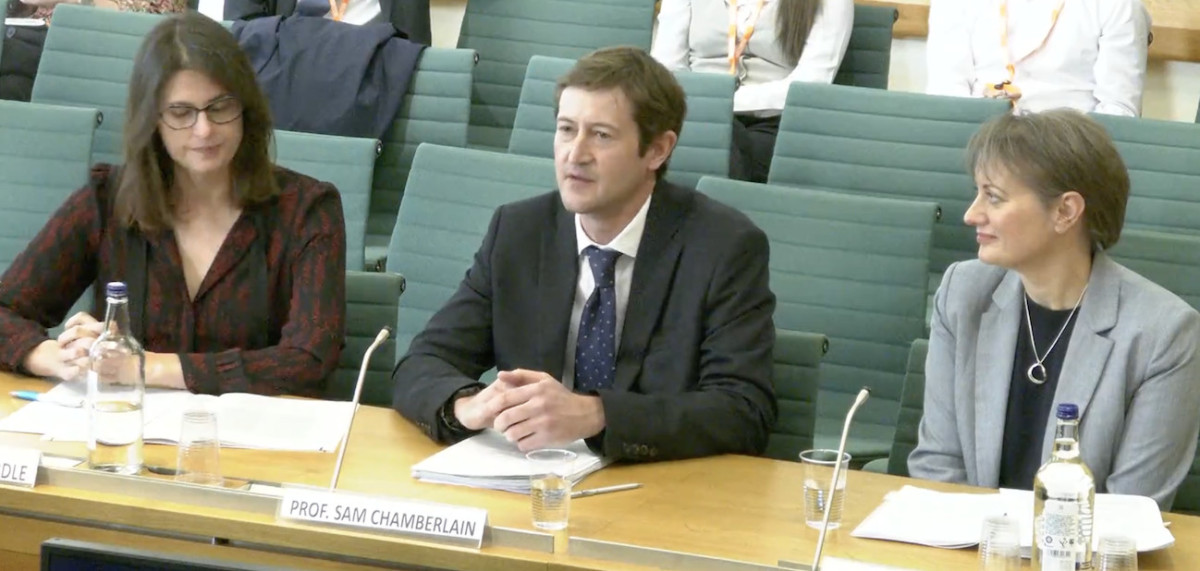
These witnesses were Lucy Hubber, Director of Public Health for Nottingham; Professor Sam Chamberlain, Professor of Psychiatry at the University of Southampton; and Professor Heather Wardle, Professor of Gambling Research and Policy at the University of Glasgow.
The evidence presented by the panel has been formally questioned by wider policy and problem gambling treatment stakeholders. The Player Protection Hub reported the third formal complaint about the evidence submitted to the inquiry, coming from a senior figure at the Gambling Commission.
Previous complaints were lodged by GambleAware and a coalition of treatment and advocacy groups including Deal Me Out, EPIC Global Solutions and Gordon Moody who accused the panel of misleading MPs on a critical debate.
Obtained via a freedom of information request. The letter was authored by Tim Miller, Executive Director of Research and Policy at UKGC, though his name was redacted in the disclosed version. In it, the Commission rebuts statistical claims made during the session by three expert witnesses:
- Lucy Hubber, who stated that “about a third of children aged 11 to 16 are using some form of land-based gambling”;
- Professor Sam Chamberlain claimed that “data from 2020 found that up to 20% of children and young people who gamble already have some degree of problem gambling”; and
- Professor Heather Wardle, who asserted that “skin betting among young adults is as risky as online slots”.
The Commission states unequivocally: “In relation to the first point raised by Hubber, no source was provided for this information, other than ‘from local estimates’. For the points raised by both Chamberlain and Wardle, there was no source provided.”
Tim Miller references the Commission’s Young People and Gambling report conducted annually in partnership with Ipsos, as the definitive set of official statistics.
The 2024 edition found that 27% of 11–17-year-olds had spent money on any form of gambling in the previous 12 months — most commonly on legal or informal activities such as penny arcade machines and betting with friends or family. Critically, only 1.5% of young respondents met the clinical threshold for ‘problem gambling’, with a further 1.9% categorised as ‘at risk’.
The findings, Miller argues, provide no statistical basis for claims that “a third” of children are gambling in land-based venues or that one in five are suffering harm.
The letter also seeks to clarify the UKGC’s complaint handling processes, after witnesses appeared to criticise the regulator for perceived inaction. Miller reminds the Committee that under the Gambling Act 2005, the Commission is legally constrained by a two-year window in which to impose financial penalties after discovering a regulatory breach.
“After two years, we may still conduct a licence review under section 116 of the Act,” the letter states. “However, certain enforcement options—such as fines—may be unavailable.”
Even so, the Commission may still impose licence conditions, warnings, suspensions or revocations where appropriate.
Miller illustrates this with a response to concerns raised by Labour MP Ben Coleman about historic failings, noting that the case in question related to activity that had already been subject to regulatory action, and that the complaint arrived four years after the alleged misconduct began.
The UKGC’s intervention adds to growing scrutiny over how evidence is being curated and challenged during the Committee’s inquiry. With three separate complaints now filed by major stakeholders — two of which have already been published, pressure is mounting on the Committee to account for discrepancies in its handling of the matter.
Moving forward, the Commission emphasised that it “seeks consistency and accuracy in the debate on gambling policy,” particularly when addressing the social impact of problem gambling “as the body responsible for collecting Official Statistics around gambling in Britain, we play an important role in helping to ensure that the public policy debate is well informed by evidence.”