Regulated betting in the Republic of Cyprus grew 8% YoY to more than €1.3bn (£1.1bn) in turnover for 2025. To keep this trajectory going, the local market requires smart supervision and a forward-thinking regulatory strategy.
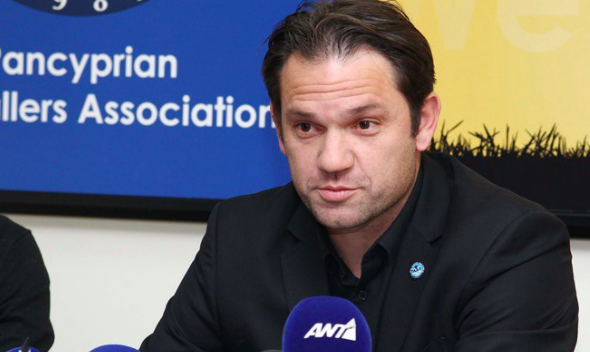
Ahead of his attendance at SBC Summit Lisbon, Panagiotis Trisokkas, President of the Cypriot National Betting Authority, has assured SBC News that this strategy has been nailed down to a T, and produced some interesting ideas that the wider EU sector would be right to consider.
SBC News: Tell us a bit about the legal gambling sector in the Republic of Cyprus. What is its value, how is it taxed, how many players are there?

Panagiotis Trisokkas: The regulated betting sector in the Republic of Cyprus has developed into a mature and steadily growing market. In 2025, total betting turnover exceeded €1.3bn, representing growth of approximately 8% compared with 2024. Online betting accounts for the largest share of activity, while the retail network remains important for employment and the wider economy.
The market operates under the Betting Law of 2019, which established a modern licensing and regulatory framework based on transparency, integrity and strong consumer safeguards. Cyprus currently licenses both land-based (Class A) and online (Class B) sports betting operators under a robust supervisory regime.
The taxation model is straightforward and designed to balance economic growth with public benefit. Licensed operators pay a 10% betting tax on their net betting revenue, together with a 5% statutory contribution. Of that contribution, 4% supports Cypriot sport, while 1% is allocated to programmes that protect young people and individuals affected by gambling-related harm.
From a regulatory perspective, however, success is not measured solely by market growth or tax revenues. Our objective is to ensure that the sector develops in a sustainable manner, supported by effective supervision, high compliance standards and a strong commitment to market integrity and consumer protection.
Additional context (click pointer)
The National Betting Authority of Cyprus does not regulate the broader iGaming sector, as online casino games remain strictly prohibited in the country.
The Republic of Cyprus also has a relatively low problem gambling rate compared to the otherwise high public engagement with the betting sector. One of the main reasons for this is that the country has accepted problem gambling as a public health concern rather than solely a regulatory matter.
SBC News: You have a B2C gambling sector that’s pretty much ring-fenced. How does that affect your problem gambling rates?
Trisokkas: A regulated market certainly helps reduce risk, but regulation on its own is never enough to prevent gambling-related harm.
Our latest national prevalence study showed that around 70% of adults in Cyprus had participated in some form of gambling during the previous 12 months, while around 3% were identified as experiencing moderate-risk or problem gambling. Like most countries, the majority of people gamble without experiencing harm, but for a small proportion the consequences can be serious—not only for the individual, but also for their family and wider community.
That is why the National Betting Authority has adopted a public health approach through its Safer Gambling Strategy. We see gambling-related harm as more than a regulatory issue. It is a public health issue that requires prevention, education, early intervention and access to support services, alongside effective regulation.
This approach also means that responsibility does not rest with regulators alone. Government, licensed operators, healthcare professionals, educators, researchers and civil society all have a role to play in creating a safer gambling environment.
Ultimately, our objective is simple: to ensure that the regulated market continues to grow responsibly, while reducing gambling-related harm through evidence-based policies and strong partnerships.

The country is also home to a dense network of B2B companies, which while signaling the importance of Cyprus as a regional hub for gaming-related technology, Trisokkas tells us it requires a reform that has been “long overdue”.
SBC News: Several prominent B2B companies are based in the Republic of Cyprus. Does the extensive B2B presence require another level of regulatory oversight in comparison to other jurisdictions?
Trisokkas: The expansion of Cyprus’s gambling technology sector inevitably raises the level of regulatory responsibility. A mature B2B ecosystem requires regulators not only to deepen their technical expertise, but also to maintain sufficient visibility over the ownership, governance and activities of businesses established in the jurisdiction, particularly where their products and services are supplied across multiple markets.
For this reason, the proposed new legislation will therefore introduce a dedicated licensing regime for B2B suppliers—a reform that has been overdue and on which Cyprus could not remain passive. We see this as the natural evolution of our regulatory framework. Properly designed, the regime should be proportionate, efficient and largely frictionless for legitimate businesses, while providing meaningful regulatory assurance without creating unnecessary barriers to innovation. It should also strengthen confidence in Cyprus-based suppliers and enhance the Republic’s credibility and standing as a trusted European jurisdiction for gambling and technology.
The Republic of Cyprus recently passed over the EU Council Presidency to Ireland. As an official EU state regulator, what do you think of the proposal of Victor Negrescu, VP of the EU Parliament, to introduce a collective tax on gambling?
First, it’s important to recognise that gambling taxation remains a Member State competence. Any proposal to introduce a new EU own resource of this kind would require unanimity in the Council, making agreement politically challenging.
From a regulator’s perspective, the key question is not whether gambling should be taxed more. The real question is whether taxation supports a safe, sustainable and competitive regulated market.
Any proposal should be assessed against one simple question: will it strengthen the regulated market or unintentionally push consumers towards illegal operators? If the cost of operating legally increases while illegal operators continue to avoid taxes and regulatory obligations, we risk undermining the very consumer protection objectives we are trying to achieve.
Another important consideration is how these revenues are used. From our perspective, any contribution generated by the gambling sector should be transparently reinvested in initiatives that directly benefit society—particularly prevention, education, research, treatment and support for those affected by gambling-related harm.
Cyprus has long recognised that gambling should also contribute to society. Alongside the standard tax framework, licensed betting operators contribute 5% of their net betting revenue to statutory funds. As mentioned before, 4% supports the development of sport, while 1% is dedicated to the protection of young people and the prevention and treatment of gambling-related harm. This reflects our public health approach to gambling regulation, where revenues generated by the sector help fund measures that reduce gambling-related harm and strengthen communities.
For these reasons, we would have reservations about introducing an additional European levy on the gambling sector. We believe greater value can be achieved through stronger regulatory cooperation than through additional sector-specific taxation.
Additional context (click pointer)
Negrescu’s proposition was for gambling firms to be required to pay 1% of their GGR on an EU-wide level. As highlighted by Trisokkas himself, Cyprus has signalled that it would question such a measure.
Instead, the regulator has suggested a pan-European self-exclusion framework that extends protection across borders, which Trisokkas believes will deliver more tangible benefits for consumers.
SBC News: How important do you think cross-sector regulatory collaboration and information sharing, like the regulatory meetings coming in Lisbon, are in this day and age?
Trisokkas: Illegal gambling, financial crime, cybersecurity, artificial intelligence and sports integrity all operate across borders and increasingly across sectors. This means that cooperation can no longer be limited to gambling regulators alone. We need stronger partnerships with law enforcement agencies, AML authorities, payment providers, technology companies, sports organisations and digital platforms.
Events such as the SBC Summit, play an important role because they allow regulators to share intelligence, discuss emerging risks and learn from one another’s experiences. In my view, we should move beyond simply exchanging information and towards more coordinated, intelligence-led cooperation.
Ultimately, stronger collaboration leads to stronger regulation—and that benefits consumers, licensed operators and the integrity of the market alike.
What do you think the main talking points during this year’s regulatory meetings will be? Should we expect illegal gambling to dominate discussions?
Illegal gambling will certainly remain one of the central topics because it continues to challenge every regulated market. However, I don’t think it will dominate the conversation in the same way it has in previous years.
Increasingly, the discussion is shifting from identifying problems to developing practical solutions. We are seeing greater attention on artificial intelligence, digital identity, financial crime, cross-border enforcement and how regulators can make better use of data and technology to become more proactive.
I also expect stronger emphasis on international cooperation. Criminal networks already operate across borders, and regulators need to become equally connected through faster intelligence sharing, coordinated enforcement and closer collaboration with law enforcement, AML authorities and technology companies.
The real challenge is whether regulators can evolve quickly enough to remain effective while continuing to protect consumers, preserve market integrity and support sustainable innovation.
Article contributions from Patrick Killeen
SBC Summit is one of the world’s largest gatherings of betting and gaming professionals. Taking place in Lisbon, Portugal, from 29 September-1 October, the event will bring together 40,000 attendees from across the international industry.
The event encompasses three days of learning, networking, and discussion, alongside a major exhibition featuring leading brands from around the globe.
For more information and tickets, visit sbcevents.com/sbc-summit