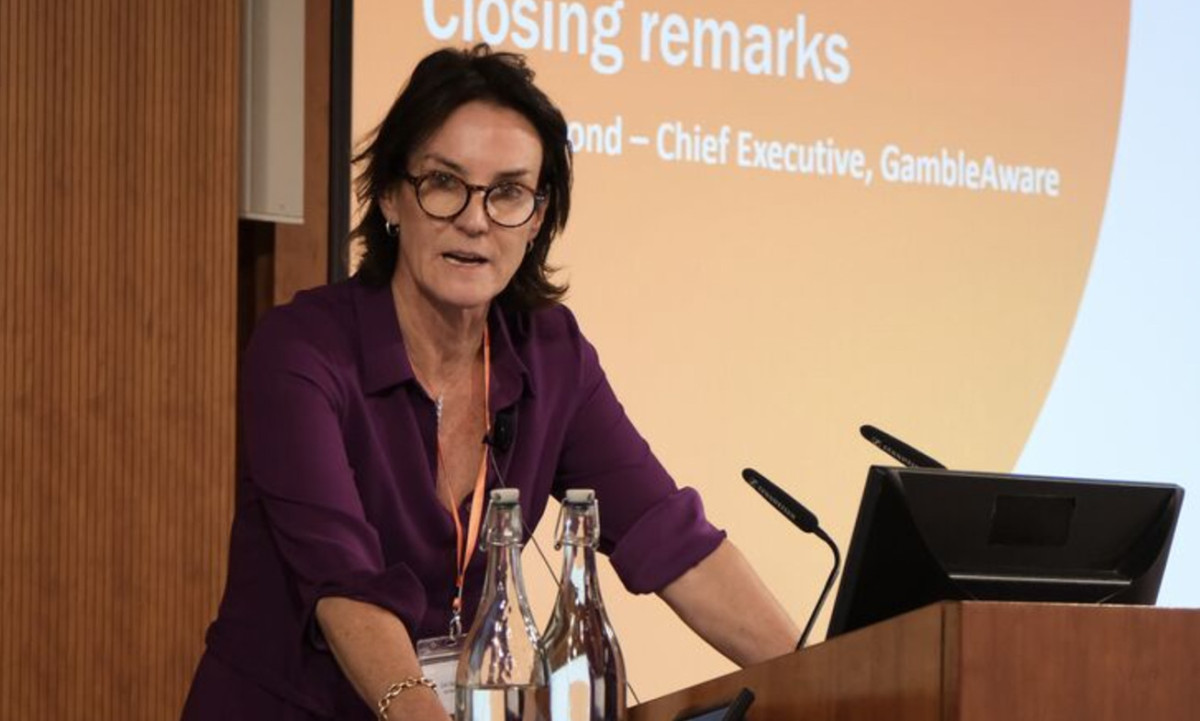
Zoë Osmond, CEO of GambleAware, has hit back at inaccuracies by ministers and public health experts in a sharply worded letter to Layla Moran (Liberal Democrats), Chair of the Health and Social Care Select Committee.
The charity CEO has criticised the Committee for making “unsubstantiated claims” about GambleAware’s record in tackling gambling harms and independence from the gambling sector.
Her letter is published in response to the “oral evidence hearings on gambling harms” of the Select Committee taken on 2 April, ahead of the launch of a new funding structure for gambling harms, overseen the NHS, the Office for Health Improvement and Disparities (OHID), and UK Research and Innovation (UKRI) effective from 6 April.
GambleAware accuses witnesses including Professor Heather Wardle, Dr Sam Chamberlain and Lucy Hubber of undermining critical work across research, education, and treatment — the very pillars of the upcoming statutory levy system aimed at tackling gambling-related harm in Great Britain.
In a clear defence of GambleAware’s previous role, Osmond said that experts had presented: “Ill-informed statements about the independence of third sector services are highly concerning as they ultimately impact service users, risking them turning away from services or not seeking support when they need it.”
The response is a firm rebuttal of inaccuracies that GambleAware has ever been influenced by the gambling industry, despite historically receiving funding through voluntary donations from gambling companies.
“I want to be clear that GambleAware is entirely independent from the gambling industry,” Osmond stated. “Members of our independent Board of Trustees are leaders across the NHS, public health and third sectors and have no connection to the industry.”
She emphasised that the Charity Commission had recently affirmed its confidence in GambleAware’s independence and governance, stating that its funding arrangements have “no impact on our decision-making.”
This defence of independence extended particularly to research – a major area of concern raised during the Committee hearing. Osmond categorically denied any involvement of the gambling industry in shaping GambleAware’s research programme.
“The gambling industry has absolutely no input at any stage of GambleAware’s research commissioning, delivery or publication process,” she wrote. “We do not engage with the gambling industry to discuss or consult on any aspect of our work.”
New system must maintain GambleAware Research
GambleAware states that all research it commissions is subjected to a transparent and competitive process, assessed by external experts and individuals with lived experience of gambling harms, and undergoes peer review to ensure academic integrity and methodological rigour.
In recent years, GambleAware has worked with a roster of respected institutions including the University of Bristol, NatCen, and the Behavioural Insights Team. While it will no longer lead research commissioning under the new system – a role being handed over to UK Research and Innovation (UKRI). Osmond stressed the importance of recognising the value of existing work and preventing its erosion by what she described as unfounded public criticism.
Turning to public health campaigns and education, Osmond also sought to counter what she described as misleading claims about GambleAware’s programmes being compromised by industry links.
“All of GambleAware’s vital campaigns are fully evidence-based and are developed with no input from the industry,” she wrote.
She highlighted the success of the charity’s recent stigma-reduction campaign, which reframed the conversation around gambling harm as a public health issue rather than a personal failing.
The campaign led to a 9%increase in calls to the National Gambling Helpline and, according to an independent academic review, was the only harm reduction campaign that led to a statistically significant drop in gambling urges.
Third Sector cannot be overlooked
On the upcoming transition to the new Research, Prevention and Treatment (RPT) system – funded by the Statutory Levy due to come into force on 6 April 2025 – Osmond offered a cautious welcome, praising its potential for long-term sustainability while warning against overlooking the third sector.
“It is therefore imperative that the third sector continues to play a central role in the future RPT system,” she said, adding that is needed “to ensure that this specialist knowledge, expertise and experience is not lost.”
She also called on the government to provide clarity on how core assets developed by GambleAware will be maintained through the transition. “The GambleAware brand is central to the current system,” she added, citing strong public trust metrics and digital tools used by millions annually.
Among the digital assets singled out were the charity’s self-assessment quiz and spend-calculator tool, both designed to prompt behavioural reflection and engagement with support services. Over 160,000 people have used the self-assessment quiz, with over half taking meaningful action afterwards.
GambleAware supports intervention on Advertising
Perhaps the strongest warnings in Osmond’s letter were reserved for gambling advertising and its growing impact on children and young people.
“Reducing exposure to gambling, and communicating the risks associated with it, must be prioritised,” she urged.
She cited stark statistics from recent GambleAware research: 96% of 11–24-year-olds had seen gambling advertising in the previous month, yet only 38% had noticed any health warnings.
In response, GambleAware is calling for urgent government intervention, including:
- Stronger, clearer health warnings on all gambling ads (e.g. “Gambling can grip anyone”).
- A ban on all gambling marketing at sports events, including removal from kits and stadium signage.
- A pre-watershed ban on broadcast gambling advertising, bringing the UK in line with stricter international standards.
The message was unequivocal: failure to act risks undoing progress and leaving vulnerable individuals exposed in an environment saturated with gambling promotions.
“As the leading charity in Great Britain working to keep people safe from gambling harm,” Osmond concluded, “we hope our expertise and assets will continue to support the sector – and those affected – as this transition unfolds.”