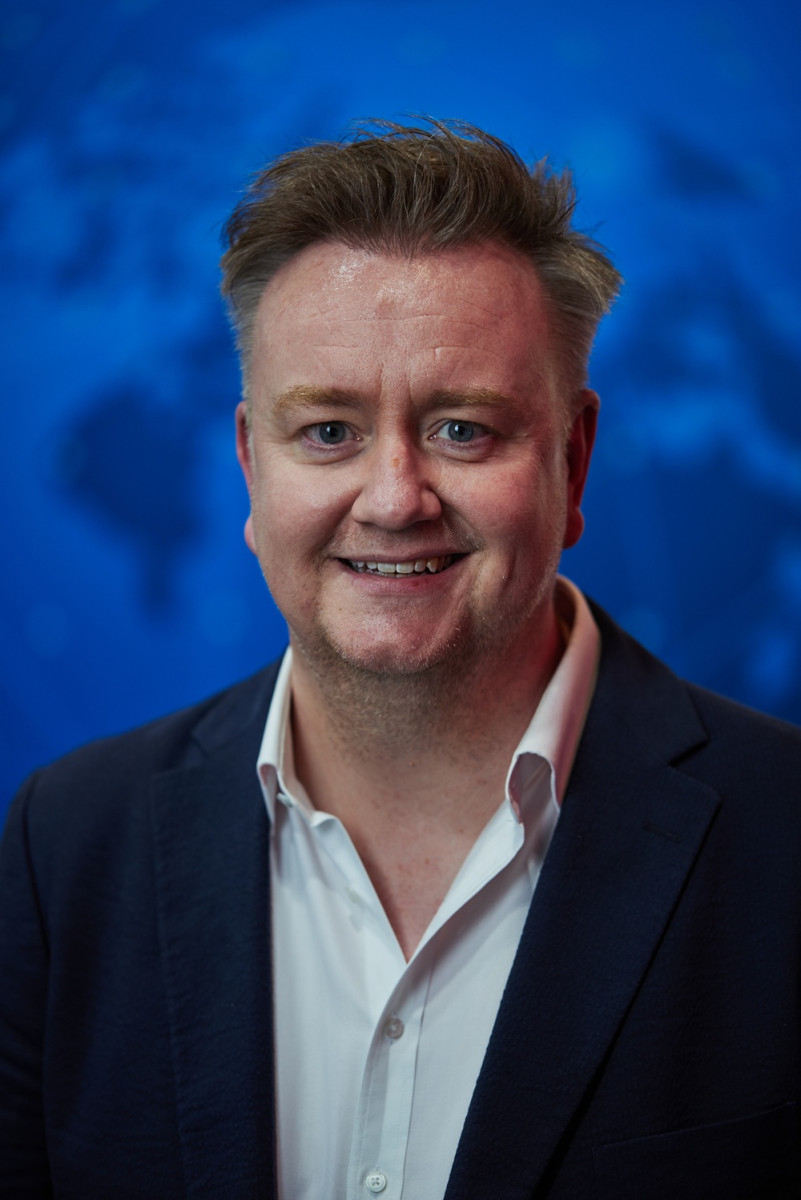
Justin Cosnett, Chief Product Officer at Continent 8 Technologies
Artificial intelligence boasts the capability to transform the future direction of the industry, however, the entire ecosystem must be correctly prepared to harness these possibilities, warns Justin Cosnett, Chief Product Officer at Continent 8 Technologies.
In a wide-ranging conversation to kick-start the maiden event of the year in its shiny, new Catalan home, one of the major talking points of the week was unsurprisingly put under the spotlight.
However, in addition to looking at the technological demands that could accompany an increasing AI uptake, Cosnett also casts his net wider to dissect standout trends and market shifts, an increasing amount of cybersecurity threats, procedures to fully support partners and why one particular alliance will significantly influence the market.
AWS and the Americas
Like many across the entire gambling landscape, the opportunities presented across a range of jurisdictions spanning North and South America have certainly captured the attention of Continent 8.
Opening the conversation, Cosnett honed in on these aforementioned geographies upon being quizzed on what stood out amid a record setting year for igaming and online sports betting trends.
“I think that North American regulatory growth being a little bit slower, allowed many to consolidate and concentrate elsewhere, including ourselves,” he begins.
“We invested more, building our cybersecurity capability and the expansion of the service portfolio. Obviously, we’ve also been getting ready for LatAm, and regarding the new launch of Brazil, we were able to implement early ahead of market opening, rather than the more reactive US, at its height, with multiple states opening over a short amount of time.”
Geographical possibilities were not the only agenda point, with an alliance alongside Amazon Web Services also proving to be a major plus for the company through the past year.
After being selected to join the AWS Solution Provider Program, Continent 8 introduced a range of managed and professional services in a bid to simplify hybrid and multi-cloud environments and infrastructures. This, Cosnett vowed, will expand and get much stronger through 2025.
“We’ve grown our service position prior to last year with AWS,” he continues. “We’re the biggest AWS Outposts hoster in the world, in partnership with multiple customers, and we really wanted to expand upon that capability.
“Many customers will enter a regulated market initially AWS-built and operated, requiring them to require certain AWS capabilities in locations not serviced by AWS regions or local zones. Additionally, we have expanded our product offering to support customers spend management or help optimise, or even offer native AWS services such as EKS, so new market entry customers can go via our cloud. And our cybersecurity services also extend to AWS.
“Cyber doesn’t just apply to where customers are hosted with us. We can now expand into what they have hosted in AWS or Azure or GCP, whether it’s Europe, North America or even Asia.
“It’s growing up that infrastructure stack into more of the services, the databases, the platform as a service, rather than the traditional co-location or rack and power environment, as we used to call it.”
Combatting cyber threat concerns
Cyber attacks have certainly increased in prominence during recent times to worryingly become a common occurrence on a global scale, whether that be in an online and land-based landscape.
The fallout, most notably financially, of such incidents can have a significant impact on those affected. Despite this, Cosnett points to one solution that he believes could eradicate a vast majority of these.
This primarily revolves around the human element, which he notes could well have been exploited to account for approximately 90 per cent of the security threats that have been witnessed.
“Cyber training is of paramount importance,” Cosnett remarks. “We’re seeing a lot more concentration on making sure your staff avoid clicking on links in emails or responding to suspicious messages on WhatsApp, and there’s actually a significant expansion in the training that you need to do for staff awareness.
“The ability to do regular safe test campaigns with your staff is critical. For example, all of our teams are tested minimum monthly.
“The type of test we do changes and adapts in-line with attack types and even specific internal company processes or systems in use. Everyone in Continent 8 is more cautious now about opening email, contact via WhatsApp, and despite AI and the technology in cybersecurity systems improving, the human exploit is there. It’s reportedly to blame for 90 per cent of all cyber failures.”
Regulatory headaches
The gambling ecosystem is certainly not averse to alternations in regulation. However, that does not mean that understanding and adapting to these changes, which can significantly vary across jurisdictions, is an easy feat.
When looking at the strategies that are deployed to assist partners in newly regulated or regulating jurisdictions, Cosnett pulls back the curtain on the inner workings of Continent 8 in ensuring that as smooth a process as possible is felt.
In addition to citing the diligent regulatory and compliance team that it houses, relationships alongside industry associations and law firms are also hailed as making sure that the process for clients to go live, or adhere to these changes, are as seamless as possible.
“A lot of our customers want to be first to market, even live early to start registering customers before market opening so that, especially if timed around a specific sporting event, going live with customers, ready to go is possible immediately,” he comments.
“That really means we have to be in circa three months prior to the actual go live, with any appropriate license or approval, so that customers can get installed, get ready, test their systems, make sure everything is approved by the regulator and then go.
“I don’t think anywhere in the world is going to be any different in the future. If there’s a drop-dead date for going live with a license, we will have to be there early.
“All technology and service suppliers market an ability to get operators first to market. Every single one of our customers wants to have a competitive edge, even though they might all be customers of different services, they all want to be in the market as early as possible, ready to go in line.”
What does the future hold?
A familiar theme evident throughout the discussion once again came back to the fore as the discussion drew to a close by looking at future trends and tech, as well as what the industry can expect to witness from Continent 8 themselves.
Despite first pointing to an expectation that a shift to private connectivity, meaning less disruption, better resilience and faster connectivity, will be evident, one elephant that is consistently lurking could not be avoided.
“I think AI is something that’s not just a buzzword, but it’s going to have a huge impact,” Cosnett states. “We are going to start having very dense, GPU-heavy clouds as a service for those heavy workloads that our customers want to use AI for.”
Adding: “Generally, I think there’s going to be a refresh in terms of hardware and architecture and the way customers approach this. Once you’ve had a big expansion to a market, it’s now coming up to maybe three years in the US, a lot of customers will be looking at what we do with that infrastructure we put in.
“Is now the time to move some workloads into a public cloud? Is now the time to move away, for example, from a VMware solution that has increased in cost, post-Broadcom acquisition? We’re probably going to see a lot of customers trying to do more output with less spend, and looking at technology, how can they achieve that?
“Whether that’s through AI utilisation, or whether that’s through just changing their architecture to be ready for its impact.”
To learn more about Continent 8’s global managed hosting, connectivity, cloud and cybersecurity services, visit continent8.com or contact [email protected].