A retail gambling operator has been fined £150,000 by the Gambling Commission in the midst of political debate about the future of gaming venues on Britain’s high streets.
The Commission fined Hollard Park Leisure, a local AGC operator in the East Midlands city of Leicester, for failing to offer a self-exclusion scheme to its customers. This is a mandatory requirement for licensed UK gambling firms, whether online or offline-focused.
Hollard Park did not participate in a multi-operator self-exclusion scheme until its licence was suspended by the Commission in October 2025. The regulator has now decided its pre-October non-compliance is worthy of a fine.
“Self-exclusion schemes provide a crucial service for people who feel they are suffering gambling harm,” said John Pierce, the Commission’s Director of Enforcement and Intelligence.
“It is important that all operators fully integrate with the scheme and maintain effective safeguards for self-excluded customers.”
Pierce reiterated that all licensed UK operators must ensure “that they are fully participating in a recognised multi-operator self exclusion scheme” and have procedures in place to “identify self-excluded customers from gambling in any of their premises”.
“These are not optional requirements,” he added. “They are fundamental licence conditions designed to protect consumers from harm, and operators that fail to meet them can expect regulatory action.”
Beginning of the end of the 24 hour slot shop?
Though the fine is not an overly significant amount, especially when compared to some of the multi-million pound fines amassed by gaming giants like Entain and William Hill over the past decade, it still casts a shadow over AGCs.
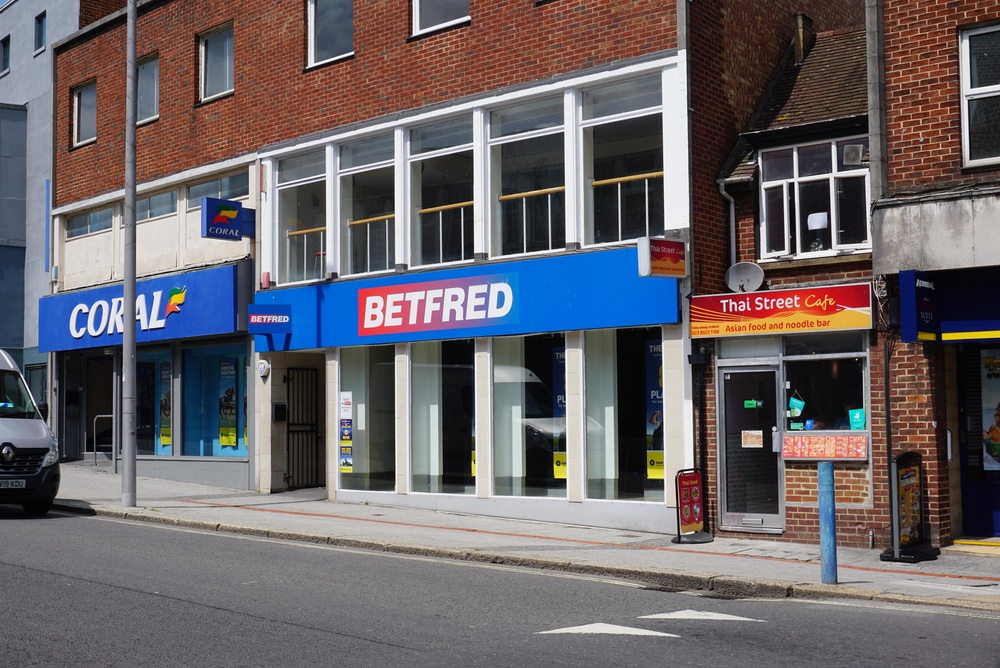
The venues, known by many as ‘24 hour slot shops’, have become subject of a campaign by local governments calling for greater powers to limit gambling venues in their areas.
This campaign gained the ear of Andy Burnham, now Prime Minister, back when he was Mayor of Greater Manchester. Burnham co-signed a letter penned by 38 other local authorities.
Now that he is PM, Burnham is moving to remove the Aim to Permit rule on licensing, which requires local councils to lean towards permitting a gambling premises’ application rather than rejecting it.
He is also flirting with the idea of raising business rates on gaming venues and other ‘anti-social’ businesses to pay for a rate cut for pubs, clubs and music venues. The language around this has been unclear though, and it’s not 100% whether this will target just AGCs or betting shops too.
Nonetheless, AGCs remain a controversial area of the gambling debate. MPs like Dawn Butler, a long-time campaigner against the Aim to Permit rule, have been very vocal in their belief that AGCs and betting shops have a detrimental impact on the UK high street and working class communities.
“The gambling industry says that gambling shops help high streets, but they do not,” she said in a parliamentary discussion last year.
“When a gambling shop is set up, other shops do not want to be there.
“Gambling establishments entice people to come in and then ply them with food and drink, and teas and coffees. There is no point in opening a coffee shop next door when there are free coffees in the gambling shop.”
The betting industry has been vocal in its response to the criticism against it by members of the governing Labour party. The Betting and Gaming Council (BGC), a trade body for major UK betting and gaming firms, asserts the industry’s compliance, for example.
The BGC, whose members include betting shop operators but not AGC operators, claims that its members have an “overall pass rate of 97% between May 2025-April 2026” during Serve Legal benchmarking tests.
Serve Legal tests age restricted retailers to ensure age controls on products like alcohol and gambling are being enforced. This includes, for example, if someone who appears to be under-25 enters a betting shop, and whether or not the staff ask for ID to ensure this person is aged over 18.
“These are excellent results and a clear demonstration of the high standards being delivered across the regulated betting and gaming sector,” said Grainne Hurst, Chief Executive Officer of the BGC.
“Protecting young people is a fundamental responsibility for every regulated operator, and these results show our members are taking that responsibility seriously.”
Nonetheless, as compliant as industry management may strive to make its betting shops, the political shade AGCs have cast in recent years is going to be difficult to shake off.