“They can’t collect legal taxes from illegal money.”
This quote is widely attributed to infamous Chicago mob boss Al Capone, although its validity is debted among historians and ironically it was his lack of tax payments that ultimately earned Capone a trip to Alcatraz prison.
However, Capone wasn’t wrong (if he did actually say the above quote). Money made illegally can’t be taxed unless properly laundered, and this is what happens to the millions in pounds and euros made by the many illegal gambling firms targeting Europe.
So what can the regulated industry do to win back this market share? SBC News takes a look at a pan-European perspective on how to fight the illegal market…
LeoVegas: learn from the dodgy firestick!
The British government has given some notice, enough to grant the Gambling Commission more funding to counter illegal gambling activity and enough to create a dedicated task force but perhaps not enough to take industry warnings into account when deciding tax rates.
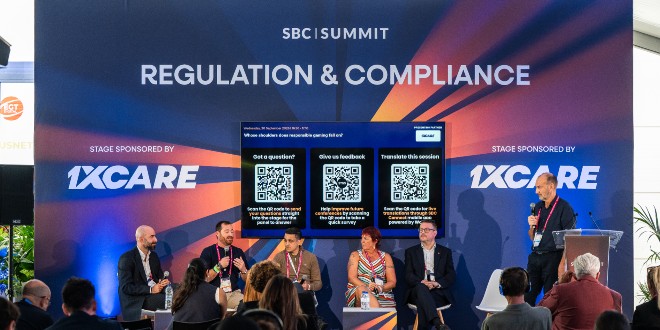
“We spent some time with the Gambling Minister recently, showing some of the work that we’ve done on analysis around the black market,” Richard Clarke, Managing Director of Paddy Power Betfair, told SBC Summit attendees in Lisbon prior to the November budget.
Industry continues to engage with DCMS, which has political oversight of gambling and where the Gambling Minister oversees the work of the Illegal Gambling Taskforce. The reception from the remainder of the cabinet remains chilly, however.
The reversal of ‘Aim to Permit’, new taxes, and the addition of anti-gambling advocacy groups to the list of funded organisations, has further hammered home that gambling is struggling to find friends in government.
The task of winning a government onto your side is never an easy one. And for gambling, it isn’t just the government companies that need to win over – preventing the customer from going to the black market is an industry job as much as a regulator’s.
“I was interested by the stance that the TV broadcasters are now starting to take when they talk about watching football on your dodgy firestick on a Saturday,” said Andrew Wright, Managing Director of LeoVegas UK.
“They’re now using the lens … that you’re 40% more likely, your X% more likely to get hacked if you’re using dodgy firesticks to watch football. They’re trying to give the customer the disincentive to not use the unregulated market in their world.”
The British industry finds itself in the middle of a frustrating waiting game. DCMS’ Taskforce has been consulting a possible ban on unlicensed betting firms sponsoring Premier League clubs, for example, something the regulated industry is clamouring for – but stuck waiting around for.
“We should certainly be making progress in the things that we can control,” said Clarke, citing education as a particular area to focus on – people need to understand, he said, that “the actual consumer experience of being a black market customer is horrific”.
This is something Paddy Power Betfair has been putting across to the Gambling Minister. Making sure the customer is aware of this as well is another critical task.
The Netherlands: know your enemy….
Everyone involved in the European betting business is well aware of the exhausting battle the Dutch regulated sector has been waging against illegal gambling since it was re-regulated in October 2021.
Just prior to the SBC Summit, the Dutch trade body VNLOK took this battle to another level by taking legal action against Meta. Licensed Dutch companies have been frustrated with the prevalence of offshore, unlicensed platforms’ advertising on Meta’s Facebook and Instagram for years now.
“The black market is omnipresent on Meta,” said Bjorn Fuchs, Chair of VNLOK, commenting at Lisbon just two days after his trade body decided to summon the $201bn big tech giant to court.
“I think 90% of the advertisements shown (presumably Fuchs meant gambling adverts here) is black market advertising. Meta is playing a particularly strange role, in my view, they basically say ‘there’s not much we can do about it, we can take it away after we get notification off the regulator’.
“They’re not taking responsibility for sure. If you take away all possibilities for these people (illegal platforms) to advertise, who is going to have visibility ultimately to the Dutch players.”
The Netherlands’ struggles with illegal gambling have become the regulated industry’s ultimate cautionary tale. In the UK it has been regularly cited in debates around advertising, taxation, and everything in between.
For the Netherlands and other nations to get to grips with the offshore black market, authorities need to gain an understanding of it – something Eric Olders, CEO of JVH gaming and entertainment group, remarked is hardly an easy task due to the nature of the black market itself.
“It’s very difficult to measure because of the nature of a black market, but that doesn’t mean we shouldn’t have the discussion on that specific element,” he remarked at Lisbon.
The widely held regulatory channelisation target of 90% has also come under fire from the Dutch betting space. VNLOK’s Fuchs remarked that the government needs to “quit the lullaby of 90%”, as ultimately even if the nine in 10 bettors are gambling with the regulated market, there’s still one who is going offshore.
“The unlicensed market and their volume is way bigger than the numbers now reflect,” he said. “(We need to be) doing proper research, getting the facts on the table and looking at all the facts and aspects, that’s most important.”
“It’s all about people, so let’s focus on the people that are playing in the licensed ecosystem with protection.”
Italy: improvise, adapt, overcome
In conversations around betting black markets in Europe, the UK, Netherlands, Germany and the Nordics tend to come up in conversation the most. Italy, in contrast, is mentioned half as much.
This is not to say that Italy doesn’t have some regulatory issues. The disconnect between the online market, re-regulated in November 2025 and now flourishing, and the retail market, where a government decision is still being awaited, is one example of this.
“The market is changing quickly in terms of many aspects,” Mauro De Fabritiis, founder of MDF Partners, said in Lisbon. “Omni-channel convergence, technology acceleration, changing consumer behavior, continued online growth, shift to casino, increasing market concentration, and a persistent illegal market.”
Davide Diodato, CEO of HBG Online, commented on the online-retail disconnect:
“If we are together and we can have the same weapons that online have, maybe we can bring value to the customer to bring a better experience and also to fight legal market because a thing that illegal markets can’t have that we can have is the bond with the territory, with the signs we have on the street – they cannot buy that.
“They can of course do better bonuses than we do because they don’t pay taxes, they can copy our games, but they cannot bond with the territory like we have.”
With a new market in effect for over a year now, the challenge Italian operators and the regulator, the ADM, has is to encourage citizens to use it. If they want to gamble, they should gamble in the licensed sector – simple, right?
“We need to do something together with the authorities, probably a common campaign to show that this market is now more compliant, more visible, and more credible to the final customer,” said Fabio A. Bufalino, Country Director of Stake Italy.
If there’s one thing Italian gambling firms have learned to adapt around, its marketing. The industry’s marketing and advertising campaigns are heavily restricted, including a ban on sports sponsorships – though operators and clubs still find ways to work together via ‘infotainment’ deals.
The industry’s agility to regulatory change and to external pressures has been central to its rise to become the second biggest market in Europe after the UK, as well as Italians’ famous passion for sports, especially football.
This agility will come in handy as the battle against the black market continues to roll on.