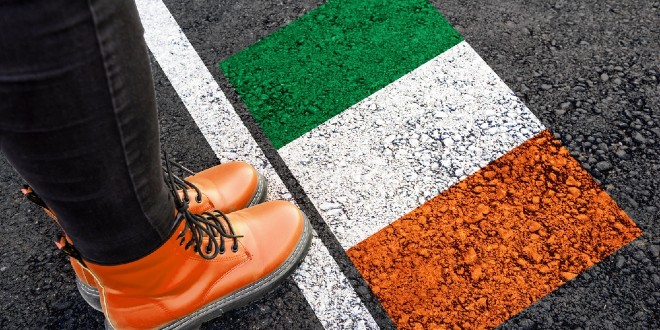
Ireland’s new gambling authority to prioritise compliance and conduct on gambling harms reduction.
The Gambling Regulatory Authority of Ireland (GRAI) will use a ‘full toolkit’ to ensure operators’ compliance with regulations and combat problem gambling, which it believes is much higher than previously expected.
In a double interview with the Irish Examiner, Anne-Marie Caulfield, Chief Executive of the newly formed regulatory agency, stated that rates of harmful gambling in Ireland are ‘10 times higher than had been previously thought’ according to recent data.
This is a worrying figure for the GRAI as it embarks on what it set to be its first year of regulatory activity. The authority was brought into existence by recent legislation, the Gambling Regulation Act 2024, which sought to modernise Ireland’s nearly century old gambling regulation.
Addressing problem gambling has been earmarked as a priority for the regulator, and the responsibilities operators shoulder in meeting this challenge have not been lost on it either – bookmakers can expect the GRAI and its seven-person board to rigorously uphold standards, Caulfield told the Examiner.
Firms that fall foul of the regulator will come up against its toolkit of enforcement actions, summarised by Caulfield in her interview.
“It ranges from a notice of improvement to a €20m fine, or 10% of turnover — whichever is greatest — to a suspension of a licence, revoking a licence and, in terms of the particular officers, key decision makers, there can also be consequences for them.”
Another policy the GRAI is looking to implement is a pre-emptive one. The regulator plans to vet executives of gaming firms as part of the licensing process, looking to stay alert to how top individuals in the industry monitor and address gambling harms.
It can be assumed that this vetting will take place during both new licence applications and during applications for renewed licences.
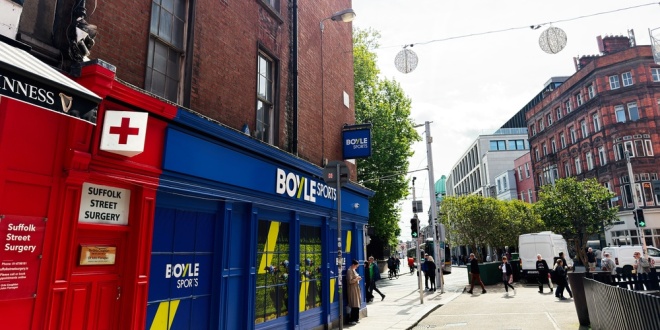
With Ireland a founding market of some notable betting firms like Flutter Entertainment and BoyleSports while also being a target market of some major overseas firms like Entain, 888 and William Hill being notable residents, the impact of these vetting could be far reaching.
As the policy unfolds, it could also be coped by other major European jurisdictions which have turned their legislative and regulatory attention to gambling in recent years – Ireland’s neighbour in the UK and continental counterparts in the Netherlands, Belgium and Germany being some notable examples.
“As part of that vetting process, we will be asking who the responsible individuals are and vetting them individually. Obviously then subsequently, if there’s an issue, we’ll be tracking back to that,” Caulfield told the newspaper.
Under the Gambling Regulation Act 2024, the GRAI has been ordered to establish a National Gambling Exclusion Register to provide individuals struggling with gambling addiction the option to self-exclude from all gambling activities and promotions.
The GRAI will also be charged with designing a Social Impact Fund to finance research, training, and education on gambling addiction. The initiative mirrors the UK gambling’s RET Levy and aims to enhance public awareness, support prevention strategies, and improve resources available for those affected by problem gambling.
The sponsorship conundrum
The Chief Executive has not given as much clarity into how licensing fees will be structured, nor the extent of advertising restrictions in Ireland. The latter is, as in other major betting markets, a particularly contentious issue.
Fees will be ‘proportionate’ across the different types of gaming operators, the Examiner reports, suggesting that the payment may be based on how much revenue each company makes – Flutter Entertainment’s brands would pay much more than say, and of course bookie, for example. Fees will also be the subject of a public consultation soon.
Regarding advertising, the GRAI told Irish media that it will be monitoring developments, but it seems that no concrete policies have yet been set. As stated above, the extent of gambling advertising and particularly sports marketing has become a major point of debate in Ireland.
Credit: mark gusev / Shutterstock
Different sporting bodies have been weighing in on this, and have very different opinions. The Gaelic Athletic Association (GAA), the most widely followed sports league in the country, has shown a keenness to sever marketing links with betting over recent years.
Back in 2020 and 2021 the GAA, alongside the Gaelic Players’ Association (GPA), called for an outright ban on betting advertising. In contrast though, the Football Association of Ireland (FAI), has previously stated that betting partnerships remain a matter for its member clubs to decide policy on.
As in the UK, Netherlands, Belgium, Italy and other nations, Irish sports stakeholders and policymakers have a balancing act to contend with. This is the need for decent consumer protection to be balanced with the financial needs of sports clubs, many of which count betting sponsorships as a key revenue source.
“There are different measures, further measures, that can be taken by the authority. So that is an area that will be looked at in due course,” Caulfield said.