Georgia believes it has proven its technical viability for iGaming enterprises. The challenge now is regulatory… to convince global business, investors and financial institutions that it can also become a trusted international licensing centre.
For years, Georgia has lived in the paradox of the global gambling sector. The Caucasus nation has become one of the industry’s most important technology and engineering hubs.
Global operators have quietly established software centres, live casino studios and customer support operations in Tbilisi, even as the world’s licensing business remained concentrated in Malta and Gibraltar.
Stakeholders in Tbilisi want to change that dynamic. As revealed at SBC Summit Tbilisi (15-16 July), government officials and policy advisers are preparing to present Georgia’s ambition to establish itself as an “international iGaming jurisdiction”, with an official regime to be revealed in August 2026.
The objective is to become an “export regime” for gambling services, solutions and technologies to international markets, positioning Georgia as the regulatory gatekeeper of Europe, Central Asia and the Middle East.

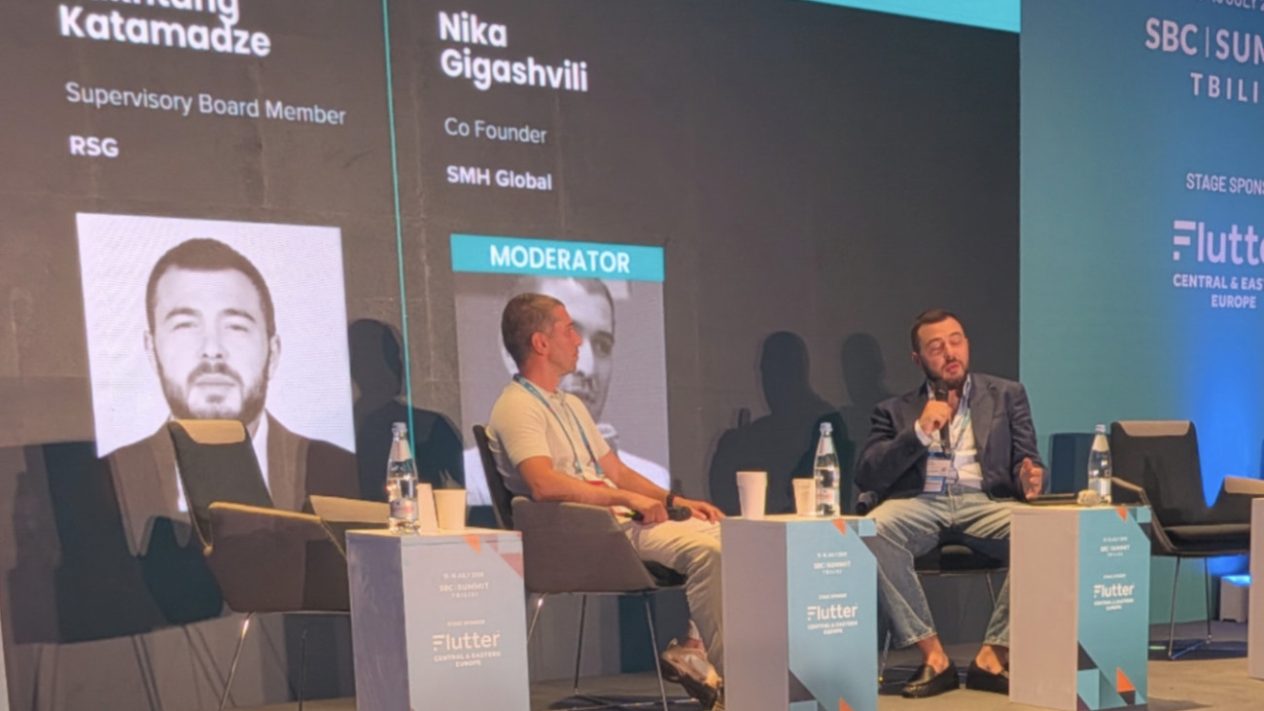
Key policy stakeholder, Vakhtang Katamadze, Supervisory Board Member of RSG told audiences: “August will be an opportunity for Georgia to present itself to the global industry – not simply as another licensing jurisdiction, but as a long-term investment destination.
“We believe the foundations are already in place. Now it is time to demonstrate that Georgia can offer the regulatory certainty and institutional confidence international businesses expect.”
The credentials are in place as Flutter Entertainment, Betsson and Entain operate significant technology and service centres in the capital, alongside dozens of suppliers, software developers and live gaming specialists.
Furthermore, home grown winners include Spribe, SmartSoft, SMH Holdings and Adjara Group, as incumbents of a business that generates circa 2-3% of Georgia’s GDP.
The ambition to launch an export regime underpins legislation that would create a dedicated licensing framework for operators serving customers exclusively outside Georgia.
Under the proposals, international online casino, sportsbook and gaming licences would be available only to companies targeting foreign markets, with Georgian consumers remaining outside the regime. The model seeks to attract foreign capital, high-value employment and export revenues without expanding domestic gambling participation.
Regime is Switzerland not Malta
For Vakhtang Katamadze, the distinction of Georgia’s international iGaming policy is fundamental.
He said: “Georgia is not trying to build a larger domestic gambling market. We are building an export industry.
“The objective is to create an internationally recognised regulatory framework that attracts investment, creates highly skilled employment and exports digital services, while maintaining a clear separation from the domestic market.”
Commercially, the framework is designed to compete. International licence holders would pay a 5% tax on gross gaming revenue, substantially below the rate applied to operators serving Georgian consumers.
Katamadze argues that taxation is only one part of the proposition, a lesson learnt from competitor jurisdictions.
“We do not want to become the Malta of iGaming; we want to become its Switzerland,” he continued.
“Our market is changing. Operators are no longer choosing jurisdictions on tax alone—they are choosing legal certainty, regulatory credibility and banking confidence. That is where Georgia intends to compete.”
The proposed regime places considerable emphasis on anti-money laundering controls, rigorous know-your-customer obligations, transparent supervision and financial governance. Officials believe those standards will distinguish Georgia from jurisdictions that have historically competed primarily on speed and cost.
Georgia’s improving banking and payments infrastructure may prove just as important as its tax regime. Access to reliable financial services has become a competitive advantage as operators face increasing scrutiny from banks, payment providers and institutional investors.
According to Katamadze, financial credibility will ultimately determine whether the project succeeds.
“The licence is only part of what Georgia is offering. The real product is confidence. Every operator, supplier and financial institution must know that our AML controls, KYC procedures and supervisory standards meet the highest international expectations. Without that confidence, no licensing regime can establish long-term credibility.”
Combined with competitive operating costs, young and hungry workforce, and an established technology ecosystem, it presents an alternative proposition to Europe’s traditional licensing centres.
Building an operational ecosystem was the first challenge. Building international confidence is the second.
Recognition from governments, financial institutions and overseas regulators will depend less on legislative ambition than on consistent enforcement and regulatory oversight.
Katamadze is confident that the next phase is about attracting long-term licences and investment, via a credible and trusted programme designed for the nuances of online gambling and its diverse business incumbents.
“The first phase of Georgia’s story was proving we could attract the world’s leading operators. The second is proving we can build the jurisdiction where those businesses choose to expand, innovate and invest. If we achieve that, licenses become the outcome – not the objective.”
“Success won’t be measured by how many licences Georgia issues. It will be measured by whether the next generation of global gaming businesses chooses to build its headquarters, technology and investment here. That’s the market we are competing for.”