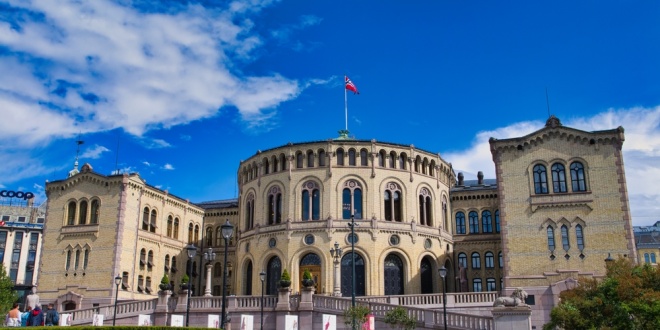
Norway’s monopoly on gambling was labeled as “contrary to all common sense” by one of the leading politicians in the opposition party.
Himanshu Gulati, a senior member of the Progress Party (FRP), spoke at the annual conference of the Norwegian Trade Association of Online Gambling (NBO), where he laid out his arguments as to why the monopoly regime is no longer viable.
“I want us to establish a licensing model,” said the politician from the Progress Party, which after a surge in popularity now scores around 30% in public opinion polls.
“We need a debate about gaming policy that is more fact- and knowledge-based. Even though we have different attitudes and positions in this country about monopoly or licensing models, we must be able to form a common factual basis and realities to relate to.”
Gulati then went on to question the realities around the funding of sports through the current state monopoly operator, Norsk Tipping, and whether what is being done is still enough or the model in place is no longer reliable to effectively support sports.
“Norwegian gaming policy has been closely linked to the income of sports, voluntary teams and associations. We must be able to have a fact-based debate on whether the model we have had for all these years is still the model that will generate the most money for the purpose, given that the channeling is as low as it is when so many people play on gaming sites anyway. They are also fully allowed to do this.”
The Progress Party representative also highlighted that Norway is losing control over gambling harms by keeping the companies who have decades of experience in shaping player protection mechanisms out.
The same goes for anti-match-fixing initiatives, Gulati added.
“Some of the rules and restrictions we have are, in my opinion, contrary to all common sense. I have said within my party for many years that when there is a change [to form a] government, the licensing model in the gaming sector must be the most important cultural policy issue for the FRP.”
As a reminder, most gambling markets in Europe operate on a licensed basis. And while partial state monopolies do still exist, Norway set to become the only country on the continent to maintain a full monopoly over all types of gambling after Finland voted to liberalise its market starting 2027.