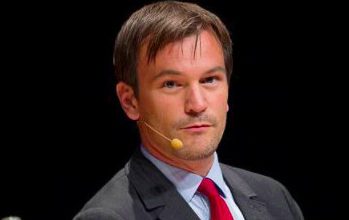
Ahead of his attendance at SBC Summit in September, Gustaf Hoffstedt, Chief Executive Officer of Swedish online gambling trade body BOS, tells SBC News that he thinks it’s time for a rethink of the gambling sector in Sweden.
Hoffstedt’s main issues lay with how the government has handled the market since it re-regulated in 2019, and the state’s direct involvement in it through the state-owned operator Svenska Spel.
“It is tricky that the government, in addition to proposing new laws on the gambling market and through its authority supervising the gambling market, also runs its own commercial gambling company,” he said.
“There are no watertight partitions between the legislative and judicial powers and the state-owned company. Therefore, the government-owned gambling company will always be given positive discrimination.
“I hope that the state sells its commercial gambling company and instead focuses on its unique role, namely, to make laws and ensure that gambling companies follow these laws. I also hope that the entire gambling market is then reregulated, so that competition is also allowed into the lottery market.”
It’s all about regulation
Despite Hoffstedt’s comments that Svenska Spel benefits structurally from being state-owned, history has shown that the operator is no less a target for regulatory scrutiny than its private competitors – most recently illustrated by its legal entanglement with gambling authority Spelinspektionen.
It is also worth noting that BOS firing at Svenska Spel is not a new occurrence. Both entities have been at each other’s throats before, notably failing to find common ground around strategies to protect Sweden’s channelisation rates, which have been gradually on the decline.
In fact, this is a matter that Hoffstedt believes the government is directly to blame for due to its “doomed to fail” conception that the licensed market can be further restricted while tackling the black market at the same time.
“The government has not taken a single measure to increase the attractiveness of the national gambling license market during the current term of office, which ends this autumn when the Swedish people go to the polls again,” he stated
“Instead, the government is relying on the belief that it is possible to tighten the license market further as long as the government simultaneously tries to attack the unlicensed gambling companies. This is a strategy that is doomed to fail.”
Hoffstedt also pointed out that the government is yet to implement its own proposal to criminalise the conversion of Swedish players by unlicensed gambling operators, which he interprets as a failure to do enough on that side as well.
He continued: “It is important to acknowledge that high channelisation can only be achieved if two-thirds of the focus of politicians and gambling authorities is spent on increasing the attractiveness of the licensed gambling market.
“The remaining third can be devoted to smoking out the unlicensed. Today, all the focus is on the latter, and such a one-sided policy will never be successful.”
Is the writing on the wall?
Coincidentally or not, looking at the Swedish gambling market’s financial performance at the start of this year reveals stagnating local revenues across all corners of the sector – from operators like Betsson and suppliers like Evolution, to affiliates such as Catena and investor firms like Angler.
Hoffstedt adds that the market is so interconnected that it moves as one combined entity through both its rises and falls.
“Sweden has the highest proportion of online gambling in all of Europe with just over 68%. With such a high online penetration as Sweden’s, the time when you could gain market share at the expense of land-based gambling is largely over.
“If the online gambling market is to grow, the gambling market as a whole must grow, since it more or less constitutes the same market.”
Recent market movements also saw some of the biggest Swedish gambling firms express clear interest in opportunities abroad. Betsson, for example, acquired Canadian Rhino’s B2C assets to grow its presence there.
Evolution was close to acquiring US-based gambling tech provider Galaxy Gaming, but the deal fell through last second. Like Betsson though, the firm did launch in the newly-established market of Alberta last month.
Regardless, Hoffstedt sees this merely as proof of Swedish firms’ ability to compete internationally rather than a defensive strategy in reaction to difficulties at home.
“Swedish online gambling companies have always grown mainly abroad. Historically, this was because Sweden had a gambling monopoly until 2019,” he said.
“In addition, the domestic market of around eight million adult citizens has been considered too small by Swedish online gambling companies. I do not know how large a share Sweden accounts for in Swedish Evolution, but I would guess one percent.
“The connection to Swedish gambling companies’ willingness and ability to expand therefore has a weak connection to the Swedish national gambling market.”
Despite all, the CEO of BOS has seen some major positives come out of Sweden’s 2019 re-regulation, which has brought an overall market that nurtures healthy competition between responsible gambling operators, as well as a central self-exclusion system and legally binding player protection policies.
In light of Finland’s upcoming liberalisation of its own market in 2027, Hoffstedt added that Scandinavian and Nordic countries continue to prove that it is still possible to create a free and attractive gambling market.
“If Finland does like Sweden and Denmark but skips our most embarrassing mistakes, Finland will become a beacon of light in Europe in gambling regulation.”
Don’t moose out!
On a final note, Hoffstedt reassured moose roaming in Sweden that they can rest easy this September, as he will be hunting for fruitful business relationships in Lisbon instead.
“Apart from my family, the most sacred thing in my life is the annual moose hunt in Swedish Lapland. Unfortunately, it falls on the same week in September as the SBC Summit.
“I prioritise being in Lisbon for the SBC Summit. That says something about how important the event is to me. I am pleased with that decision, and so should the moose be.”
SBC Summit is one of the world’s largest gatherings of betting and gaming professionals. Taking place in Lisbon, Portugal, from 29 September-1 October, the event will bring together 40,000 attendees from across the international industry.
The event encompasses three days of learning, networking, and discussion, alongside a major exhibition featuring leading brands from around the globe.
For more information and tickets, visit sbcevents.com/sbc-summit