

Search
Choose a style
Dark
Light
Features
BREAKING
Featured News
Time to read: min
Will self-appointed Gambling Policy Commission find favour with Labour?
November 9, 2026

BREAKING
Featured News
Time to read: min
Supreme Court suspends legal challenges against Brazil gambling ban
November 9, 2026
BREAKING
Featured News
Time to read: min
Flutter posts Q3 of compounding headaches as net loss exceeds $1bn
November 4, 2026
23:08
BREAKING
Featured News
Time to read: min
Lula & PT told to own the football fallout of Brazil betting ban
November 4, 2026
BREAKING
Europe
Time to read: min
German iGaming’s state of play - uncertain elections, regulatory rollouts and black market battles
November 13, 2025
BREAKING
Europe
Time to read: min
Berlin takes charge of German gambling oversight as regulations up for review
July 3, 2026
BREAKING
Features
Time to read: min
World Cup Betting Tour: Tipico optimistic for Germany’s chance in “13th month” World Cup period
June 10, 2026
BREAKING
Sportsbook
Time to read: min
'Thriving under constraints': TipWin's World Cup game plan in a restrictive German market
April 7, 2026
BREAKING
iGaming
Time to read: min
Germany is losing high-value gamblers to the black market
March 17, 2026
BREAKING
Europe
Time to read: min
Gaming in Germany set for November with high-profile figures booked for key discussions
September 8, 2026
BREAKING
Europe
Time to read: min
Governing party given clear strategy to end German gambling deadlock
June 26, 2026

BREAKING
Popok
Time to read: min
Why PopOK Gaming is ready to compete in Europe after Tipico Germany link-up
May 26, 2026
Gaming in Germany 2026: live coverage from Berlin as further details of German market to emerge
You’ve shared it!
Germany was one of the most followed gambling markets in Europe last year, and all because of the wrong reasons. Our coverage of the 2025 Gaming in Germany conference showcased a compromised licensed offer, an undermined gambling authority, and a regulatory framework awaiting review. One year on, how has the market fared?
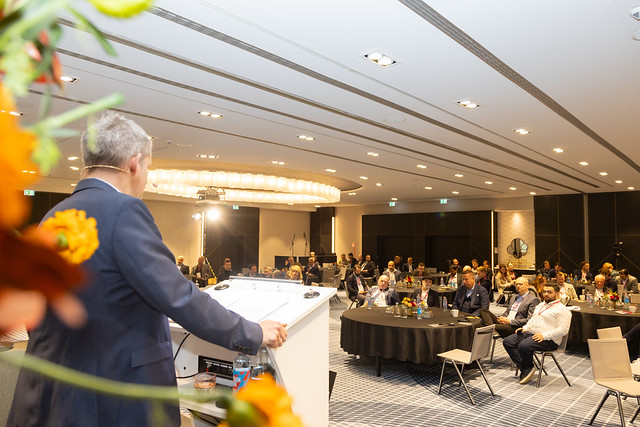
Join SBC News as we land in Berlin once again for the annual Gaming in Germany conference, held at the Doubletree Hilton Ku’damm. Some of the most important discussions today will shed light on the GlüStV 2021 evaluation progress, the legality around prediction markets entering Europe, and the latest around Meta vs the licensed sector.
Coverage from SBC News’ Senior Journalist, Viktor Kayed, will begin around 09:00am GMT/ 10:00am Berlin time, and will continue until the conference ends this evening, at 4:30pm GMT/ 5:30pm local time.
10:00 – The dangers of the sun
We kick off with a keynote by Nadja Wierzejewski, Head of Enforcement at the German regulator Gemeinsame Glücksspielbehörde der Länder (GGL).
Wierzejewski pointed out that the licensed industry and the gambling authority generally have the same common direction – have a sustainable regulated market. But there are some opposing views after all.
One contradiction stems from the estimates about the size of the black market. Wierzejewski said that the GGL’s numbers can’t be far from the truth, given that they echo the report from Euromat, which placed illegal gambling at 25% of the total market share.
Earlier this year, the GGL has previously stated that licensed channelisation rates stand around 77%.
What’s the common ground, though? The view that the black market carries a risk for the player, their life and their health.
“It is our shared objective to avert this danger from players.”.
Wierzejewski added that the player choosing the illegal market is often wrongly portrayed as a conscious decision. In her experience, many do not recognise that this is the case.
If there is a sun, then it must be legal, Wierzejewski said she’s been told by players, referring to the famous brand logo of German licensed giant Merkur Group.
Lastly, she noted that several regulatory measures are starting to show positive effects, such as the payment blocking powers GGL is utilising as a leverage against illegal operators.
But more needs to be done, particularly around the much needed introduction of fully fledged IP blocking powers, as well as the collaboration between licensed operators and gambling authorities.
“I would like to see more from industry operators. You have the players, I have the rules, and only by working together will we see results against the black market.”
10:40 – Our study will counter GGL’s study
Dr. Dirk Quermann, President of online trade body Deutscher Online Casinoverband (DOCV), seems to disagree with the data presented by the regulator, GGL.
Quermann confirmed that the DOCV has commissioned a study that will be published sometime in early December, countering the GGL’s claims that only 23% of the whole German market is illegal.
The regulator’s report, Quermann pointed out, “relies on a 2000 people survey pool and their memories” , contrary to the GGL’s typical high standards when conducting such work.
Quermann promised a much larger study that is representative of the whole German market, showcasing channelisation rates of 36% in Germany against the European average of 79%.
The DOCV President also wants to see separate working groups for virtual slots and sports betting ahead of the GlüStV 2021 final report deadline of 31 December, as he pointed out that there are currently none.