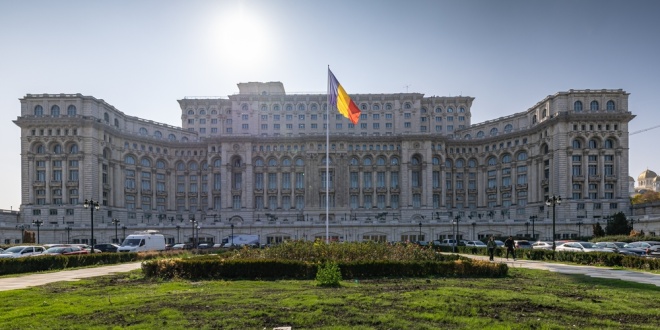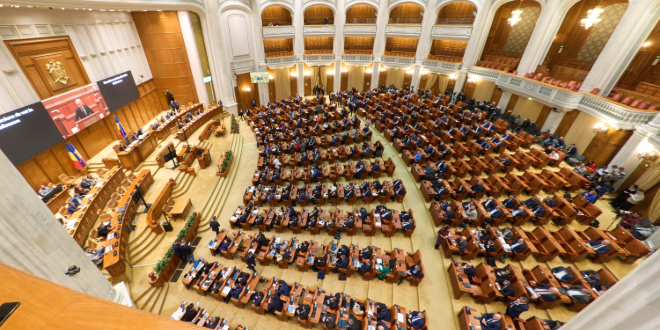
Five months after a political stalemate and three failed attempts to set up a new administration, Romania has just elected its new Prime Minister in the face of Lula Niculescu.
The PM, nominated by President Nicusor Dan, comes amid an agreed six-month truce between rival political powers the Social Democratic Party (PSD) and the National Liberal Party (PNL), putting their differences temporarily on pause to invite some stability and get the 2027 budget through the door.
With all gears into motion, all sectors are now potentially marked to fund the 5.2% of GDP deficit target, and gambling is not an exception.
However, with the gambling authority of ONJN currently on shaky legs, Niculescu has a lot on his hands that he needs to do first before leveraging the sector to strengthen national stability.
Short-term benefits vs long-term sustainability
Niculescu will need to tread carefully not to squeeze operators’ margins even further, which are still adapting to the tax increases introduced in 2025.
Law 141/2025 introduced higher taxes on players’ winnings, with lowest band payouts (up to RON 10,000) taxed at 4%, middle band payouts (RON 10,000 – RON 66,750) at 20%, and the highest band (over RON 66,750) at 40%.
Operator taxes were also increased. The online gambling authorisation tax rate went up from the previous rate of 21% of GGR to 30%. Minimum annual online authorisation tax went up from €400,000 to €480,000.
Fixed-odds betting and gaming machine taxes were also increased.
With costs up for operators, Niculescu will need to consider the effects of a further increase, particularly on smaller operators and land-based venues.
The question will essentially boil down to whether the government is in need of new taxes or whether the collection of existing liabilities will suffice without tinkering with the long-term sustainability of the gambling sector.
Clear path forward for ONJN
The gambling regulator keeps attracting bad press ever since an independent audit found close to €1bn in missing taxes in 2025. This led to the resignation of then-President Gheorge Gheorge and the appointment of Vlad Cristian-Soare in April 2025.
Just over a year later, Soare was dropped this August and replaced with yet another new President, Valentin-Ioan Tomescu.
Over the summer, reports also surfaced of former and current high-level ONJN officials being called in for questioning over a number of alleged bribery cases.
All of the above has of course proven very disruptive for the policy work of the ONJN, which has the major responsibility of licensing, supervising, and enforcing Romania’s gambling regulations.
WIth 85% of the funds collected by the ONJN from licensed operators going into the state budget, Niculescu’s cabinet will need to work towards building up the regulator’s reliability.
The €5m question
Because of how unstable the ONJN is, a key initiative introduced by Soare to deliver a total of €5m in grants to recipients as funding for problem gambling initiatives has now been temporarily suspended by the new authority President.
A total of 54 projects were approved in July 2026, but the regulator’s new leadership put a lid on it on 2 October, arguing that a review into the subsidiary programme is needed to assess its legal and budgetary basis.
Niculescu and his government will need to demonstrate a high level of transparency to resolve the stalemate and prove its commitment to addressing gambling-related harms in the country.