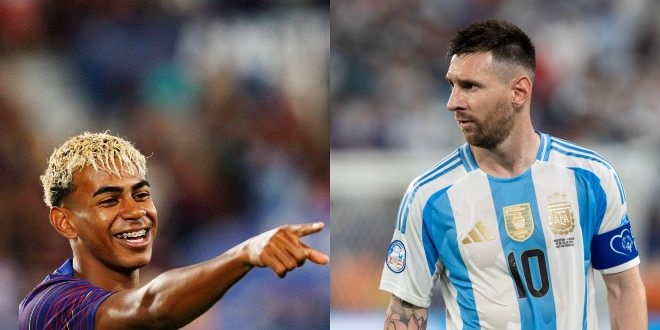
With the 2026 FIFA World Cup fast approaching, early predictions are already taking shape as fans and analysts look ahead to football’s biggest spectacle.
Thanos Ntakis, Cross-Functional Manager at Altenar, Carlos Sabanza Cenzano, Head of Sponsorship at Codere Online, Jeevan Jeyaratnam, Chief Betting Officer at Abelson Sports, and Leo Barker, Vice President Commercial for EMEA at Optic Odds, share their perspectives on the leading contenders, Golden Boot favourites, potential breakout stars, and how the expanded format and unique hosting conditions across the Americas could impact the tournament.
Who is your favourite to win the 2026 FIFA World Cup, and why?

Thanos Ntakis: I’m going with France. Spain, England, Brazil and Argentina will all be right in the mix, but France just looks like the safest pick: elite depth, tournament experience (let’s not forget that they won in 2018 and lost the final in 2022), and the kind of match-winners who can drag them through tight knockout games.
They’ve been priced right at the top of the market alongside Spain, and their recent World Cup form speaks for itself.
Carlos Sabanza Cenzano: It’s hard to separate the top three for me. France has that tournament DNA and always seems to peak at the right moments.
Spain probably plays the most coherent football of anyone right now and knows how to win tournaments ugly when they need to.
England with Harry Kane as captain and a squad that finally looks ready feel like a real threat rather than just a hopeful one. If any of those three win the trophy wouldn’t surprise.
Brazil always feels like a sentimental pick rather than a rational one at this point, but don’t rule them out on nearby home soil either.
Jeevan Jeyaratnam – Given this is betting forum, my pick revolves around my idea of a value bet. Spain (9/2) and France (5/1) are undoubtably solid favourites but with so many changed variables in this World Cup it is very hard punt at short odds.
A little further down the list are the Nations League winners, Portugal. With 12/1 available in a couple of places, in my opinion, they represent a better punt. In defence and midfield, it is hard to find stronger starting lineups. The big question mark is, as usual, Ronaldo. His continued presence at the age of 41 can be a concern. I just hope Roberto Martinez is strong enough to deal with him, should he fail to fire in the early games.
Goncalo Ramos would be his logical replacement but has been a sub for most of this career and it is a big ask for him to step up. There are midfield options that may be preferred in a false 9 role but it is hard to see Martinez upsetting Cristiano. As bigger priced alternatives to Portugal, I like Colombia and Türkiye.
Leo Barker – I’ll hold my hands up straight away. I’m an Arsenal fan, and that probably colours this answer more than I’d like to admit. Spain were my pick going into this week. They won Euro 2024 convincingly, look the most well-rounded squad, and the market agrees.
France are right there too, and neither would raise an eyebrow. Then Arsenal won the Premier League for the first time in 22 years, and suddenly I’m looking at England differently.
We’ve been here before. I’m old enough to remember the Golden Generation, so much promise, so little delivery. That sticks. This England squad hasn’t exactly been convincing either, with inconsistent qualification and a poor showing against Japan.
But Saka and Rice arrive off the back of a title. Rice was arguably the best player in the league this season, and Saka is getting back to his best. Add Villa’s Europa win, and there’s more confidence there. That kind of momentum can carry. England have the quality, Tuchel the pedigree. It’s always been about mentality, and the belief feels stronger. Slightly biased? Probably. But England are my pick.
Who is your pick to take home the Golden Boot?
CSC: Kylian Mbappé feels almost too obvious. If France go deep which I expect he’ll rack up the numbers. The wildcard I’d watch is Lamine Yamal. If Spain string together a long run, he could genuinely steal it. Still very young for this stage, but that’s almost the point.
Michael Olise has been electric and if he gets the starts, he has the quality to go on a real scoring run. Luis Díaz is someone I really bet in this market. He thrives in big moments, Colombia will be riding on emotion, and he has that ability to carry a team almost single handedly.
JJ: The format change makes Golden Boot an interesting market. On one hand you may expect the favourites to perform with more consistency as they have more games to play and will play against, generally, weaker opposition.
On the other hand, the increased format means a longer tournament and so coaches could well rest players at the end of the group stage. With only 16 teams exiting the tournament after the group section, there will be a number of teams with very little jeopardy going into MD3.
Mbappe’s injury concerns and stress from his increasingly fractious role at Real Madrid means he’s an unsteady 6/1 fav, for me. With Kane at 7/1, those pair are a distance ahead of 12/1 Messi in the market.
I’ll be looking at bigger each way prices- Kenan Yildiz (150/1 Türkiye) and Luis Suarez (40/1 Colombia). Deniz Undav is also interesting (80/1 Germany) if given an opportunity.

LB: Kylian Mbappé is the obvious choice. He won the Golden Boot at the 2022 World Cup with eight goals and although no player has retained the award, he looks more than capable. France have a favourable group, he is their main man, and his tournament record is extraordinary.
Harry Kane at 7/1 is the value alternative. The Bayern Munich striker has scored over 50 goals this season and remains England’s penalty taker. For a longer-shot option, Lamine Yamal appeals at bigger odds. Spain are favourites to reach the final, giving Yamal the chance to play the most matches.
TN: I’d take Kylian Mbappé. It is the obvious pick, but sometimes the obvious pick is obvious for a reason. He’ll be France’s main man, he already has a huge World Cup record, and if France go deep, he should get enough games to rack up goals.
He’s also listed as the early Golden Boot favourite in current markets. I know that I didn’t invent fire here, but this just makes total sense.
Which players could emerge as breakout stars on the World Cup stage?
JJ: Even with an expanded format, many of the players at this summer’s World Cup will be known to many fans, already. Of those less well known to the casual fan, Bosnia’s Esmir Bajraktarevic is one to keep an eye on; the PSV winger is an exciting but unpredictable talent.
With doubts about the match fitness of Kai Havertz and with few other options up front, an opportunity may present itself for Stuttgart’s prolific Deniz Undav, who has enjoyed a highly successful season in the Bundesliga.
Another PSV starlet, Ismael Saibari of Morocco is another who has been in great form all season and could really announce himself on the world stage.
LB: Every World Cup produces global superstars. 1998 gave us Thierry Henry and Ronaldo Nazario. 2014 introduced James Rodriguez. 2018 confirmed Mbappé. Qatar 2022 brought Gavi, Pedri and Enzo Fernandez. This one should be no different.
Rayan Cherki is impossible to ignore despite his habit of irritating opposition fans. Creative, fearless and central to Pep Guardiola’s attacking system, he could thrive if France rotate Mbappé during the group stage.
Nico O’Reilly has emerged as an attacking weapon from left-back and may solve a long-standing issue for England. Nico Paz, developed at Real Madrid and now flourishing under Cesc Fàbregas, has the technical quality to stand out on the biggest stage.
Meanwhile, Désiré Doué looks primed for a breakout tournament after an excellent season with Paris Saint-Germain.
TN: A few names jump out: Lamine Yamal for Spain, Désiré Doué or Michael Olise for France, and Endrick or Estêvão if Brazil gives them real minutes.
This tournament feels made for a teenager or early-20s attacker to announce himself properly, it’s really a perfect chance for these players to find their breakthrough.
I’d especially watch the French wide players because Mbappé will draw so much attention that someone else could get space to shine. So Michael Olise will do wonders if you ask me – he’s had an excellent season with Bayern Munich as well.
CSC: Morocco showed in 2022 what African football is capable of, and they’ll arrive in 2026 with even more confidence and a generation of players ready to announce themselves on the biggest stage.
Colombia is another team that could genuinely surprise beyond Díaz there’s real quality running through that squad, and young players who are hungry to make their mark.
We must keep an eye on Germany’s new generation. They’ve been rebuilding with some genuinely exciting young talent (Pavlović & Lennart Karl) and a World Cup on the continent next door with massive German support travelling could be the moment a few of them truly arrive.
Could the expanded tournament format create more surprises in outright and long-shot markets?
LB: Absolutely, and this is where the most interesting betting angles lie. The expanded field statistically favours dark horses. More knockout spots, new teams, and a greater chance of a favourable bracket means outsiders can dream a little longer than in the old 32-team format.
The Round of 32 adds a layer of uncertainty for outright backers. Favourites must now win one more high-pressure knockout match, making the route to the final more dangerous and increasing the importance of bracket position.
A lopsided draw could stack heavyweights on one side or open the door for a surprise semi-finalist. That added volatility creates value.
Teams like Morocco, Japan, Colombia and Ecuador have enough quality to make deep runs if the draw falls kindly, while the increased number of matches offers more opportunities for in-tournament trading swings.
TN: Definitely. With 48 teams, 12 groups of four, and a new Round of 32, there’s more room for chaos: more debutants, more third-place qualifiers, and more knockout matches where one mistake can flip the whole tournament. That probably helps long shots to make a headline run, even if winning the whole thing still heavily favours the elite squads.
CSC: With 48 teams, you’re almost guaranteed a few genuine upsets in the group stage more than we’ve seen before. The longshot markets could be wild because a smaller nation only needs to string together a few results to reach the quarters. The 2022 Morocco run showed what’s possible.
JJ: As mentioned earlier, the extended format and general weaker profile of the competition participants could alter things in a couple of ways. Either more rotation or more opportunity to rack the goals up. Generally, a longer tournament will favour the favourites but given the elongated knock-out stage, there are sure to be a number of shocks in the round of 32 and round of 16.
Perhaps more interesting, are a number of rule tweaks making debut at this competition. Enforced water breaks in each half threaten to disrupt the rhythm, while IFAB’s latest change to substitutions, timed substitutions are a total unknown:
Players have 10 seconds to leave the pitch once substituted. If they exceed it, the incoming player must wait one full minute before entering, leaving the team temporarily a man down.
How might hosting across the Americas influence outcomes for certain teams?
TN: The travel, heat, humidity and altitude could matter more than people think. The tournament is spread across the USA, Mexico and Canada, with very different conditions from city to city; research has flagged extreme heat, altitude in Mexico City and Guadalajara, and long travel as factors that can affect player health and performance.
Teams with strong squads, smart rotation and good preparation should benefit – another reason why I like France’s chances because of their elite depth.
CSC: The altitude in some Mexican venues is a real conversation it historically favours teams with physical conditioning and hurts European sides who aren’t prepared for it.
But beyond the geography, there’s a human factor that I think is massively underrated: the sheer number of Mexican fans who will fill US stadiums.
The Mexican community across the States is enormous, and when El Tri plays whether in Miami, Los Angeles or anywhere else it will feel like a home game in every sense. The atmosphere will be something else entirely and that matters.
Mexico will be under pressure to finally get past the quarterfinals, a barrier that has haunted them since they reached the quarters on home soil back in 1986.
Forty years after they have the closest thing to a home crowd again. That emotional weight, combined with genuine fan support across the border, could be the push that finally gets them through.
JJ: The 2026 World Cup, spread across USA, Canada, and Mexico, introduces the most extreme geographic and environmental variation in tournament history.
The 2026 tournament spans 4,300 km east–west and 4,000 km north–south; the largest footprint ever, meaning teams may travel thousands of miles between group matches, crossing multiple time zones.
Mexico may be the host that benefits most, certainly in the early stages. El Tri plays two matches at Estadio Azteca, which is situated at 2,240m above sea level.
This iconic stadium’s altitude will be tough to overcome for South Africa and Czechia who face the hosts there. The other group game is played in Guadalajara, which itself is 1,550m above sea level.
In contrast to previous tournaments, teams will be travelling the length and breadth of the Americas, meaning no static base location and meaning accumulating high levels of travel fatigue.
Add this to the expected temperatures in many of the venues and this could certainly impact the quality and level of play. There is a definite host advantage and a likely disadvantage for northern European and East Asian teams who have extreme travel as climate swings to counter.
LB: The tri-host setup adds a fascinating layer to tournament predictions. History shows host nations regularly outperform expectations, with familiar conditions, crowd support, and reduced travel creating advantages that markets underestimate.
For the USA, this could be the moment the programme announces itself on the world stage. Home advantage could propel the USMNT to a quarter-final, with the right draw, while Mexico, opening the tournament at the Estadio Azteca, brings altitude, atmosphere and huge emotional intensity into play.
The underrated angle may be an advantage for South American nations. Argentina, Brazil, Colombia and Uruguay will face far less travel and climate adjustment than many European teams, a subtle but meaningful edge across a demanding seven-match tournament.