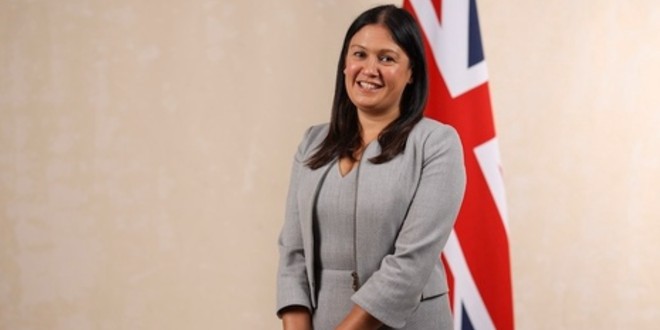
Culture Secretary Lisa Nandy has quit social media platform X, citing an influx of “abuse and misinformation” which is plaguing the site.
Nandy, who heads up the Department for Culture, Media and Sport (DCMS), confirmed that the rest of her department will also leave X.
DCMS is the primary political authority for UK betting and gambling, overseeing key regulatory decisions and government processes affecting the industry.
“I’ve decided to leave this platform and my Department will too,” she wrote.
“A platform originally designed for free speech and expression now favours abuse and misinformation over meaningful debate.
“It isn’t healthy for our democracy or our communities and I don’t want to support it.”
There’s a certain irony to the decision, given that aside from sectors like gambling and sports, one of DCMS’ most important remits is as the government department responsible for social media.
While Ofcom is the independent regulator for online safety in the UK, DCMS is responsible for government policy on the media, creating the legislation and strategic frameworks enforced by independent bodies.
This includes social media, though this is a remit it seems to share with the Department of Science, Innovation and Technology (DSIT).
It was DSIT, not DCMS, which led the introduction of the planned ban on under-16s using social media apps like X, Instagram and TikTok – one of PM Keir Starmer’s flagship policies before he announced his resignation. The department has been heavily involved in this, though, directly collaborating with DSIT.
Nandy’s decision to pull her and DCMS’ accounts has not gone uncriticised by both Labour opponents and the wider public.
Conservative Leader Kemi Badenoch responded by saying: “DCMS is supposed to counter and deal with misinformation, not run away because it’s all too much.”
DCMS, gambling and social media – an uneasy relationship
As noted above, Nandy’s department is also responsible for the policy, strategy and laws governing the gambling sector – one which is very much a trending topic on X.
X has become a hotbed for discussion around gambling harm prevention charity funding and Financial Risk Assessments (FRAs) – otherwise known as affordability checks – as well as a springboard for unlicensed operators to market their products.
Social media has become a defining talking point in the conversation around illegal and unlicensed gambling in the UK, with the regulated industry routinely protesting about the extent to which illegal operators market themselves via platforms like Facebook, Instagram, and X.
Tim Miller, outgoing Gambling Commission Policy and Research Director, was particularly critical of Meta’s lack of action around this, while Ladbrokes and Coral owner Entain has become very vocal about influencers prompting unlicensed brands on platforms like X.
To counter the black market, DCMS launched the Illegal Gambling Taskforce, headed up by Gambling Minister Baroness Fiona Twycross. Curbing illegal advertising, whether on social media or otherwise, is a top priority for the task force.
Nandy’s decision to remove her department from X should not mandate Baroness Twycross to leave the platform too, though she has not posted since the announcement.
X and the Illegal Gambling Taskforce
In fairness, DCMS’ Illegal Gambling Taskforce is not limited to ridding X of illegal gambling advertisements.
It is in the midst of a series of consultations planned around payments and a possible ban on unlicensed companies sponsoring English sports teams – something which Stake clearly does not anticipate being enforced given its continued sponsorship of Everton, announced earlier this week.
It would be naive to think that Nandy and the rest of the DCMS will not be updated on the goings on of the gambling industry on X, but her – and its – departure from the platform is one that has raised many an eyebrow.
It also begs the question – if DCMS characterises X as a platform which enables “abuse and misinformation”, and is problematic enough to leave it entirely, is enough being done to address other harms there, like the widespread misinformation contained in illegal gambling advertisements?
Lord David Frost, a figure who has previously voiced his concerns over affordability checks, commented: “I can tell Lisa Nandy that, when I was doing the Brexit negotiations, I got waves of disagreement and often abuse on this platform in its pre-Elon form (and I still do to some extent).
“I don’t complain. There’s a mute button for the worst. It’s the price of also reaching lots of people.
“Lisa Nandy needs to toughen up a bit. She also needs to remember she is a Secretary of State who should be using all relevant channels to communicate.”
It wouldn’t take long for an X user to see that the platform has been infiltrated with “AI slop”, political bias and misinformation.
This has gradually gotten more and more prevalent ever since the platform was taken over and rebranded by SpaceX owner Elon Musk.
Nandy and DCMS not the first in “X-odus”
DCMS is not the first governmental department to quit X, as the Attorney General’s office left the platform just last month.
Richard Hermer told his office to stop posting on there unless it is with the intention of combatting misinformation.
Nandy has confirmed that she will remain active on her Instagram, Facebook and LinkedIn accounts.
Her decision to remove both her own and DCMS’ accounts from X is a clear indicator of just how significant platforms like this are in modern communications, and how the butterfly effect of this can be seen across multiple industries and aspects of society.