Burnham has been Prime Minister for less than a month but has already been revamping many policies in the UK, and change for the gambling industry is imminent.
What is Aim to Permit? And why is Burnham against it?
The UK faces a number of challenges in 2026 – economic stagnation and inflation, climate change which has left more than half of England in drought, a housing crisis, high costs of living, and the impact of overseas conflicts in Ukraine and the Middle East.
With all this in mind, you could be guilty of thinking that gambling may be further down the list of priorities for Burnham’s Labour government.
That is not the case, however, as the PM has pledged to revoke the Aim to Permit rule around gambling licences, though his government likely sees this as beneficial to easing some of the burdens the UK is facing, particularly relating to the high-street economy.
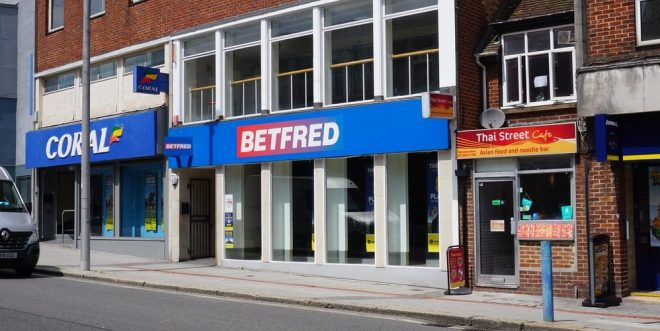
The Aim to Permit rule limits the ability of local authorities to prevent betting shops and 24-hour slot machine venues opening in their area.
But Burnham, a long-time sceptic of the gambling sector, is now set to scrap this in favour of supporting community spaces over businesses that “can cause social harm”.
Burnham’s “dodgy businesses” plan a popular one
In a post on X, Burnham lumped betting shops in with other “dodgy businesses”.
“Vape shops. Betting shops. Dodgy businesses,” he wrote.
“If you look at your high street these days and think ‘who asked for this?’, you’re not alone.
“I’m doing something about it. We’re giving local people and councils more control over what opens, and tougher powers to crack down on businesses that aren’t good for our communities.
“For too long, Westminster has stood by while our high streets declined. That ends now.”
Burnham is clamping down on betting shops on the high street. Credit: R Heilig / Shutterstock
As with nearly every governmental decision, this has had a mixed reaction, though reports show that the plans have scored an “average favourability” rating of 80.4.
A vocal proponent of the decision has been the independent think tank, the Social Market Foundation (SMF).
Jamie Gollings, the SMF’s Deputy Research Director, said Burnham’s plan “puts decision-making back where it belongs” after the venues have been “proliferating in the poorest communities”.
However, Vaughan Lewis, former Chief Financial Officer at evoke, made clear the involvement the SMF has had in this decision.
He wrote on his Substack: “The SMF’s deputy research director co-authored the report that called for Aim to Permit to be scrapped, and this organisation published the 40% machine duty proposal six weeks ago.
“Win the licensing argument, move to the tax argument. That is the ratchet, running on schedule.
“The second is the evidence. The government says these venues have spread rapidly.
“Gambling Commission data has AGCs down from 1,610 to 1,415 over the last decade, and betting shops down by a third. A policy justified by proliferation, aimed at a sector in retreat.”
Unintended consequences
Interestingly, Lewis also noted the potential unintended dangers that the scrapping of the Aim to Permit rule could have on shops that remain open.
“There is a third effect nobody intended. Restricting new premises makes existing licences scarcer and therefore more valuable,” he continued.
“This gives operators a reason to keep loss-making shops trading for their option value rather than their trade. A high street policy whose consequence is more struggling shops, held open for potential future resale.”
Another proponent of Burnham’s decision has been the Centre for Social Justice (CSJ). That think tank has also been a critic of the gambling industry in the past.
The organisation released the “Not a Game” report, calling for better protection measures around gambling.
Today, Joshua Nicholson, Head of Housing and Communities at the CSJ, mirrored Burnham’s post when saying: “The government is right to give councils new powers to say no to these dodgy shops. High street renewal is vital to restoring security within our communities.”
Peers for Gambling Reform (PGR) also “strongly welcomed” the decision.
“This is a significant milestone for local communities and an important move towards putting the prevention of gambling harm at the heart of decisions about our high streets,” its Chair, Lord Foster of Bath, said on LinkedIn.
“I look forward to working with the Prime Minister and his team in helping bring about the abolition of Aim to Permit as soon as possible.”
Big blow for under-pressure bookies
Of course, there are major, and valid, concerns about the presence of gambling venues on the high street, not least 24 hour adult gaming centres (AGCs).
The fact gambling venues tend to be congregated in some of the most deprived areas of the UK is clearly a major problem. A BBC report back in December concluded that more than half of AGCs are located in the UK’s most impoverished areas, for example.
However, in the last 15 years, the number of these establishments have reduced from 12,207 to 8,234. The number of betting shops has also declined from over 9,000 to under 6,000 between 2012-2025.
The Betting and Gaming Council (BGC), the trade body for UK betting and gaming, pointed to the amount of jobs that have been lost due to shop closures across the country.
“Betting shop numbers have fallen by over a third since 2019. Around 3,000 shops have closed and over 15,000 jobs have already been lost,” a spokesperson told SBC News.
“It is wrong to lump highly regulated, licensed betting shops together with rogue or criminal businesses. Betting shops still support 37,500 jobs, bring vital footfall to neighbouring businesses and, for many customers, are valued community hubs.”
Many would – and do – disagree that betting shops are “valued community hubs”, but there are definitely two sides to this story.
Companies such as evoke’s William Hill; Entain’s Coral and Ladbrokes; Flutter Entertainment’s Paddy Power; and Betfred, have all announced shop closures so far in 2026.
They have also all pointed out that they are losing market share to the illegal market in the midst of the continued pressure on the industry. The regulated industry often points out that while it has mandatory safer gambling and player protection measures in place, the undervalued one does not.
While Burnham may view clampdown on betting shops may be a necessity to revitalise the UK high street, it may well come at a cost to a large handful of businesses.
SBC News has approached Entain, BOYLE Sports and evoke for comment. Entain, Betfred and JenningsBet wished not to comment.









“Dodgy businesses” or “valued community hubs”?: Reaction to Burnham’s high street revamp
You’ve shared it!
Reaction to Andy Burnham’s decision on the UK’s high street bookmakers is already flooding in left, right and centre.
Burnham has been Prime Minister for less than a month but has already been revamping many policies in the UK, and change for the gambling industry is imminent.
What is Aim to Permit? And why is Burnham against it?
The UK faces a number of challenges in 2026 – economic stagnation and inflation, climate change which has left more than half of England in drought, a housing crisis, high costs of living, and the impact of overseas conflicts in Ukraine and the Middle East.
With all this in mind, you could be guilty of thinking that gambling may be further down the list of priorities for Burnham’s Labour government.
That is not the case, however, as the PM has pledged to revoke the Aim to Permit rule around gambling licences, though his government likely sees this as beneficial to easing some of the burdens the UK is facing, particularly relating to the high-street economy.
The Aim to Permit rule limits the ability of local authorities to prevent betting shops and 24-hour slot machine venues opening in their area.
But Burnham, a long-time sceptic of the gambling sector, is now set to scrap this in favour of supporting community spaces over businesses that “can cause social harm”.
Burnham’s “dodgy businesses” plan a popular one
In a post on X, Burnham lumped betting shops in with other “dodgy businesses”.
“Vape shops. Betting shops. Dodgy businesses,” he wrote.
“If you look at your high street these days and think ‘who asked for this?’, you’re not alone.
“I’m doing something about it. We’re giving local people and councils more control over what opens, and tougher powers to crack down on businesses that aren’t good for our communities.
“For too long, Westminster has stood by while our high streets declined. That ends now.”
As with nearly every governmental decision, this has had a mixed reaction, though reports show that the plans have scored an “average favourability” rating of 80.4.
A vocal proponent of the decision has been the independent think tank, the Social Market Foundation (SMF).
Jamie Gollings, the SMF’s Deputy Research Director, said Burnham’s plan “puts decision-making back where it belongs” after the venues have been “proliferating in the poorest communities”.
However, Vaughan Lewis, former Chief Financial Officer at evoke, made clear the involvement the SMF has had in this decision.
He wrote on his Substack: “The SMF’s deputy research director co-authored the report that called for Aim to Permit to be scrapped, and this organisation published the 40% machine duty proposal six weeks ago.
“Win the licensing argument, move to the tax argument. That is the ratchet, running on schedule.
“The second is the evidence. The government says these venues have spread rapidly.
“Gambling Commission data has AGCs down from 1,610 to 1,415 over the last decade, and betting shops down by a third. A policy justified by proliferation, aimed at a sector in retreat.”
Unintended consequences
Interestingly, Lewis also noted the potential unintended dangers that the scrapping of the Aim to Permit rule could have on shops that remain open.
“There is a third effect nobody intended. Restricting new premises makes existing licences scarcer and therefore more valuable,” he continued.
“This gives operators a reason to keep loss-making shops trading for their option value rather than their trade. A high street policy whose consequence is more struggling shops, held open for potential future resale.”
Another proponent of Burnham’s decision has been the Centre for Social Justice (CSJ). That think tank has also been a critic of the gambling industry in the past.
The organisation released the “Not a Game” report, calling for better protection measures around gambling.
Today, Joshua Nicholson, Head of Housing and Communities at the CSJ, mirrored Burnham’s post when saying: “The government is right to give councils new powers to say no to these dodgy shops. High street renewal is vital to restoring security within our communities.”
Peers for Gambling Reform (PGR) also “strongly welcomed” the decision.
“This is a significant milestone for local communities and an important move towards putting the prevention of gambling harm at the heart of decisions about our high streets,” its Chair, Lord Foster of Bath, said on LinkedIn.
“I look forward to working with the Prime Minister and his team in helping bring about the abolition of Aim to Permit as soon as possible.”
Big blow for under-pressure bookies
Of course, there are major, and valid, concerns about the presence of gambling venues on the high street, not least 24 hour adult gaming centres (AGCs).
The fact gambling venues tend to be congregated in some of the most deprived areas of the UK is clearly a major problem. A BBC report back in December concluded that more than half of AGCs are located in the UK’s most impoverished areas, for example.
However, in the last 15 years, the number of these establishments have reduced from 12,207 to 8,234. The number of betting shops has also declined from over 9,000 to under 6,000 between 2012-2025.
The Betting and Gaming Council (BGC), the trade body for UK betting and gaming, pointed to the amount of jobs that have been lost due to shop closures across the country.
“Betting shop numbers have fallen by over a third since 2019. Around 3,000 shops have closed and over 15,000 jobs have already been lost,” a spokesperson told SBC News.
“It is wrong to lump highly regulated, licensed betting shops together with rogue or criminal businesses. Betting shops still support 37,500 jobs, bring vital footfall to neighbouring businesses and, for many customers, are valued community hubs.”
Many would – and do – disagree that betting shops are “valued community hubs”, but there are definitely two sides to this story.
Companies such as evoke’s William Hill; Entain’s Coral and Ladbrokes; Flutter Entertainment’s Paddy Power; and Betfred, have all announced shop closures so far in 2026.
They have also all pointed out that they are losing market share to the illegal market in the midst of the continued pressure on the industry. The regulated industry often points out that while it has mandatory safer gambling and player protection measures in place, the undervalued one does not.
While Burnham may view clampdown on betting shops may be a necessity to revitalise the UK high street, it may well come at a cost to a large handful of businesses.
SBC News has approached Entain, BOYLE Sports and evoke for comment. Entain, Betfred and JenningsBet wished not to comment.