Gambling in Ireland has been green lit as a low risk industry for financial crime, with the exception of online bookmakers and members clubs.
The government’s rating comes amid a regulatory shift in Ireland, with the newly created Gambling Regulatory Authority of Ireland (GRAI) asserting more control over the market.
According to the latest national risk assessment, gambling showed a major improvement from its 2018/19 risk rating, which at best showed a medium risk for all types of criminal financing, with some categories not even fully assessed.
The risk assessment was presented on 18 June by the country’s Deputy PM, Simon Harris, alongside the Ministries of Finance and Justice. As usual, it assessed money laundering (ML), terrorist financing (TF), and proliferation financing (PF) risks across a number of sectors.
For relevance, the Irish government segments gambling service providers into several categories: retail bookmakers, on-course bookmakers, remote bookmakers, private members’ clubs (PMC), lotteries and bingo, and the Tote (both horse and greyhound racing).
All categories maintain a low PF risk, with some varying nuances across the ML and TF risk levels.
Cash usage and criminal influence biggest risk factors
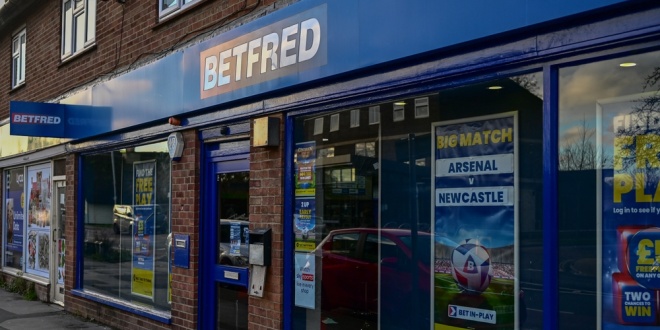
Retail bookies scored low on the TF ratings, but carried a ‘moderate’ risk of ML. Among the existing vulnerabilities in the assessment was the cash-intensive nature of the bookmakers, alongside user access to multiple premises and operators.
The same score was applied to on-course bookmakers, where cash was again one of the main concerns for the undermining of financial integrity, together with limited monitoring capabilities.
Remote bookmakers, while again having a low PF and TF score, were assessed as being at a “significant” risk of money laundering – one of the two highest scores on the list.
The Irish government pointed to the remote nature of the services, the use of pre-paid cards to fund gambling accounts, and a fragmented EU regulatory landscape as three of the main concerns it sees as needing urgent attention.
White labels were also identified as a vulnerability due to the potential of such agreements to allow market entry for entities that are far away from the established European standards, with ties to criminal organisations also not entirely ruled out.
Ireland’s members clubs hard to infiltrate
PMCs were the second and last category that landed a “significant” score on the money laundering scale. In Ireland, these are clubs that allow entry only for registered members, and offer casino-style live games such as poker or slot machines.
Some of the major vulnerabilities here were not only the frequent cash usage, but also the likelihood of such clubs being bought or influenced by criminals, which then makes the members-only exclusivity dynamic even more closed off and difficult to report.
Lotteries and bingo scored moderate-to-low on the risk assessment, while the Tote carried the lowest risk across all gambling services in Ireland.
Jim O’Callaghan, Minister for Justice, Home Affairs and Migration, commented: “The Government will continue to monitor emerging risks and update its response as necessary to ensure Ireland remains resilient in the face of a rapidly evolving threat environment.”