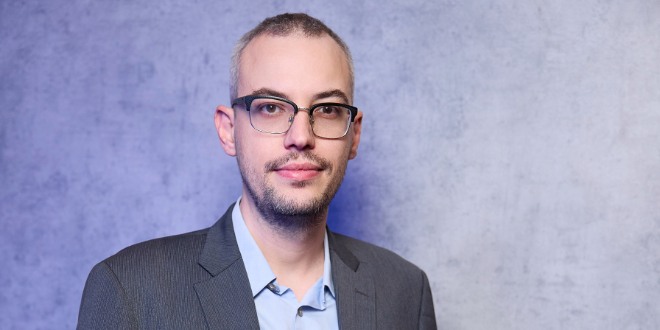
Anton Eshtokin, Chief Marketing Officer at Boomerang Partners, looks at why planning matters now more than ever in ensuring a long-lasting performance following the FIFA World Cup.
The FIFA World Cup 2026 has not started yet, but affiliate marketing is already moving around it.
For sports-focused teams, a tournament of this scale is closer to a full-cycle campaign than a single activation period. Users form intent before the first match, react during games, and often move on quickly once the emotional peak passes.
That is what makes the FIFA World Cup so important for affiliate strategy. More sports traffic will come, but more traffic does not automatically mean better results. Some teams will chase volume. Others will work with timing, content, channel mix, and user intent as one system.
The fixture list is public. The advantage is in how each team uses it.
Why the World Cup changes the traffic equation
Major football tournaments pull the market into the same rhythm. Match content, online betting interest, and user acquisition all start moving around the same schedule. The FIFA World Cup takes that effect further because demand, content, and competition are all built around the same limited match periods.
The 2026 edition also changes the scale of that rhythm. It will be the first FIFA World Cup with 48 teams and 104 matches, instead of the previous 32-team, 64-match structure.
It also adds a new round of 32 stage, creating more matchdays, more content cycles, and more points where affiliate planning can either work or break down.
Everyone knows when demand will rise. That does not, by itself, give anyone an edge. It simply puts more teams under the same clock.
Boomerang Partners’ analysis of comparable football tournaments, including UEFA Euro 2024, shows how sharp the uplift can be: during peak periods, sports traffic increased by around 1.7x. For affiliates, that creates an obvious opportunity. It also creates noise.
In similar tournament conditions, conversion did not grow automatically with traffic. Users were more active, but they also compared options faster, moved between content and offers more easily, and made decisions in shorter cycles.
The conversion pattern tightens as well. Registrations and first deposits tend to rise sharply in the final pre-event week, while online betting activity reaches its strongest peaks during live match periods. At that point, timing matters more than campaign length.
Previous major tournaments also did not show a dramatic redistribution between sports and casino verticals. The bigger change was inside sports traffic itself: sharper peaks, faster decisions, and fewer chances to recover from missed timing.
The tournament has three different traffic lives
FIFA World Cup traffic rarely moves in one clean line. It builds before the tournament, peaks during matches, and then starts to spread into other sports and events. For affiliates, each phase needs to be handled differently.
In the final stretch before kick-off, intent becomes more commercial. Interest may stay moderate for most of the pre-event period, but registrations and first deposits usually rise around 7–10 days before the tournament begins. At this point, users are still making relatively rational choices: tournament winners, opening matches, team performance, and simple pre-match markets tend to attract early attention.
Once the tournament starts, everything becomes faster. Live match periods become the most valuable part of the cycle, with 70–80% of online betting activity during major tournaments taking place in-play, mostly from mobile devices. Goals, red cards, substitutions, and momentum shifts create short bursts of intent. Miss them, and they are hard to win back.
The 2026 schedule adds another layer to this. With the FIFA World Cup hosted across North America, some match periods will fall into less familiar hours for European audiences.
For affiliate teams, that makes scheduled content, automated workflows, live coverage, and post-match follow-ups more important. The challenge is not only reacting quickly, but also being ready when the match does not fit the usual working day.
After the final, attention shifts again. Part of the audience slows down; some users pause, while others move toward the next available sports events. For football, that decline can last two to three weeks, which makes post-event planning as important as the build-up.
For affiliates, the task is to follow that movement: build intent before the tournament, capture demand during matches, and keep users engaged once the main event is over. Campaigns built only around the opening peak leave too much value behind.
From reactive campaigns to controlled execution
A FIFA World Cup campaign cannot run on one message, one channel, or one push.
Pre-event activity needs to warm up the intent. Live activity needs faster creative and channel adjustment. Post-event workflows need to keep users engaged when the emotional high is gone. These are separate jobs, each with its own rhythm.
Earlier this year, TIME TO WIN offered a useful snapshot of that model in practice. The affiliate tournament, held by Boomerang Partners as part of its collaboration with AC Milan, brought together 57 affiliate teams and generated 1,611 sports FTDs across brands within Boomerang Partners’ clients’ portfolio. Participants worked across performance, SMM, PR, surveys, and reviews through the Rossoneri Hub.
That mix matters. Sports traffic rarely flows through a single, clean channel anymore. Content, social activity, expert commentary, platform trust, and timing can all influence the same decision.
TIME TO WIN was not a FIFA World Cup campaign, but it showed how affiliate teams behave when competition becomes structured and tied to sports-led engagement.
For the FIFA World Cup, the same logic becomes more intense. An affiliate team focused only on live traffic may miss the pre-event build-up.
A team that prepares content in advance but cannot move quickly during matches may lose the most valuable part of the tournament. The strongest setups connect the full cycle.
The expanded format also brings more first-time and returning teams into the tournament. That does not simply mean more matches. It creates new fan narratives and additional pockets of interest that may not have been central in previous FIFA World Cup cycles.
Planning is now part of performance
When peak periods are visible to everyone, preparation becomes part of the result.
Sports affiliate planning in 2026 is moving beyond generic event lists. Teams need to understand not only what is happening, but when interest starts to build, when it converts, and where users are likely to move next.
Boomerang Partners launched its Sports Marketing & Betting Calendar 2026 in January as a planning framework for sports affiliates. In the context of the FIFA World Cup, its value is not in listing fixtures.
It helps teams think in stages: pre-event awareness, live engagement, and post-event retention. Available on the Boomerang Partners website throughout the year, the Calendar gives affiliates a practical reference point for planning around major sports events.
Mehdi, Director of Affiliates at Paradise Media and TIME TO WIN participant, shared in a tournament comment: “We are preparing for the FIFA World Cup 2026 in the summer, and having the match days, teams, and groups in one spot accelerates the research for us.”
That is where planning becomes practical. Content has to be ready before demand spikes. Campaigns need to be prepared before live periods open. And once the tournament ends, the next step should already be mapped.
What partners are already seeing
Users switch between streams, odds, content, communities, and offers while the match is happening. That changes the affiliate role. Sending traffic into a funnel is only part of the job; the harder part is shaping the decision while user intent is still active.
Competition is also no longer limited to direct betting offers. During major sports events, users interact with prediction-style platforms, social forecasting formats, creator-led discussions, and community content simultaneously. All of these formats compete for the same live attention, which makes clarity and timing even more important.
Trust and clarity now matter more than aggressive visibility. In a comment shared as part of TIME TO WIN, Olesea Naidion, Brand Manager at Nightrush, noted: “Players compare platforms instantly now, so trust and clarity beat aggressive marketing. The competition forced us to be faster, smarter, and more honest.”
In a crowded match period, clear terms and transparent communication can influence conversion. Users do not have time to decode complex messages. They choose what feels relevant, fast, and reliable.
Competition is forcing affiliates to be more selective as well. Anete Dunina, Head of Sales at Revpanda Group, put it directly in her TIME TO WIN commentary: “Traffic is more expensive and less loyal than ever. We have to focus on positioning, visibility, and constant optimisation, as volume alone doesn’t work anymore.”
For FIFA World Cup campaigns, winning the click is only the first step. Holding the user long enough to convert is where the harder work begins.
Where GBA fits into the longer game
The FIFA World Cup will reward sharp execution, but one strong period is still not enough to define a successful affiliate strategy in 2026. A major tournament can create a powerful lift. The harder part is maintaining performance after the peak.
The Golden Boomerang Awards 2026 reflect the same shift. The third season, launched by Boomerang Partners on April 3 under the concept ‘Beyond the Moment,’ is built around sustained performance over several months rather than a single short push. Its timing overlaps with a packed sports calendar, including the FIFA World Cup, where planning, consistency, and adaptability can be tested over time.
Within a season-based format like GBA, major tournaments such as the FIFA World Cup become acceleration points. Teams that plan around these periods well can gain momentum not only in traffic but also in the wider leaderboard race.
TIME TO WIN and Golden Boomerang Awards work as two parts of the same logic: first, a short, high-intensity environment for testing approaches, then a longer distance where performance has to hold through changing user behaviour and multiple sports peaks.
In that context, the FIFA World Cup becomes more than a short-term opportunity. Teams that rely only on short bursts may win individual moments. Teams that build systems can carry momentum further.
The World Cup as a market filter
The FIFA World Cup 2026 will bring traffic. That part is predictable.
What is less predictable is who will turn that traffic into lasting performance. The tournament will test how affiliates plan before demand peaks, how quickly they react during live match periods, and how well they keep users engaged after the event ends.
In 2026, the schedule is public, and the conditions are shared. The difference comes from timing, precision, and systems strong enough to perform when demand is at its highest.
That is also why planning tools and long-term formats matter more this year. In Boomerang Partners’ ecosystem, the Sports Marketing & Betting Calendar 2026 supports preparation around major sports peaks, while the ongoing Golden Boomerang Awards season shows what sustained performance looks like over time.



Boomerang Partners: FIFA World Cup 2026 and the new rules of sports affiliate marketing
You’ve shared it!
Anton Eshtokin, Chief Marketing Officer at Boomerang Partners, looks at why planning matters now more than ever in ensuring a long-lasting performance following the FIFA World Cup.
The FIFA World Cup 2026 has not started yet, but affiliate marketing is already moving around it.
For sports-focused teams, a tournament of this scale is closer to a full-cycle campaign than a single activation period. Users form intent before the first match, react during games, and often move on quickly once the emotional peak passes.
That is what makes the FIFA World Cup so important for affiliate strategy. More sports traffic will come, but more traffic does not automatically mean better results. Some teams will chase volume. Others will work with timing, content, channel mix, and user intent as one system.
The fixture list is public. The advantage is in how each team uses it.
Why the World Cup changes the traffic equation
Major football tournaments pull the market into the same rhythm. Match content, online betting interest, and user acquisition all start moving around the same schedule. The FIFA World Cup takes that effect further because demand, content, and competition are all built around the same limited match periods.
The 2026 edition also changes the scale of that rhythm. It will be the first FIFA World Cup with 48 teams and 104 matches, instead of the previous 32-team, 64-match structure.
It also adds a new round of 32 stage, creating more matchdays, more content cycles, and more points where affiliate planning can either work or break down.
Everyone knows when demand will rise. That does not, by itself, give anyone an edge. It simply puts more teams under the same clock.
Boomerang Partners’ analysis of comparable football tournaments, including UEFA Euro 2024, shows how sharp the uplift can be: during peak periods, sports traffic increased by around 1.7x. For affiliates, that creates an obvious opportunity. It also creates noise.
In similar tournament conditions, conversion did not grow automatically with traffic. Users were more active, but they also compared options faster, moved between content and offers more easily, and made decisions in shorter cycles.
The conversion pattern tightens as well. Registrations and first deposits tend to rise sharply in the final pre-event week, while online betting activity reaches its strongest peaks during live match periods. At that point, timing matters more than campaign length.
Previous major tournaments also did not show a dramatic redistribution between sports and casino verticals. The bigger change was inside sports traffic itself: sharper peaks, faster decisions, and fewer chances to recover from missed timing.
The tournament has three different traffic lives
FIFA World Cup traffic rarely moves in one clean line. It builds before the tournament, peaks during matches, and then starts to spread into other sports and events. For affiliates, each phase needs to be handled differently.
In the final stretch before kick-off, intent becomes more commercial. Interest may stay moderate for most of the pre-event period, but registrations and first deposits usually rise around 7–10 days before the tournament begins. At this point, users are still making relatively rational choices: tournament winners, opening matches, team performance, and simple pre-match markets tend to attract early attention.
Once the tournament starts, everything becomes faster. Live match periods become the most valuable part of the cycle, with 70–80% of online betting activity during major tournaments taking place in-play, mostly from mobile devices. Goals, red cards, substitutions, and momentum shifts create short bursts of intent. Miss them, and they are hard to win back.
The 2026 schedule adds another layer to this. With the FIFA World Cup hosted across North America, some match periods will fall into less familiar hours for European audiences.
For affiliate teams, that makes scheduled content, automated workflows, live coverage, and post-match follow-ups more important. The challenge is not only reacting quickly, but also being ready when the match does not fit the usual working day.
After the final, attention shifts again. Part of the audience slows down; some users pause, while others move toward the next available sports events. For football, that decline can last two to three weeks, which makes post-event planning as important as the build-up.
For affiliates, the task is to follow that movement: build intent before the tournament, capture demand during matches, and keep users engaged once the main event is over. Campaigns built only around the opening peak leave too much value behind.
From reactive campaigns to controlled execution
A FIFA World Cup campaign cannot run on one message, one channel, or one push.
Pre-event activity needs to warm up the intent. Live activity needs faster creative and channel adjustment. Post-event workflows need to keep users engaged when the emotional high is gone. These are separate jobs, each with its own rhythm.
Earlier this year, TIME TO WIN offered a useful snapshot of that model in practice. The affiliate tournament, held by Boomerang Partners as part of its collaboration with AC Milan, brought together 57 affiliate teams and generated 1,611 sports FTDs across brands within Boomerang Partners’ clients’ portfolio. Participants worked across performance, SMM, PR, surveys, and reviews through the Rossoneri Hub.
That mix matters. Sports traffic rarely flows through a single, clean channel anymore. Content, social activity, expert commentary, platform trust, and timing can all influence the same decision.
TIME TO WIN was not a FIFA World Cup campaign, but it showed how affiliate teams behave when competition becomes structured and tied to sports-led engagement.
For the FIFA World Cup, the same logic becomes more intense. An affiliate team focused only on live traffic may miss the pre-event build-up.
A team that prepares content in advance but cannot move quickly during matches may lose the most valuable part of the tournament. The strongest setups connect the full cycle.
The expanded format also brings more first-time and returning teams into the tournament. That does not simply mean more matches. It creates new fan narratives and additional pockets of interest that may not have been central in previous FIFA World Cup cycles.
Planning is now part of performance
When peak periods are visible to everyone, preparation becomes part of the result.
Sports affiliate planning in 2026 is moving beyond generic event lists. Teams need to understand not only what is happening, but when interest starts to build, when it converts, and where users are likely to move next.
Boomerang Partners launched its Sports Marketing & Betting Calendar 2026 in January as a planning framework for sports affiliates. In the context of the FIFA World Cup, its value is not in listing fixtures.
It helps teams think in stages: pre-event awareness, live engagement, and post-event retention. Available on the Boomerang Partners website throughout the year, the Calendar gives affiliates a practical reference point for planning around major sports events.
Mehdi, Director of Affiliates at Paradise Media and TIME TO WIN participant, shared in a tournament comment: “We are preparing for the FIFA World Cup 2026 in the summer, and having the match days, teams, and groups in one spot accelerates the research for us.”
That is where planning becomes practical. Content has to be ready before demand spikes. Campaigns need to be prepared before live periods open. And once the tournament ends, the next step should already be mapped.
What partners are already seeing
Users switch between streams, odds, content, communities, and offers while the match is happening. That changes the affiliate role. Sending traffic into a funnel is only part of the job; the harder part is shaping the decision while user intent is still active.
Competition is also no longer limited to direct betting offers. During major sports events, users interact with prediction-style platforms, social forecasting formats, creator-led discussions, and community content simultaneously. All of these formats compete for the same live attention, which makes clarity and timing even more important.
Trust and clarity now matter more than aggressive visibility. In a comment shared as part of TIME TO WIN, Olesea Naidion, Brand Manager at Nightrush, noted: “Players compare platforms instantly now, so trust and clarity beat aggressive marketing. The competition forced us to be faster, smarter, and more honest.”
In a crowded match period, clear terms and transparent communication can influence conversion. Users do not have time to decode complex messages. They choose what feels relevant, fast, and reliable.
Competition is forcing affiliates to be more selective as well. Anete Dunina, Head of Sales at Revpanda Group, put it directly in her TIME TO WIN commentary: “Traffic is more expensive and less loyal than ever. We have to focus on positioning, visibility, and constant optimisation, as volume alone doesn’t work anymore.”
For FIFA World Cup campaigns, winning the click is only the first step. Holding the user long enough to convert is where the harder work begins.
Where GBA fits into the longer game
The FIFA World Cup will reward sharp execution, but one strong period is still not enough to define a successful affiliate strategy in 2026. A major tournament can create a powerful lift. The harder part is maintaining performance after the peak.
The Golden Boomerang Awards 2026 reflect the same shift. The third season, launched by Boomerang Partners on April 3 under the concept ‘Beyond the Moment,’ is built around sustained performance over several months rather than a single short push. Its timing overlaps with a packed sports calendar, including the FIFA World Cup, where planning, consistency, and adaptability can be tested over time.
Within a season-based format like GBA, major tournaments such as the FIFA World Cup become acceleration points. Teams that plan around these periods well can gain momentum not only in traffic but also in the wider leaderboard race.
TIME TO WIN and Golden Boomerang Awards work as two parts of the same logic: first, a short, high-intensity environment for testing approaches, then a longer distance where performance has to hold through changing user behaviour and multiple sports peaks.
In that context, the FIFA World Cup becomes more than a short-term opportunity. Teams that rely only on short bursts may win individual moments. Teams that build systems can carry momentum further.
The World Cup as a market filter
The FIFA World Cup 2026 will bring traffic. That part is predictable.
What is less predictable is who will turn that traffic into lasting performance. The tournament will test how affiliates plan before demand peaks, how quickly they react during live match periods, and how well they keep users engaged after the event ends.
In 2026, the schedule is public, and the conditions are shared. The difference comes from timing, precision, and systems strong enough to perform when demand is at its highest.
That is also why planning tools and long-term formats matter more this year. In Boomerang Partners’ ecosystem, the Sports Marketing & Betting Calendar 2026 supports preparation around major sports peaks, while the ongoing Golden Boomerang Awards season shows what sustained performance looks like over time.