The race to decide the regulatory future of American prediction markets has hit a legislative speed bump, but this is not stopping the likes of Polymarket from chasing gold in this rapidly growing space.
Polymarket, the world’s largest prediction market, is looking to make its return to the US, its founding nation but also one where it has not been legally allowed to operate for the past three years, and where it has continued to run into occasional legal difficulties.
The company has agreed to acquire QCEZ, the holding company behind the QCX LLC derivatives exchange and QC Clearing LLC clearinghouse, for $112m. Both of these are licensed by the Commodity Futures Trading Commission (CFTC), enabling Polymarket to gain a foothold in regulated financial services once again.
But why is this significant to gambling? And why has Polymarket chosen now as the time to make its return to the US? This is a story with a lot of different factors, companies and individuals at play….
CFTC crossroads
Key names in the predictions markets saga are the above-mentioned Polymarket, alongside Kalshi, the leading regulated provider of prediction markets in the US; the CFTC, regulator of US derivatives markets; and a man called Brian Quintenz, who has two interesting jobs.
Firstly, since 2021 he has been a board member of Kalshi. This leading predictions platform has found itself at the centre of state and federal regulatory debate over its ‘events contracts’ products. These contracts are a form of financial services where users invest in the outcome of a sporting event or political outcome – not too dissimilar to placing a bet.
He is also President Donald Trump’s nomination to become CFTC Chair, marking his return to the regulator after working there as a Commissioner between 2017-2021 – but crucially, his appointment is not final yet, as the Senate Committee set to vote on his appointment on Monday was postponed reportedly due to one Senator’s delayed flight.
Quintenz’s appointment could be crucial, as his role at Kalshi would imply a more favourable view of prediction platforms, although he has pledged to step down from the board should his nomination be approved. It is also worth noting that the CFTC has already had a hands off approach to prediction markets under Trump as it is, leaving it to state gambling regulators to continue any legal fights.
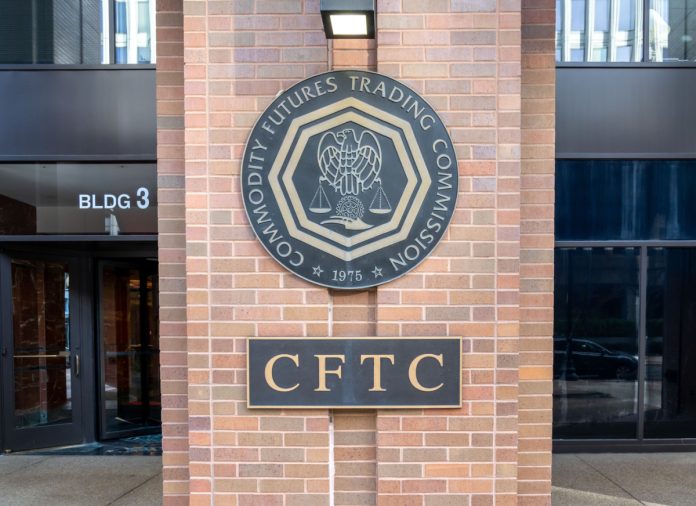
Credit: JHVEPhoto / Shutterstock
Polymarket seems to think now is the time to strike while the iron is hot. Interest in prediction markets is huge right now, spearheaded by Kalshi although other companies like Robinhood, Auger and Crypto.com (which Quintenz was advisor to between 2021-2022) also make their impact, and the regulatory environment also seems favourable, despite the delay in Quintenz’s final appointment.
Although Polymarket is the largest prediction market globally, it is not legally allowed to offer its services in the US. In 2022 it was accused of running an illegal derivatives operation by the CFTC due to running a predictions platform without being registered as a designated contract market (DCM) or a swap execution facility (SEF) with the regulator.
To put this issue to bed Polymarket agreed to block all American customers from accessing its services and focus on being a global, non-US platform, though still coming up against legal challenges in Singapore and Belgium. Acquiring QCEZ is the company’s road back into the US.
“Polymarket is the largest prediction market globally and has become synonymous with understanding the probability of current events,” said Shayne Coplan, Founder and CEO of Polymarket.
“Demand is greater than ever — not just in user growth and trading volume, but in how mainstream audiences are turning to Polymarket to separate signal from noise, bias, and speculation.
“Now, with the acquisition of QCEX, we are laying the foundation to bring Polymarket home — re-entering the US as a fully regulated and compliant platform that will allow Americans to trade their opinions.”
This marks Polymarket’s second big US push of this year, coming not long after it became the official prediction market partner of social media platform X. Interestingly, the deal was announced shortly after Kalshi claimed that it had become X’s predictions partner, only to backtrack.
Coplan would later take to his company’s partner’s social media platform to victoriously declare Polymarket’s return to its country of origin.
Prediction markets vs sportsbooks
Much of the regulatory debate around prediction markets has revolved around how similar the products are to betting. Controversy first arose because of Kalshi’s politics predictions markets, which the CFTC argued violated state gambling laws banning politics betting while under Joe Biden’s administration.
With the change in administration from Biden to Trump, the CFTC seems to be taking a more hands off approach. This has left Kalshi only having to deal with challenges from various state regulators and tribal gaming operators, with the firm taking legal action against cease and desist orders issued by the State Gambling Commissions of Maryland, Nevada and New Jersey.
For sportsbooks, prediction markets could have a few different consequences. Firstly, there is the possibility of new competition if bettors feel that prediction platforms offer better returns than sportsbooks. There is also product variety – after all, these platforms offer predictions on politics and real-world events like award ceremonies and TV show outcomes, something US sportsbooks aren’t allowed to do but are a common feature of European betting markets like the UK.
However, there could also be opportunity. Flutter Entertainment has been eyeing up the possibility of a FanDuel Predictions Market, reportedly assigning staff to the project and considering a nationwide deal with Kalshi.
Also, for international operators looking to carve out a slice of the US pie, launching a federally regulated prediction market could be a more efficient approach than having to deal with each state regulator one-by-one.

Credit: Brester Irina / Shutterstock
For the most part though, the US gaming industry is erring on the side of caution, and has been making its case against Quintenz appointment as CFTC lead. A letter signed by the American Gaming Association, the National Council for Problem Gambling, the Indian Gaming Association, and the National Congress of American Indians made this clear.
“It should be deeply troubling to this Committee that he offered no assurances that the CFTC under his leadership would enforce its own regulations,” the letter read, as seen by SBC Americas.
“This is even more concerning based on the fact that Mr. Quintenz is poised to not only become the CFTC Chair but could also be the sole commissioner based on current vacancies and planned departures.”
According to Bloomberg, the Chair of the Senate Committee on Agriculture, Nutrition and Forestry, which was due to vote on Quintenz’s appointment, the postponed Committee vote will happen before the August recess (2-31 August).
Regardless of his appointment, however, it seems that predictions platforms’ growth will continue, and the industry will have to respond – though whether it will be through legal action, marketing, product alterations, or the mantra of ‘if you can’t beat em, join em’ is anyone’s guess.










The prospects in predictions: Polymarket returns to US while key regulatory appointment delayed
You’ve shared it!
The race to decide the regulatory future of American prediction markets has hit a legislative speed bump, but this is not stopping the likes of Polymarket from chasing gold in this rapidly growing space.
Polymarket, the world’s largest prediction market, is looking to make its return to the US, its founding nation but also one where it has not been legally allowed to operate for the past three years, and where it has continued to run into occasional legal difficulties.
The company has agreed to acquire QCEZ, the holding company behind the QCX LLC derivatives exchange and QC Clearing LLC clearinghouse, for $112m. Both of these are licensed by the Commodity Futures Trading Commission (CFTC), enabling Polymarket to gain a foothold in regulated financial services once again.
But why is this significant to gambling? And why has Polymarket chosen now as the time to make its return to the US? This is a story with a lot of different factors, companies and individuals at play….
CFTC crossroads
Key names in the predictions markets saga are the above-mentioned Polymarket, alongside Kalshi, the leading regulated provider of prediction markets in the US; the CFTC, regulator of US derivatives markets; and a man called Brian Quintenz, who has two interesting jobs.
Firstly, since 2021 he has been a board member of Kalshi. This leading predictions platform has found itself at the centre of state and federal regulatory debate over its ‘events contracts’ products. These contracts are a form of financial services where users invest in the outcome of a sporting event or political outcome – not too dissimilar to placing a bet.
He is also President Donald Trump’s nomination to become CFTC Chair, marking his return to the regulator after working there as a Commissioner between 2017-2021 – but crucially, his appointment is not final yet, as the Senate Committee set to vote on his appointment on Monday was postponed reportedly due to one Senator’s delayed flight.
Quintenz’s appointment could be crucial, as his role at Kalshi would imply a more favourable view of prediction platforms, although he has pledged to step down from the board should his nomination be approved. It is also worth noting that the CFTC has already had a hands off approach to prediction markets under Trump as it is, leaving it to state gambling regulators to continue any legal fights.
Credit: JHVEPhoto / Shutterstock
Polymarket seems to think now is the time to strike while the iron is hot. Interest in prediction markets is huge right now, spearheaded by Kalshi although other companies like Robinhood, Auger and Crypto.com (which Quintenz was advisor to between 2021-2022) also make their impact, and the regulatory environment also seems favourable, despite the delay in Quintenz’s final appointment.
Although Polymarket is the largest prediction market globally, it is not legally allowed to offer its services in the US. In 2022 it was accused of running an illegal derivatives operation by the CFTC due to running a predictions platform without being registered as a designated contract market (DCM) or a swap execution facility (SEF) with the regulator.
To put this issue to bed Polymarket agreed to block all American customers from accessing its services and focus on being a global, non-US platform, though still coming up against legal challenges in Singapore and Belgium. Acquiring QCEZ is the company’s road back into the US.
“Polymarket is the largest prediction market globally and has become synonymous with understanding the probability of current events,” said Shayne Coplan, Founder and CEO of Polymarket.
“Demand is greater than ever — not just in user growth and trading volume, but in how mainstream audiences are turning to Polymarket to separate signal from noise, bias, and speculation.
“Now, with the acquisition of QCEX, we are laying the foundation to bring Polymarket home — re-entering the US as a fully regulated and compliant platform that will allow Americans to trade their opinions.”
This marks Polymarket’s second big US push of this year, coming not long after it became the official prediction market partner of social media platform X. Interestingly, the deal was announced shortly after Kalshi claimed that it had become X’s predictions partner, only to backtrack.
Coplan would later take to his company’s partner’s social media platform to victoriously declare Polymarket’s return to its country of origin.
Prediction markets vs sportsbooks
Much of the regulatory debate around prediction markets has revolved around how similar the products are to betting. Controversy first arose because of Kalshi’s politics predictions markets, which the CFTC argued violated state gambling laws banning politics betting while under Joe Biden’s administration.
With the change in administration from Biden to Trump, the CFTC seems to be taking a more hands off approach. This has left Kalshi only having to deal with challenges from various state regulators and tribal gaming operators, with the firm taking legal action against cease and desist orders issued by the State Gambling Commissions of Maryland, Nevada and New Jersey.
For sportsbooks, prediction markets could have a few different consequences. Firstly, there is the possibility of new competition if bettors feel that prediction platforms offer better returns than sportsbooks. There is also product variety – after all, these platforms offer predictions on politics and real-world events like award ceremonies and TV show outcomes, something US sportsbooks aren’t allowed to do but are a common feature of European betting markets like the UK.
However, there could also be opportunity. Flutter Entertainment has been eyeing up the possibility of a FanDuel Predictions Market, reportedly assigning staff to the project and considering a nationwide deal with Kalshi.
Also, for international operators looking to carve out a slice of the US pie, launching a federally regulated prediction market could be a more efficient approach than having to deal with each state regulator one-by-one.
Credit: Brester Irina / Shutterstock
For the most part though, the US gaming industry is erring on the side of caution, and has been making its case against Quintenz appointment as CFTC lead. A letter signed by the American Gaming Association, the National Council for Problem Gambling, the Indian Gaming Association, and the National Congress of American Indians made this clear.
“It should be deeply troubling to this Committee that he offered no assurances that the CFTC under his leadership would enforce its own regulations,” the letter read, as seen by SBC Americas.
“This is even more concerning based on the fact that Mr. Quintenz is poised to not only become the CFTC Chair but could also be the sole commissioner based on current vacancies and planned departures.”
According to Bloomberg, the Chair of the Senate Committee on Agriculture, Nutrition and Forestry, which was due to vote on Quintenz’s appointment, the postponed Committee vote will happen before the August recess (2-31 August).
Regardless of his appointment, however, it seems that predictions platforms’ growth will continue, and the industry will have to respond – though whether it will be through legal action, marketing, product alterations, or the mantra of ‘if you can’t beat em, join em’ is anyone’s guess.