As AI expands the capabilities of all industries, sports betting is still learning how to use it and improve the gaming journey. Kambi is no exception, as it looks to move beyond the traditional sportsbook catalogue towards a more dynamic, personalised experience, with AI enabling operators to offer propositions tailored to individual players and specific moments in sport.
Recently, the supplier has simplified its product line-up to two core offerings, Turnkey Sportsbook and Odds Feed+, both built on the same trading data and engine but designed to meet different operator needs. Kambi’s Chief Product Officer Erik Lödgberg explains that the model provides greater clarity for partners while allowing the company to develop new betting experiences across its technology and trading capabilities.
Lödgberg sees the next stage of sportsbook development as a shift away from fixed lists of markets towards experiences that respond to what players want to achieve. As AI expands the scale and variety of betting opportunities, he believes traditional front-end designs will struggle to keep pace with what trading technology can create.
Two products, one trading engine
Kambi’s simplified product model is intended to make its offering clearer for operators while allowing them to choose the delivery model that best fits their strategy and operating structure.
“Both the Turnkey Sportsbook and our Odds Feed+ are built on the exact same trading data and trading engine,” Lödgberg explained.
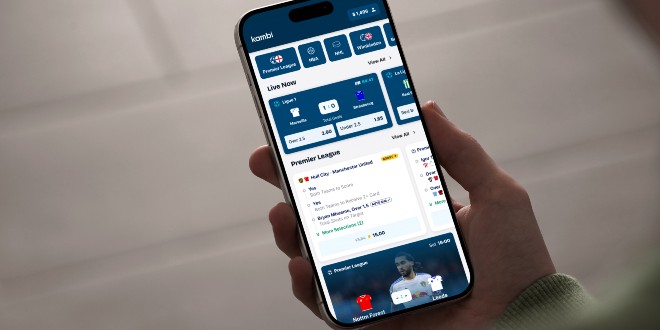
The Turnkey Sportsbook provides a complete end-to-end solution, combining Kambi’s technology, pricing, risk management, regulatory compliance, front end and managed services. It is designed for operators seeking a proven but flexible platform that can scale quickly in regulated markets.
Its vertical integration, from the front end through to the platform and trading engine, also gives Kambi the opportunity to develop new sports betting experiences across the entire product.
Odds Feed+, meanwhile, allows operators to integrate the same trading intelligence into their own platforms and front ends. While this can improve operational efficiency, Lödgberg says the greater opportunity lies in helping partners improve margins and develop their own innovations using the flexibility of Kambi’s AI trading platform.
The model therefore gives operators a choice between adopting a complete sportsbook solution and using Kambi’s trading capabilities to strengthen their existing products.
Moving beyond the static sportsbook catalogue
Looking further ahead, Lödgberg believes sportsbook design is approaching a significant change, moving away from a static catalogue of available markets towards a more responsive experience: “The things we now can do with AI in trading, it just simply cannot be fully leveraged by the existing design paradigms or structures that we have on the front end side,” he says.
As AI increases the scale and variety of betting propositions that can be created, Lödgberg expects the conventional grid or catalogue model to become less effective. At the same time, developments in other industries are raising expectations around how easily users should be able to discover relevant options.
Kambi envisages a more on-demand sportsbook in which players rely less on navigating extensive menus and preset markets. Instead, they could express an intent or indicate the experience they want, with the sportsbook responding with relevant propositions from a much wider range of possible outcomes.
For Lödgberg, a dynamic sportsbook should not simply mean adding more tools, markets and complexity. It should behave more like an intelligent layer around a live sporting event, surfacing opportunities, combinations, promotions and moments that match how individual users engage with sport.
Existing products such as BetBuilder and player props already demonstrate demand for more combinable and individualised betting options. Lödgberg described them as evidence that the industry is moving in this direction, with players increasingly seeking unique propositions and more ways to bet around specific moments.
Bringing data and AI trading together
Kambi sees the combination of its betting data and trading engine as central to making this more personalised sportsbook possible.
Player and market data can help identify which propositions are worth creating for a particular user at a particular time, while the trading engine provides the ability to deliver those opportunities at scale.
“Data without the engine, it can identify the opportunity, but it can never deliver it at scale. And the engine without data, it can create breadth, but it lacks the understanding of what to prioritise that matters,” Lödgberg explained.
For Kambi, the two capabilities are complementary. Data can indicate what is relevant, but without the technology to create and deliver the proposition, that insight cannot be fully realised. Conversely, an engine capable of generating a wide range of markets needs data to determine which opportunities deserve priority.
Lödgberg believes that combining rich data with AI-powered trading can help Kambi deliver the right product at the right time, moving the sportsbook beyond a broad catalogue of available bets towards a more tailored experience for each player.