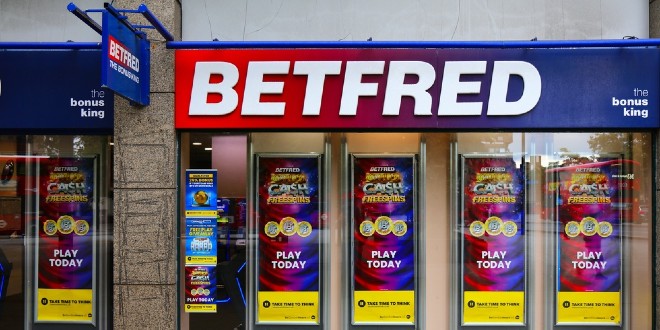
Betfred reported turnover of £995.6m for the 52 weeks to 29 March 2026 as the business filed its last annual report before a drastic change to the UK gambling landscape.
The UK gambling giant, founded by Fred Done back in 1967, saw gross profit come in at £720m but profit after tax was £39.6m, according to a Companies House statement. These figures represent drastic decreases year-over-year (FY 24/25: £1.07bn and £128.8m respectively) but are largely incomparable due to Betfred’s FY 24/25 lasting for a period of 78 weeks.
Done is still a vital cog in the Betfred engine, serving as chairman despite stepping down as CEO in 2021, but recently sounded perhaps his gravest warning in years – a rumoured doubling in Machine Games Duty (MGD) would kill off the UK’s retail betting industry by 2030.
Betfred makes substantial investment in online operations
For the reported period, Betfred’s retail gambling turnover was £544m, which came from its retail estate of 1,293 shops.
The business culled some shops in the timeframe, as this figure was down from 1,351 the year before. Its estate is set to become even slimmer as it was confirmed in July that a further 132 Betfred shops will close later this year, with up to 600 jobs at stake.
It comes amid a continued shift from retail to online betting in the UK, which has now been occurring for over a decade.
But the retail betting industry is travelling directly towards a cliff edge currently, and betting shops in the UK have taken a battering due to the increase in Remote Gaming Duty (RGD) from 21% to 40% implemented in April this year.
Other major UK operators to have announced shop closures since the tax rise include Flutter Entertainment (Paddy Power), Entain (Ladbrokes) and evoke (William Hill).
One of the positives about this shift for Betfred is that it has moved with the times and seen a consistent increase in its online turnover.
For the 52 weeks to 29 March 2026, online gambling turnover reached £451.7m – down on the 78-week period last year (£563.6m) but up considerably since FY 22/23, when online turnover was £197m.
The group continued investing heavily in its online technology to boost this. Total capitalised development costs reached £110.4m, alongside spending £22.1m on R&D during the period to enhance software, data analytics and mobile capabilities.
Costs to keep coming
This wasn’t the only factor contributing to Betfred’s substantial outgoings, with employee costs rising by £19.2m on a like-for-like 12-month basis, despite a reduction in overall headcount from 9,622 to 9,463 staff.
The company attributed this to rises in the National Minimum Wage and employers’ National Insurance.
For now, Betfred continues as a profitable component of the UK gambling landscape, but Done has been very vocal since the 2025 Autumn Budget, which also saw a proposed increase in General Betting Duty (GBD) from 15% to 25%, effective 1 April 2027.
While there are operators in much more embattled positions than the Greater Manchester-founded business, Done’s warnings and the arguable dropoff in performance despite the shorter trading period suggests the company is not in as comfortable a position as yesteryear.
Betfred cutting its headline sponsorship of rugby league’s Super League and Done’s statement that its sponsorship of all five British Classics will meet the same fate should MGD double does point to some worrying signs.
Its 60th anniversary celebrations next year may be rather muted as the UK’s gambling sector continues to battle a whole host of challenges.