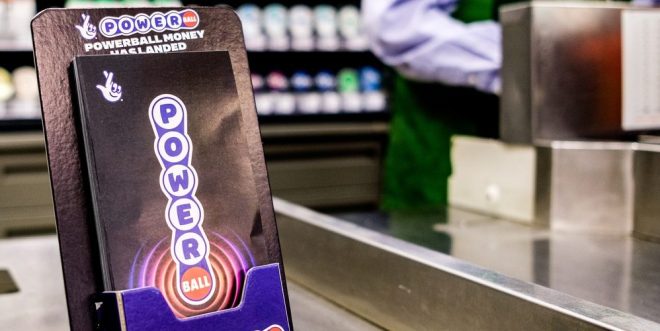
It looks highly likely that British betting firms will be banned from taking bets on the newly launched Powerball lottery format under new government proposals.
The Department for Digital, Culture, Media and Sport (DCMS) has proposed the ban, seeking to line Powerball UK up with other National Lottery products. It has opened a consultation on the matter, which is open until midnight 4 November 2026.
Powerball UK was launched by Allwyn UK, operator of the National Lottery, back in June. The format is hugely popular in the US, with jackpots sometimes numbering in the billions, with the record win of $2bn landed in November 2022.
Gov’t to close Powerball betting loophole?
Under Section 95 of the 2005 Gambling Act, betting firms are permitted to accept wagers on the outcomes of overseas lotteries – like the original US version of the Powerball – but not National Lottery products.
However, as the Powerball is a new product it is not covered by the current legislation, which only makes reference to the original suite of lottery products. DCMS suggests that this should be changed.
Vicky Foxcroft, Undersecretary of State at the Department of Digital, Culture, Media and Sport (DCMS), stated that Section 95 “seeks to preserve the distinction between betting and the National Lottery”.
The government is seeking to prevent “customer confusion and threats to the additional good causes expected to be raised from Powerball” by prohibiting third party bets on Powerball game draws.
“This will aim to remove risks of customer confusion for players, and ensure National Lottery good causes are maximised,” she said.
It’s hard to argue with the government’s motivation here, as since all other National Lottery products are excluded from third party betting, it makes sense for the Powerball to align with the rest of the product portfolio.
However, it could also be a further indication that Prime Minister Andy Burnham’s government is keeping a close eye on gambling regulations, and is more than willing to make changes.
The DCMS’ proposals come after the government has already taken aim at the Aim to Permit rule for retail gaming licensing, and is reportedly considering increasing taxes on gaming machines.