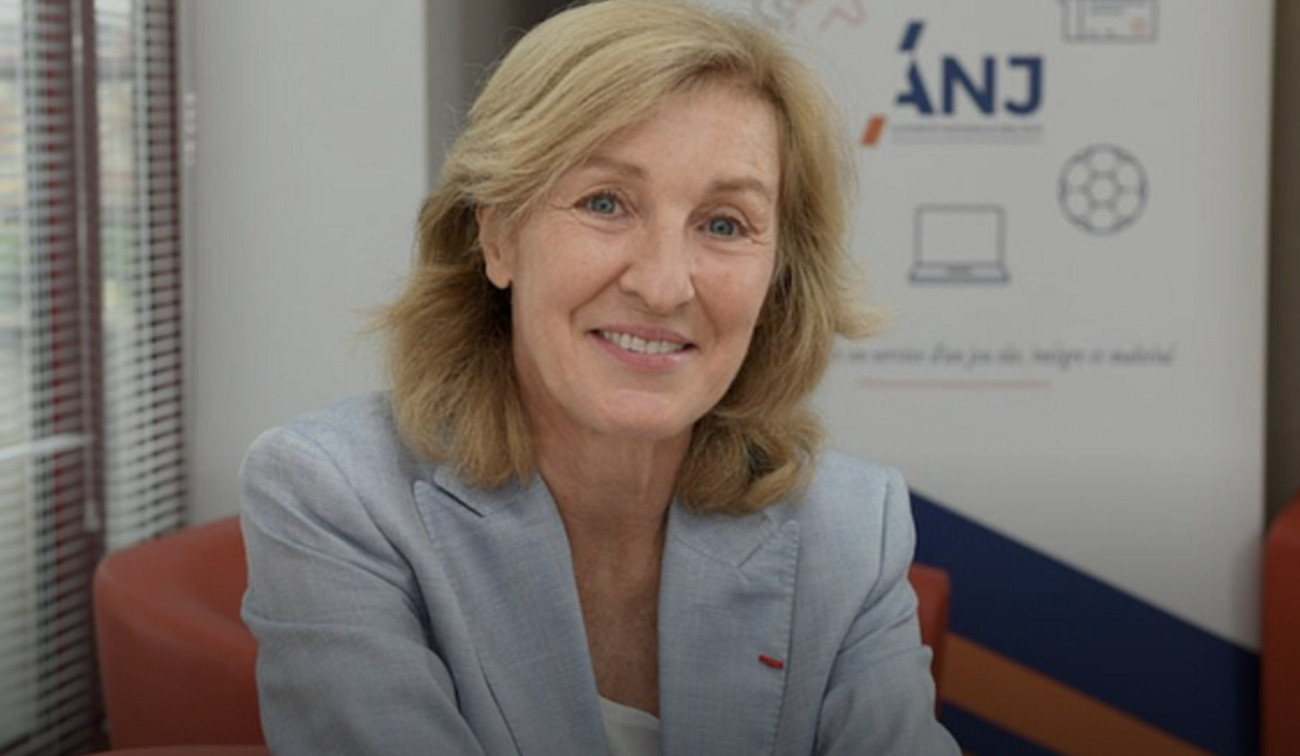

Isabelle Falque-Pierrotin’s term as president of the Autorité Nationale des Jeux (ANJ) ends on 15 June .
Interviewed by SBC correspondent Jake Pollard, she reflects on developments of the French and European gambling sectors including taxation, the normalisation of gambling and the regulatory evolution of the online sector.
Isabelle Falque-Pierrotin has chaired the Autorité Nationale des Jeux (ANJ) since 2020 and, just as she took the helm of the French gambling regulator amid a global uncertainty linked to the COVID-19 pandemic, the creation of the authority also marked a major change: under the new structure, all gambling activities in France are now placed under the supervision of the ANJ.
Until then, horseracing, land-based casinos and lottery activities had fallen under the remit of the relevant ministries (Interior, budget, Agriculture etc.). The aim in 2020 was to harmonise regulation across the various verticals, including the digital sector of course, and to strengthen the regulator’s authority.
In terms of its remit, the ANJ is responsible for ensuring compliance with the law in relation to combating problem gambling and money laundering, as well as for maintaining a balance between the various verticals that make up the French gambling sector.
Her term of office expires on 15 June, as her tenure marks an end-of-an for French gambling and its governance, competitive ranks and status.
Yet before addressing tax issues, how the industry is treated by politicians or her views on online casino regulation, we asked her to highlight some of the key moments and themes that stood out during her presidency of the ANJ, as well as that of the Gaming Regulators’ European Forum (GREF).
Changing times
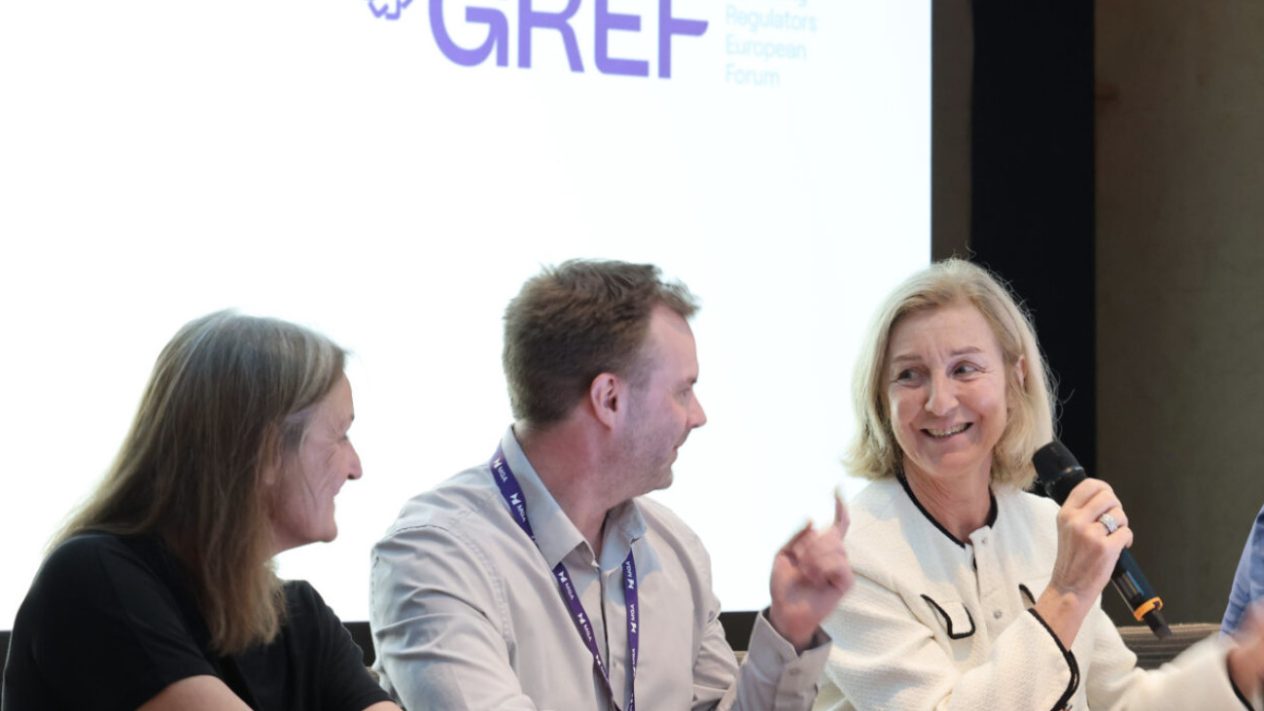
As chair of the Gaming Regulators’ European Forum (GREF) until last year, Falque-Pierrotin highlights the growing professional legitimacy of European regulators and the benefits each of them derives from having regular communications and meetings. She states: “There is no legal harmonisation at EU level, but the network of regulators is converging in terms of best practice and analysis of issues. Their cooperation is becoming increasingly operational, and I am very proud to have been part of this process.”
With regard to French operators, she acknowledges the progress made in terms of compliance, particularly when it comes to advertising. “The tone has changed; operators seem to have realised that ensuring player protection is essential and in their own interests” and, ultimately, “the environment has improved significantly since 2020”, she adds.
The second point raised by the ANJ chair is less positive and concerns the commoditisation of gambling. “Gambling has become a thoroughly commoditised product, relying on a well-established ecosystem of direct notifications, influencers and affiliates; all of whom are driving customer acquisition,” she says.
“But there is more to it than that: in the minds of the public – and young people in particular – gambling has become part of everyday life, and even part of young people’s digital culture.”
Tax rings a new era
The latest tax increase affecting French operators came into force last July and, when questioned on the matter, the ANJ president said that she had made it clear to lawmakers “that it would not be advisable to consider further increases this year”.
“The 15% tax increase on marketing introduced last July is hard to swallow, and the tax burden is particularly heavy for smaller operators.” It should be noted that as part of the July 2025 increase, OSB operators’ taxes also rose from 10.6% to 15% of their GGR.
Falque-Pierrotin’s position in 2025 is different from the one she expressed in 2024, when she told the newspaper Les Echos that “taxing the gambling market is not illegitimate”. It is not difficult to imagine how operators, already heavily taxed, must have reacted to her comments at the time.
However, her 2024 comments must also be viewed within a context in which the ANJ, as regulator, cannot take a stand against the legislature or openly oppose measures that its government had already decided to implement. Therefore, we can not assume that she was in full agreement with the 2025 tax increase, as was subsequently demonstrated by her discussions with parliamentarians in the run-up to the 2026 Budget.
Tame the noise
When it comes to advertising, France has taken a different approach to that of the Netherlands, Belgium, Italy and Spain in recent years, and permits it relatively freely (a whistle to whistle ban could be in the works but nothing has yet been confirmed).
However, this did not prevent the government from introducing a 15% tax on media expenditure as part of last year’s tax increases, although sports sponsorship was exempted. This is because gambling sponsors represent a vital source of income for clubs that are often in urgent need of funding.
“But we must be cautious, as marketing and sponsorship are closely linked,” notes Falque-Pierrotin. “If marketing (such as affiliate partnerships and advertising, ed.) is taxed at 15%, but sponsorship is not, operators will turn to sponsorship, thereby increasing their visibility at sporting events, but is that really what we want?”, alluding to a likely negative public reaction to an increased presence of gambling sponsors on football shirts.
Her comments align with this week’s news that senior players of France were unhappy about featuring on a promotion for Betclic, the national team’s official betting partner, is sure to raise the profile of an issue that is unlikely to fade away
In any case, one consequence of the rising cost of marketing is that it will lead to a reduction in affiliate campaigns and other forms of advertising. The other point is that sponsorship and mainstream advertising are, or should be, one of the benefits of regulation. The Dutch trade association VNLOK highlighted this point when it responded to the country’s latest proposal to ban advertising for online gambling.
“That is why we maintain that we are not opposed to operators advertising,” adds Ms Falque-Pierrotin, “as it is also a means of promoting legal offerings as opposed to illegal ones, which must be combated.”
She also notes that shortly after joining ANJ, advertisements for French online gambling were everywhere, with few guidelines in place, and that a bill was being introduced to ban gambling advertising. “I spoke out and said that this was not a good solution, as Italy (where an advertising ban was in force at the time) had shown that there were a multitude of ways to circumvent such a ban.”
Digital treatment
When it comes to bans or tax hikes, an obvious question arises: is the industry – particularly the online sector, simply lacking political support among MPs to fight against heavier taxes and ever-more restrictive regulations?
Indeed, while land-based casino operators and horse racing operators are often championed by MPs thanks to their local presence, digital operators – just like their counterparts in the UK or the Netherlands – have been hit with significant tax increases without any political representatives coming to their defence.
The ANJ president replies: “Gambling is in a unique position: it is a sector that is prohibited, unless an exemption is granted. In other words, it is an exceptional sector. For MPs, there is no doubt it’s not easy to deal with.”
But does she think the sector is being treated unfairly? “I don’t think so, actually; casinos and the horse racing industry have been strongly defended by elected representatives. However, I do believe that, with the proliferation of providers, the sector needs to reflect on its social responsibility towards players.
Furthermore, that’s not how we see it. It’s not our job to decide whether the sector is good or bad, or whether it is treated fairly or not. Our role is to ensure that the market develops under acceptable conditions and does not put players at risk.”
_________________
Don’t miss the second part of our interview with Isabelle Falque-Pierrotin, which will be published on Friday on SBC. The feature will focus on France’s online casino proceedings , FDJ and PMU’s impact on the French industry and what the future holds for her.