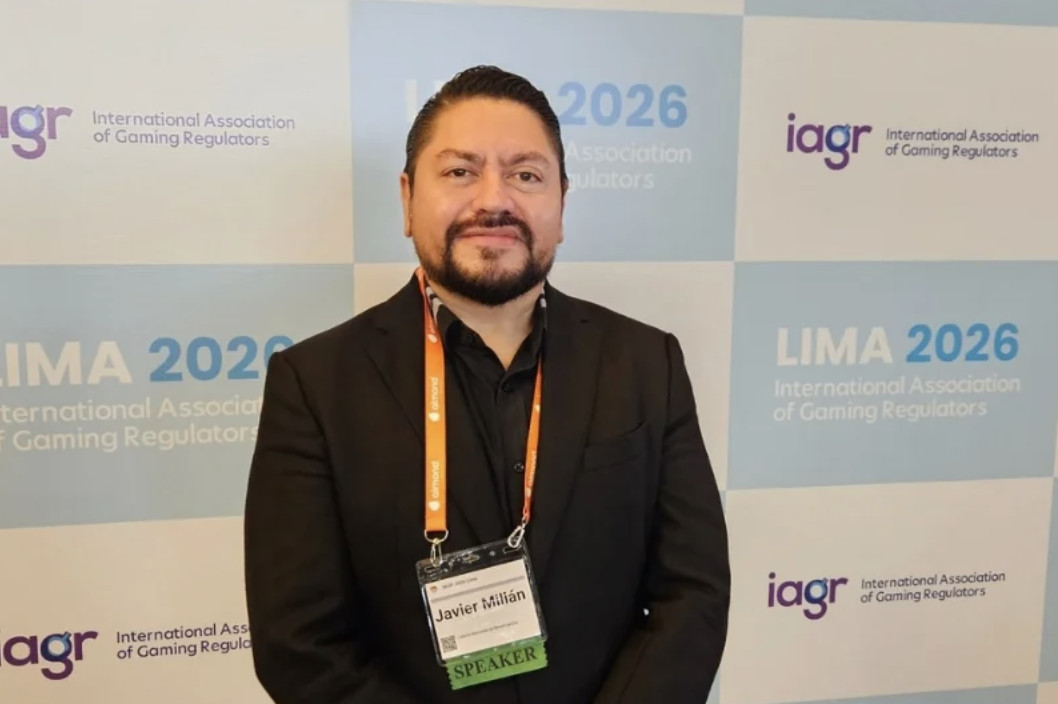

El Salvador needs to bring gambling licensing under the authority of the LNB. President Javier Milián tells Damian Martínez of SBC Noticias, his forthcoming reforms are no power grab, but an opportunity to strengthen protections and attract foreign investment to El Salvador.
__________________
The National Charity Lottery (LNB) of El Salvador is seeking to expand its regulatory authority on land-based gambling licences.
Proposals that will be initiated in 2027 were disclosed to SBC Noticias by LNB President Javier Milián, who thinks that reforms will help El Salvador harmonise laws and benefit local economies.
Milián was amongst the delegates of last week’s IAGR conference for South American regulators in Lima, Peru. Speaking to SBC Noticias, he outlined plans to overhaul the LNB’s duties and controls formed under the institution’s ‘Organic Law’.
As stands, the Organic Law gives the LNB regulatory responsibility over lottery concessions (lotto and instant win), online casino and sports betting. Milián seeks to expand these powers to cover land-based casinos and gaming halls, alongside B2B elements related to system and equipment suppliers.
“The entity is working on a reform to its Organic Law to assume the regulation of land-based casinos and gaming halls,” Milián explained.
“The changes respond to the need to establish a legal framework that offers greater guarantees to market participants.”
The initiative comes as the institution forecasts substantial growth in El Salvador’s regulated online market. The LNB projects that sports betting and online casino activity will expand by between 70% and 80% during 2026.
Milián will urge the El Salvador government to back the LNB to build a “stronger platform for the next stage of regulatory development.”
End of municipal controls
Critical to changes sought by Milián is how land-based gambling establishments receive licences to operate, that are currently authorised by El Salvador’s municipal councils.
The LNB was founded in 1870 as a state-owned lottery supporting social and welfare projects of El Salvador.
In 2021, a new Organic Law established the LNB as the supervisory authority for lotteries, sports betting and online gambling. Land-based casinos and gaming halls continued to operate under permits issued by municipal councils.
The LNB is critical of a system that does not provide the comprehensive legal framework to govern casino and gaming hall operations.
“Currently, there are no licenses for these establishments; instead, municipalities grant operating permits,” he told SBC Noticias.
“However, these permits have limited legal scope and do not provide all the necessary guarantees for the activity to be carried out properly.”
The proposed reform would place gambling licensing and supervision for these venues under the LNB, giving the institution “direct responsibility for activities currently dependent on local permissions” – a factor that has fragmented the governance of gambling in El Salvador.
That would mark a significant shift towards national oversight. The objective is to establish consistent gambling requirements, with clearer responsibilities for businesses and a stronger basis for regulatory intervention.
Milián said El Salvador’s president had delegated responsibility for advancing the regulation of the sector to the LNB, making the reform part of a wider government mandate to establish legal certainty.
For investors, the intended benefit is a clearer understanding of the conditions under which establishments can operate. For players, it is a framework that places greater responsibility on licensed businesses and their regulator.
Supply Chain must be reviewed
The LNB also wants stronger control over the supply chain supporting physical gambling venues.
Its proposals would bring machine suppliers and operators within the expanded framework, with particular attention to the certification of equipment entering El Salvador.
“We want to guarantee to players that the machines entering the country have the necessary certifications,” Milián said.
The emphasis would extend regulatory scrutiny beyond the venue itself to the equipment used on its gaming floor.
Certification would become a central part of the LNB’s proposed approach, helping establish that machines meet the requirements applicable to their operation.
The precise technical standards and approval procedures remain to be detailed. However, Milián’s comments identify equipment verification as a priority in creating a more accountable land-based market.
LNB has record of credibility
The LNB enters the reform process with an established role overseeing licensed online casino and sports betting businesses.
Milián said just over 10 licences are currently operational, while further companies have expressed interest in entering the Salvadoran market.
“El Salvador seems to be in vogue, and there are many investors interested in entering the country. However, not everyone can obtain a license,” he said.
Applications remain subject to technical and legal requirements, with commercial interest alone insufficient to secure authorisation.
Milián’s growth forecast points to the increasing scale of the activities already supervised by the institution. Online casino account for approximately 80% of the regulated online market, according to his estimates, with sports betting contributing the remaining 20%.
That expansion gives the LNB a stronger operational foundation as it seeks wider responsibilities, although the proposed land-based regime will require its own legal provisions and implementation arrangements.
Target of 2027 transformation
Foreign investment is another consideration shaping the proposed overhaul. Milián indicated that international businesses could participate in the developing framework, recommending that investors establish a Salvadoran legal entity to facilitate compliance with tax obligations.
The LNB expects to complete its reform proposal in approximately one month. LNB aims to proceed to Congress following elections scheduled for February, identifying March as a possible approval date.
Milián will plead with lawmakers to repurpose regulatory controls as a means of supporting investment, in one of Latin America’s fastest growing economies and maintaining the mandate founding principles of the LNB.
“I believe that March could be the moment when the reform to the Organic Law of the Lottery is approved by the Salvadoran Congress,” he said.