For every major football tournament, the industry debates the same questions. Will turnover exceed expectations? Which teams will drive the biggest betting volumes? And perhaps most importantly, how many newly acquired customers can operators retain once the final whistle blows?
The 2026 FIFA World Cup certainly answered those questions. However, according to Coolbet Chief Operating Officer, Tomas Graham, the tournament’s biggest lesson had little to do with acquisition or even football itself.
Speaking to SBC News, Graham reflected on a tournament that surpassed expectations across almost every metric, while outlining why operators now need to think beyond simply launching bigger promotions for the next global sporting event.
Forget the concerns, the World Cup delivered immediately
Before a ball had even been kicked, operators had plenty of reasons to be cautious.
The tournament’s North American location created concerns around awkward kick-off times for European bettors. Rising travel costs threatened to dampen the atmosphere, while FIFA’s expanded format prompted questions over whether matches involving emerging football nations would attract meaningful betting interest.
According to Graham, those concerns disappeared almost instantly.
“As soon as it started, that was all immediately forgotten, basically,” he recalled. “The first games, for us, more than doubled our expectations in terms of turnover and customers.”
Even fixtures expected to generate modest interest significantly exceeded forecasts.
Scotland against Haiti delivered twice the anticipated turnover, while Cape Verde’s shock victory over Spain became one of Coolbet’s biggest ever single-match GGR performances.
Rather than questioning whether the World Cup would perform, operators quickly found themselves facing a different challenge.
“Then the story became how do we keep the momentum and not get complacent,” Graham explained. “Ignore the noise and don’t overthink it. These popular things, they’re still going to be popular.”
Operator-friendly football creates operator-friendly margins
While supporters enjoyed a staple of the football calendar, bookmakers quietly enjoyed one of the most profitable.
Draws proved particularly valuable.
Thirty-two matches finished level, accounting for approximately 30% of the tournament compared to 23% four years earlier, before culminating in a goalless final.
For sportsbooks, that unpredictability translated directly into stronger margins.
Graham noted: “Draws continue to be unbeaten when it comes to the greatest things that there are for sportsbooks. This World Cup had the most draws of any World Cup by a mile… definitely a good feeling coming out of it.”
However, some of the tournament’s strongest-performing markets weren’t headline betting options at all.
Bookings emerged as one of the biggest revenue generators despite the tournament recording the lowest average number of yellow cards and fouls in World Cup history.
Customers continued backing higher booking totals throughout the competition, even as referees consistently allowed games to flow.
Graham believes early tournament psychology played a major role. He explained: “Bettors were expecting a bit more aggression, or at least the referees to call it a bit differently. Perhaps this first game with two red cards lifted everyone’s expectations for bookings across the tournament, and then they didn’t cover.”
Player proposition markets also continued their rapid growth. Although football’s biggest stars delivered impressive tournaments, sportsbooks still maintained healthy margins.
Lionel Messi’s player markets generated bookmaker margins of around 40%, while Kylian Mbappé scored in six of France’s eight matches but still returned margins exceeding 15%.
“These big players, when you see them score, sometimes you think, ‘Okay, this is going to be trouble,'” Graham laughed. “But even if they score six out of eight games, you’re still at a pretty strong margin on them.”
Messi’s quiet performance in the final ultimately erased many of the liabilities accumulated during the earlier rounds.
Graham added: “By blanking in that final game, really with no shots and no goals and no assists, that basically made up for all the wins that he had previously.”
Bet Builder is no longer a novelty
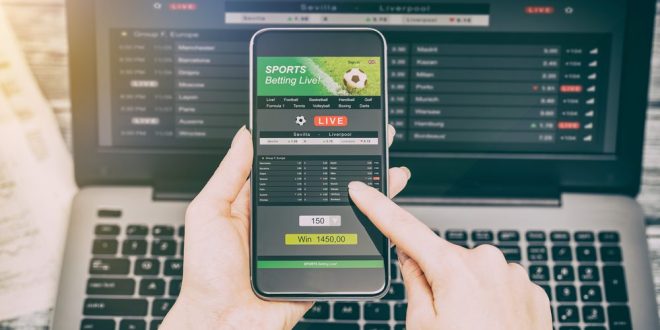
If one product defined the 2026 World Cup, it was Bet Builder.
For several years, same-game betting, or parlays for the American audience, have enjoyed growing popularity, but Graham believes this tournament represented the moment they became genuinely mainstream.
He said: “Historically, it’s been a popular thing for us and for the industry, but it was still to some extent seen as kind of a gimmick bet that only interested a certain kind of bettor.
“But I think in this World Cup it’s really crossed over to be universally popular, even with Northern European bettors who you might not traditionally think are Bet Builder type bettors.”
The tournament’s expanded format arguably accelerated adoption.
With many group-stage favourites priced at prohibitively short odds, customers increasingly used Bet Builder to create personalised, higher-priced betting experiences.
“All these big match favourites that had really low 1×2 odds… that’s also where Bet Builder really shone,” Graham observed. “People were looking for that magical 200 odds.”
Having upgraded its own Bet Builder product before the tournament began, Coolbet found itself perfectly positioned to capitalise.
For Graham, the lesson extends well beyond football. He stated: “This really is probably one of the biggest product takeaways for me… and how important continuous development in this area is going to be.”
One World Cup, very different markets
Although football provided the common product, customer acquisition strategies varied across regions.
In Estonia, Coolbet focused on community engagement through large public watch parties.
Across Latin America, television advertising and digital campaigns became the primary marketing channels. Neither strategy dramatically exceeded forecasts. Instead, they achieved exactly what they were designed to deliver.
“We hit expectations there, which is a success,” Graham said. “Whenever other stuff exceeds expectations, you forget that hitting predictions is a very strong result as well.”
Despite pre-tournament scepticism surrounding football’s place within the crowded American sports calendar, the World Cup became one of the strongest commercial periods ever recorded for Coolbet’s US B2B division.
The combined Round of 16 and quarter-final stages generated the business’s second-highest weekly revenue during the previous 12 months, outperforming almost every NFL, NBA and Super Bowl weekend.
Graham admitted: “Going into the event, there wasn’t a lot of talk about this being such a huge event. But then again… it was immediately clear that this was going to be bigger than we thought.”
Mexico fixtures proved almost as popular as US national team matches, with England against Mexico becoming Coolbet’s second most popular fixture among its American partners.
The next battle is share of wallet
Post-tournament conversations often centre on customer retention.
For Graham, however, retention begins with a different question. He commented: “Most people have multiple accounts and might have four or five accounts. For us, we’re looking to capture that share, not necessarily get more people to just gamble more overall.”
Rather than obsessing over first-time bettors, Coolbet places significant emphasis on experienced customers who already hold accounts but divide their betting across multiple operators.
Winning a greater proportion of that activity can be more valuable than continually chasing entirely new users. Meanwhile, for newcomers, Coolbet rejects blanket marketing.
“Not all newly acquired customers are built the same,” Graham said.
Instead, the operator analyses each customer’s earliest betting activity to determine whether they are experienced gamblers joining Coolbet or complete newcomers introduced to betting through the World Cup.
“Are they experienced regular gamblers who are coming to Coolbet for the first time, or are they just completely fresh and the World Cup is their first introduction to betting ever?
“Find out immediately, using all the factors you can, who they are and what they’re going to respond to the best.”
Innovation is the only sustainable advantage
Looking towards Euro 2028 and the next World Cup, Graham’s ambitions are notably simple.
“Just do more and do it even bigger.”
He concluded: “My desire from a product development standpoint is that if we’re having this conversation again… we’re not talking about products that already exist on the market.
“We’re talking about something that doesn’t even exist on the market right now that we’ve innovated, and the big impact that had on our results.”