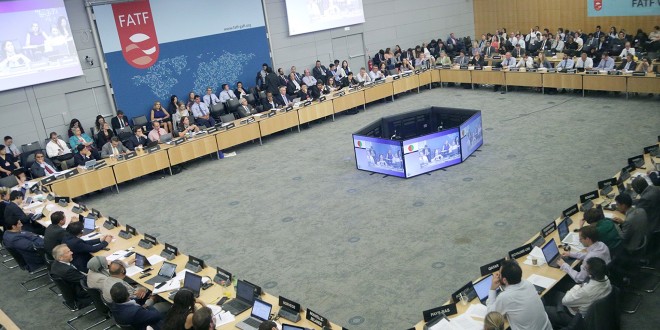
The Financial Action Task Force (FATF) has issued a stark warning to regulatory authorities that gambling platforms are increasingly being used for money laundering.
It comes as regulators, particularly in Europe, continue to revise national frameworks and compliance duties to clamp down on money laundering and financial crime. In previous recommendations, the FATF has called for wider authorities to support gambling regulators with a deeper oversight of gambling
FATF, is an intergovernmental agency responsible for setting international standards and on anti-money laundering (AML) and counter-terrorism financing (CTF) frameworks and procedures, released its latest analysis yesterday. Its common practices and protocols are endorsed by the European Union (EU) on member states to monitor high risk sectors such as corporate finance, insurance, lending and online gambling.
It warned that “brick-and-mortar and online casinos and sports betting are considered to be particularly exposed to money laundering risks”.
The evolution of technology connected to gambling platforms, as well as the varying regulations by jurisdiction on AML and CTF, has “led to developments in the money laundering, terrorist financing and, to a somewhat lesser extent, proliferation financing risks associated with the sector”.
While the unification of gambling regulations is a topic that has been discussed across the EU, it is highly unlikely to occur due to the stark differences in laws and taxes imposed on different jurisdictions. It would, however, go some way to aiding the fight against problems like this.
Unlicensed platforms which have a variety of ways for consumers to deposit have brought on added risk as organisations look to keep tabs on the wide range of threats posed by the black market.
Last month, the UK’s Labour Party called for an investigation into the now-defunct, unlicensed gambling firm Tether.bet. This followed allegations that George Cottrell, a prominent financial supporter of Reform UK leader Nigel Farage, was acting as a “whale” to connect high-roller VIP UK punters with offshore bookmakers. Cottrell denied these allegations.
Fispay, a UK-registered financial intermediary owned by Mowbray Jackson, was also the subject of Labour’s complaints after allegedly providing UK bank account details to some Tether.bet customers in order for them to deposit money for bets and receive winnings.
Some customers were supposedly instructed to transfer tens of thousands of pounds to Fispay. Jackson, like Cottrell, denied these allegations.
A further ominous sign was the Gambling Commission recently placing the UK gambling software sector at a ‘medium risk’ of money laundering and terrorist financing – an increased threat level from its previous guidance.
FATF’s “risk indicators”
In the FATF’s latest report, the analysis draws from over 80 jurisdictions, industry bodies and researchers over a year-long project, and marks the organisation’s first detailed examination of risks specifically associated with online and illegal gambling.
As has been widely reported already, it states that illegal markets rival or exceed legal markets in many jurisdictions and that unlicensed operators are consistently presenting themselves as legitimate businesses while offering anonymity and incentives that attract both consumers and criminal networks.
The report highlights methods such as moving money without actually gambling, “smurfing” (making multiple small transactions to evade detection thresholds), and placing unusually large or coordinated bets on events flagged for potential match-fixing or competition manipulation.
FATF published a list of “risk indicators”, which include account deposits coming from multiple third-party accounts, heavy reliance on cash or virtual assets, consistent betting on all possible outcomes, automated betting patterns, repeated use of VPNs, multiple account creation using fake names, and attempts to bypass customer due diligence.
The threat posed by illegal operators likely to commit AML and CTF offences will only continue to increase as technology develops, making the release of FATF advice imperative in the modern era.
Giles Thomson, FATF President, commented: Without robust safeguards, these sectors can be attractive gateways for fraudsters, professional money launderers and organised criminal networks.
“I urge all governments to take note of the risk indicators we have set out today, and put in place appropriate risk-based responses – from strengthening oversight and cracking down on illegal and offshore operators, to boosting international co-operation, and deepening public-private collaboration.”