
The Adult Psychiatric Morbidity Survey (APMS) has published trends and insights on mental health and common disorders impacting the treatment of adults in the UK.
Commissioned by NHS England and Department of Health and Social Care (DHSC) the study provides insights and the prevalence of the UK’s nine most common mental health disorders including, depression, bipolar, psychosis, ADHD, OCD, trauma, phobias, drug addiction and problem gambling.
Among these, the APMS sheds new light on problem gambling—not as a standalone behavioural issue but as one frequently linked with deeper mental health challenges. Based on structured clinical interviews and a nationally representative sample, the survey finds that just 0.3% of adults in England meet the clinical threshold for problem gambling, with 0.9% of those who gambled in the past year affected.
This figure sits far below the 2.5% prevalence rate cited by the Gambling Commission’s Gambling Survey for Great Britain (GSGB) in 2023. That contrast has sparked debate over statistical rigour.
Gambling advisory Regulus Partners, has criticised the Commission’s handling of gambling regulation, argues that the GSGB “remains an outlier when compared to all other official statistics on the prevalence of harmful gambling stretching back almost two decades.”
The APMS, in contrast, offers a clinical, methodologically transparent account. Its true value lies not in prevalence comparisons, but in its analysis of comorbidity: the strong and consistent overlap between problem gambling and psychiatric disorders.
Mental Health applies across all data
Problem gambling in the APMS is revealed to be tightly interwoven with mental ill-health. Adults identified as problem gamblers were substantially more likely to report symptoms of depression, anxiety, PTSD, OCD, and suicidal thoughts or behaviours. They were also more likely to experience problem debt, unemployment, domestic violence, or trauma.
“Problem gambling, although rare, is consistently associated with a greater burden of psychological, financial and social distress,” the report concludes.
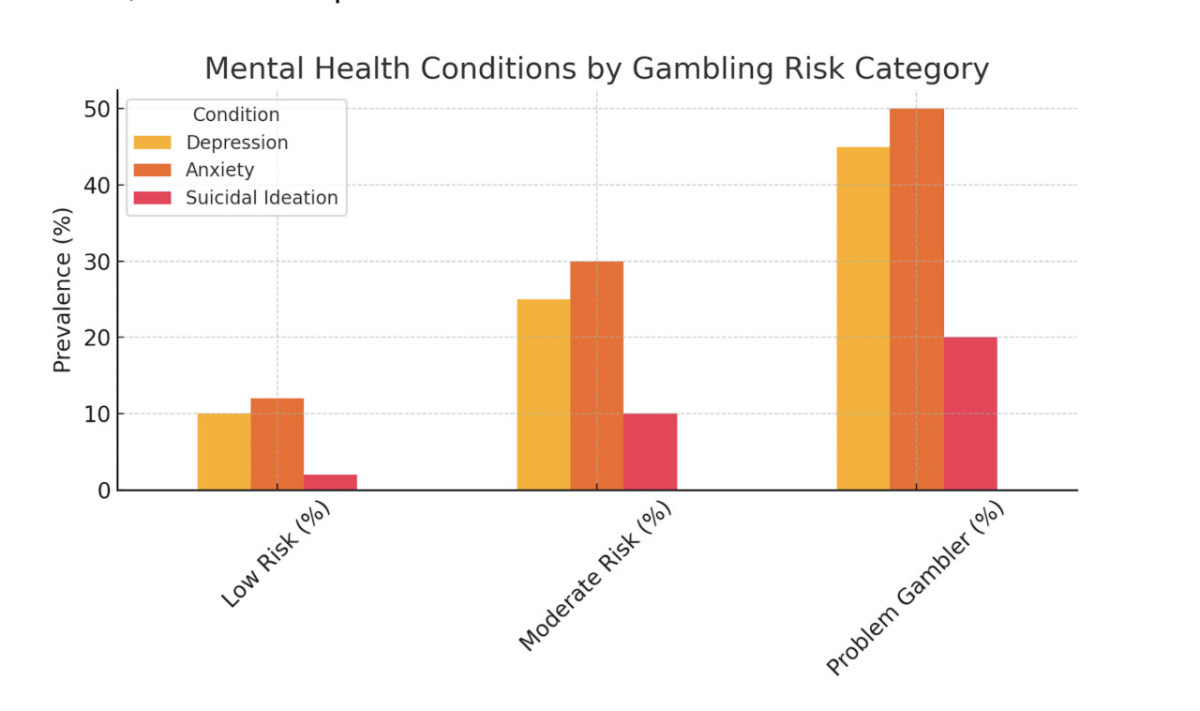
The survey also shows that problem gamblers are more likely to be receiving counselling or psychiatric medication, suggesting that they are already visible within the health system—but perhaps not always recognised through the lens of gambling-related harm.
Sharper focus on shrinking base…
Interestingly, the APMS also finds that gambling participation in the UK is declining. In 2023/24, only 43% of adults reported gambling in the previous year—down from 66% in 2007. While public discourse often implies a growing epidemic, these figures point to a contraction of gambling participation, not its expansion.
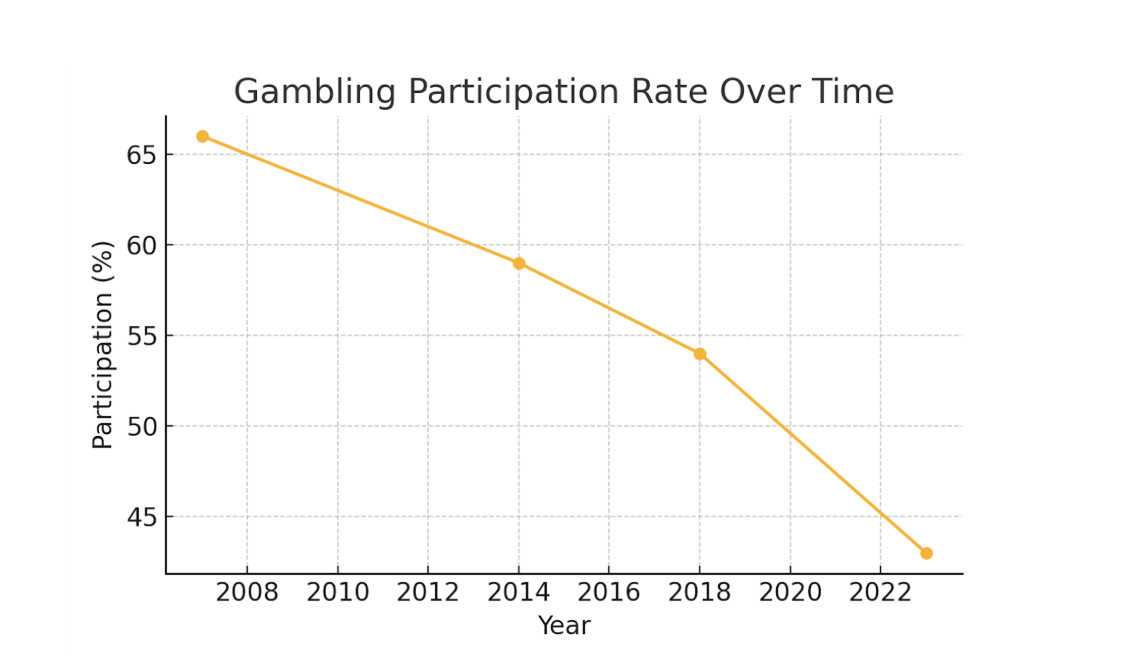
This long-term trend undermines claims of gambling “normalisation.”
The implication is not that gambling has ceased to pose a public health risk. Rather, as fewer people gamble, harm may become more concentrated among a smaller, more vulnerable population—often overlapping with those already experiencing mental health challenges.
Framing the evidence
Much of the friction between APMS and GSGB findings can be explained by methodology. The APMS relies on face-to-face household interviews and clinically validated tools, providing a more stable basis for tracking trends over time.
The GSGB, by contrast, uses online self-completed questionnaires, which are cheaper to run but more prone to response bias. That does not invalidate either approach—but it does caution against treating all figures as equally reliable.
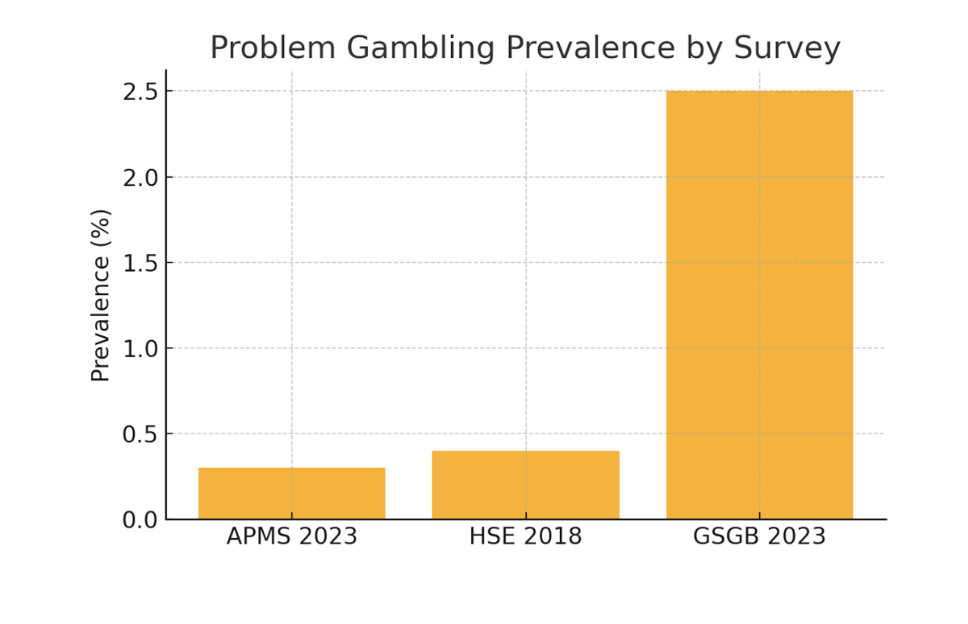
Problem Gambling Prevalence: APMS vs GSGB vs HSE (2018)
A comparative graphic that illustrates how survey design can shape outcomes.
Policy must be grounded in evidence
The APMS issues a stern warning: problem gambling is a mental health concern first, and a regulatory issue second. On that basis, it points—indirectly but firmly—to two policy priorities:
- Mainstream gambling screening in mental health services
Practitioners in NHS mental health and primary care should routinely assess for gambling harm—particularly among patients presenting with depression, anxiety, trauma, or financial distress. - Focus interventions on high-risk groups
Public health strategies should prioritise the small subset of individuals at highest risk, rather than applying generalised restrictions. This includes tailoring support across healthcare, addiction services, and financial counselling.
The APMS confirms that problem gambling is not a widespread epidemic, but for a narrow group of individuals, it is profoundly damaging. Recognising this comorbidity with mental illness is the first step toward targeted, effective policy. As the availability of rigorous national surveys shrinks, the clarity offered by this one should not be wasted.