Swedish gambling firm Hippos ATG has secured a licence to go live in Finland once the licensed market opens up on 1 July 2027.
The company, co-owned by AB Trav och Galopp and Suomen Hippos ry, will be able to offer horse racing and sports betting services to Finnish customers, alongside its full suite of online casino games that already exists as a proposition in Sweden and Denmark.
Most importantly, ATG will look to build a long-term economic value for horse racing in Finland, with trotting being one of the most popular spectator and betting sports in the country after ice hockey.
On LinkedIn, Antti Koivula, Chief Compliance Officer at Hippos ATG, commented: “A big thank you to the entire Hippos ATG team for the work that has brought us to this point, and to our owners, AB Trav och Galopp and Suomen Hippos ry, for their support, expertise and commitment throughout the process.”
Still, Koivula has been quite vocal about his reservations regarding some of the aspects of the gambling framework under which ATG will launch next year.
Finland’s marketing rules under question
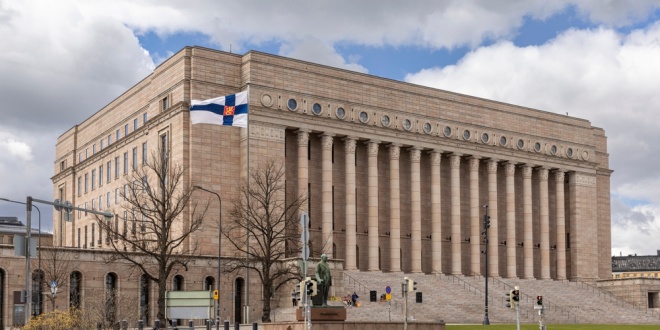
Late last year, Finland’s parliament voted to abolish the current outgoing gambling monopoly under state-owned operator Veikkaus Oy – something that the operator itself has been in support of.
The new multi-licence regime, coming into effect in July 2027 after several deadline pushbacks, will cover online betting and gaming, and will leave the National Lottery exclusively in the hands of Veikkaus.
However, some of the intricacies of the gambling regulation have attracted criticism from iGaming experts such as Koivula, particularly around how licensed operators will be able to market themselves.
Under the current provisions, affiliates are completely banned from operating in the country, raising some questions about how effectively newcomers will be able to gain market share once they land in Finland.
“I am still a bit worried about the marketing regulation and especially the enforcement,” Koivula said during a panel discussion at this year’s SBC Summit Lisbon.
“Prohibiting traditional customer acquisition channels such as affiliates…I don’t see that as a good option, it’s really bad.”
In previous interviews for SBC News, Koivula highlighted that the decision to ban affiliates has been based on a misinformed perception that the business they conduct is inherently bad, given their previous and current illegal status under Finnish law.
“The misunderstanding was quite comprehensive,” he previously said.
“In essence, the perception was that affiliates were influencers who are aggressively pushing gambling marketing towards people, including the most vulnerable groups, as if all affiliates were the same. That picture is, of course, far from accurate.
“Many affiliates operate in a highly responsible way and do meaningful responsible work themselves.
“That said, the false perception was clearly there. The main reason for that, which is rather understandable, was that affiliate marketing in Finland was and still is illegal.”
According to H2 Gambling Capital estimates, cited by the Finnish government, the domestic market peaked in value around 2017 when it reached a total value of €2bn under the consolidated monopoly model.
Since then, that value dropped to around €1.5bn in 2023 under the same model. It remains to be seen how effective the new multi-licence regime will be in generating value given the tight marketing restrictions it has to abide by.